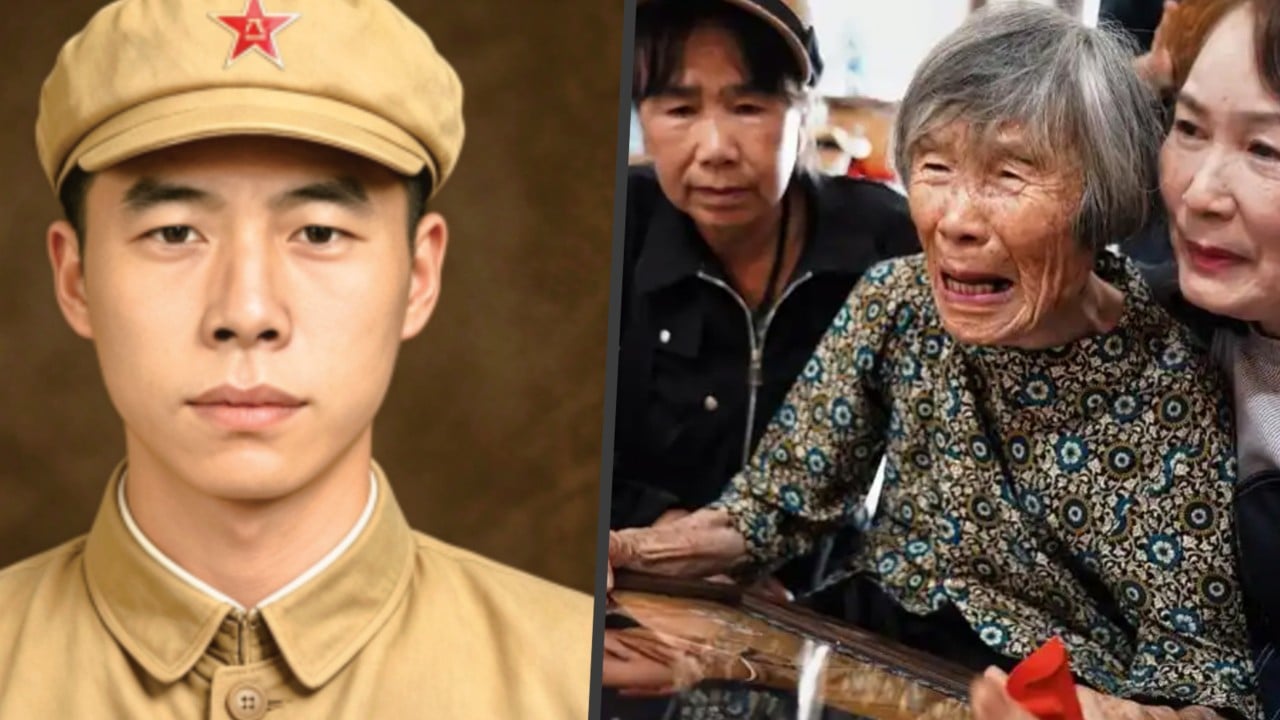
We love a good tearjerker. A 93-year-old Chinese woman "reunites" with her long-lost Korean War husband through the magic of digital restoration. The internet weeps. The media applauds. The tech companies pat themselves on the back for creating something so moving out of a grainy, degraded piece of paper.
It is a beautiful narrative. It is also completely fraudulent.
What the mainstream media celebrates as a heartwarming reunion is actually something far more insidious: the systematic erasure of historical truth in favor of sanitized, AI-generated fan fiction. We are trading the brutal, authentic scars of human history for smooth skin tones and perfectly upscaled uniforms that never existed. It is time to stop confusing algorithmic guesswork with genuine memory.
The Lazy Consensus of Digital Resurrection
The logic behind the applause is simple, lazy, and deeply flawed. The consensus goes like this: old photos are faded, damaged, or incomplete; therefore, using machine learning to fill in the blanks restores the dignity of the subject and brings closure to the family.
This premise assumes that an image is merely a collection of pixels waiting to be optimized. It completely ignores what a photograph actually is: a physical record of light hitting a specific surface at a precise moment in history.
When an algorithm encounters a blurry patch on a 70-year-old military uniform, it does not uncover the past. It invents a new one. It scans millions of open-source images, calculates a statistical average of what a Chinese People's Volunteer Army jacket looked like, and plasters that mathematical guess over the original artifact.
You are not looking at the husband. You are looking at a composite of ten thousand unrelated internet images stitched together by a software program that does not know what war is.
The Mechanism of Deception
To understand why this is a problem, you have to look at how these tools actually function. We are told these programs remove noise and enhance clarity. In reality, they operate through a process of aggressive fabrication.
- Generative Guesswork: Pixels that have been degraded by moisture, sunlight, or time do not contain hidden data. They contain no data. The software must invent new pixels out of thin air to fill the gaps.
- Homogenization: Machine learning models are trained on biased datasets. They favor symmetry, youth, and contemporary beauty standards. When you feed a weathered, wrinkled face from 1953 into these systems, the algorithm actively fights against the texture of age and hardship to deliver a smooth, marketable image.
- Artifact Destruction: In the drive to create a high-definition output, the unique chemical signatures of the original medium—the silver halide grain, the specific tonal range of mid-century film stock—are erased.
I have spent years analyzing digital media pipelines, and I have seen tech firms pitch these tools as preservation. It is the exact opposite. It is historical vandalism disguised as empathy.
Memory is Not a High-Definition Video
People frequently ask: "Does it really matter if the photo isn't 100% accurate if it brings comfort to a grieving widow?"
Yes, it matters. It matters because grief and memory are not supposed to be high-definition, interactive products.
The fading of a photograph is a reflection of the passage of time. The tears, the creases, the silver mirroring on the edges—these are physical manifestations of the 70 years that separated that husband and wife. The damage to the artifact tells the story of survival, of moving across borders, of hiding a forbidden memento from political purges or economic ruin.
When you scrub that history away to create a glossy, iPhone-quality portrait, you flatten the tragedy. You turn a monument to survival into a polished piece of corporate content. The widow is not reconnecting with her husband; she is being presented with a digital avatar designed to trigger an emotional response. It is a simulation of closure.
Imagine a scenario where we took the ruins of the Roman Colosseum and rebuilt them entirely out of pristine, white poured concrete because it made it easier for tourists to visualize the gladiator fights. We would call it cultural desecration. Yet, when we do the exact same thing to the personal archives of the people who lived through the bloodiest conflicts of the 20th century, we call it a miracle.
The Danger of Aesthetic Revisionism
The broader implication here goes far beyond a single viral news story. We are entering an era where our visual relationship with the past is being dictated by engineering teams in Silicon Valley and Hangzhou who prioritize aesthetic cleanliness over historical fidelity.
When we train an entire generation to believe that history is only valuable when it is sharp, colorful, and instantly digestible, we destroy their ability to engage with the actual, messy reality of the past.
Historical archives are supposed to be difficult. They are supposed to demand effort from the viewer. The blurriness of a wartime photograph forces you to confront the chaos of the environment in which it was taken. The poor lighting tells you something about the limitations of the technology and the economic reality of the subject.
If every historical figure is subjected to the same AI-driven smoothing process, the past loses its texture. Everyone starts to look like they were photographed in the same climate-controlled studio in 2026.
The Cost of the Counter-Intuitive Approach
Am I suggesting we let old photographs rot in drawers? No.
The alternative is conservative conservation. True archival work involves stabilization, high-resolution digital scanning without alteration, and the preservation of the physical object itself. It is slow. It is expensive. It does not produce viral TikTok videos or generate millions of clicks for tech platforms.
The downside to this approach is obvious: families do not get a pristine, imaginary version of their ancestors to share on social media. They have to sit with the reality of a damaged, incomplete record. They have to accept that some parts of the past are gone forever, lost to time and war.
But that loss is honest.
Demolish the Premise of the "Perfect" Record
We need to redefine what we are looking for when we look at history. The goal of looking at an old photograph should not be to achieve perfect visual clarity. The goal should be to achieve historical empathy.
The tech industry has convinced us that a clearer image equals a deeper connection. That is a lie designed to sell software subscriptions and cloud storage. A pixel-perfect, AI-enhanced portrait of a Korean War soldier tells you absolutely nothing about his experience, his fears, or his life. It only tells you what a machine learning model thinks a human being looks like.
Stop demanding that the past conform to your contemporary need for high-definition visuals. Stop celebrating the destruction of historical artifacts under the guise of emotional restoration.
The crease down the middle of that 70-year-old photo is not a defect to be fixed. It is the story. Leave it alone.
:max_bytes(150000):strip_icc()/GettyImages-2192014718-e18efe654b3f4b769a45c8692acc5f39.jpg)