The failure to contain an Ebola virus disease outbreak occurs when the mathematical rate of viral transmission outpaces the operational velocity of the intervention matrix. In the Democratic Republic of Congo, public health declarations frequently note that the disease progresses faster than the response. This systemic failure is not a product of resource scarcity alone, but rather a predictable breakdown in three interdependent operational pillars: localized epidemiological surveillance, the supply-chain velocity of therapeutics, and the socio-political friction of the intervention zone. When these pillars fracture, the effective reproduction number ($R_t$) remains above the critical threshold of 1.0, transforming a localized spillover into a runaway regional crisis.
The Surveillance Bottleneck: Latency in Case Identification
The primary driver of epidemic acceleration is transmission latency—the time elapsed between patient symptom onset, formal diagnostic confirmation, and subsequent isolation. In highly fractured geographies, this latency period expands due to structural deficits in active case-finding.
The surveillance deficit operates as a compounding function:
- Diagnostic Decentralization Deficits: Centralized laboratory testing creates a logistical dependency. Blood samples must travel across insecure, unpaved terrain to reach Polymerase Chain Reaction (PCR) testing facilities. Every 24 hours of transport delay allows an undetected positive case to generate secondary and tertiary transmission chains.
- Definition Flaws in Contact Tracing: Contact tracing relies on a binary classification of exposure. In volatile zones, tracking is inhibited by population displacement. If the tracing mechanism captures fewer than 90% of active contacts, the invisible transmission network expands exponentially while the official data reflects a false plateau.
- Nosocomial Amplification: Healthcare facilities acting without rigorous infection prevention and control protocols become amplification hubs. When a patient with non-specific early symptoms (fever, fatigue) is triaged alongside the general population, the clinic itself accelerates the reproduction rate.
This operational latency invalidates real-time modeling. The data guiding intervention strategies invariably reflects the state of the epidemic seven to ten days prior, forcing response teams to deploy resources based on historical, rather than current, epidemiological reality.
The Friction of Intervention Geometry
Epidemic response strategies often treat the target geography as a uniform, frictionless plane. In reality, the intervention zone is a complex grid of socio-political and physical friction that degrades the velocity of medical countermeasures. MSF and other field units consistently encounter a trust deficit that functions as an economic barrier to health-seeking behavior.
[Community Distrust] ──> [Delayed Presentation] ──> [Increased Community Viral Load]
       │
       └──> [Sub-optimal Ring Vaccination] ──> [Unchecked Transmission Chains]
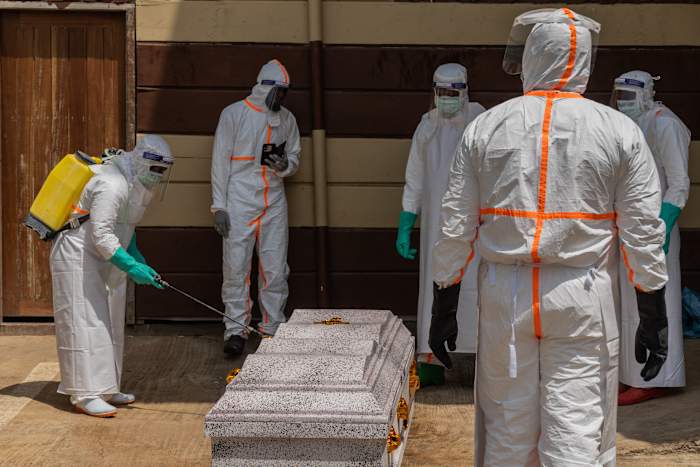
When local populations view centralized containment units as extractive or hostile, the community shifts toward clandestine management of the sick and deceased. Secure burials—critical for halting transmission, given the high viral load of Ebola corpses—are bypassed. This introduces a massive surge in transmission volume that occurs entirely outside the surveillance apparatus.
The friction also manifests in the misallocation of security assets. Militarizing a medical response to secure access for international teams frequently backfires. It solidifies community resistance, transforms health workers into targets, and halts mobile vaccination teams. The loss of community access shrinks the geographic reach of the ring vaccination strategy, leaving highly vulnerable perimeters entirely unprotected.
Therapeutic Logistical Failure Modes
The transition from investigational protocols to standardized deployment of monoclonal antibodies (such as Ebanga or Inmazeb) requires a cold-chain infrastructure that is fundamentally incompatible with the rural infrastructure of the Democratic Republic of Congo.
+-----------------------------------+-----------------------------------+
| Logistical Component              | Failure Mode Impact               |
+-----------------------------------+-----------------------------------+
| Ultra-low Temperature Storage     | Grid failure degrades therapeutic |
| (-60°C to -80°C)                  | efficacy before field deployment  |
+-----------------------------------+-----------------------------------+
| Last-Mile Transport Vector        | Security checkpoints and mud      |
|                                   | roads stall drug delivery         |
+-----------------------------------+-----------------------------------+
| Clinical Perfusion Requirements   | Lack of clean water prevents safe |
|                                   | intravenous administration        |
+-----------------------------------+-----------------------------------+
Because these therapeutics must be administered early in the disease course to maximize survival rates, a supply chain that stalls at provincial hubs serves no clinical utility for remote populations. The inability to guarantee a continuous, temperature-controlled supply line forces field clinics to ration care or revert to supportive hydration alone, driving up mortality rates and further deeply damaging community trust.
Strategic Realignment: The Decentralized Containment Matrix
Reversing the acceleration curve requires abandoning the centralized, bureaucratic intervention model in favor of a hyper-localized, high-velocity containment matrix.
First, diagnostic latency must be compressed to under four hours through the deployment of field-ready, battery-powered GeneXpert point-of-care tools at the sub-district level. Testing must happen at the first point of clinical contact, eliminating the sample transport bottleneck entirely.
Second, the ring vaccination architecture must be re-engineered. Instead of relying on international teams to enter high-friction zones, response authorities must train, equip, and compensate local community health networks to execute the contact mapping and vaccine administration. This shifts the intervention posture from an external occupation to a localized defense, neutralizing the political friction that paralyzes foreign deployments.
Finally, therapeutic deployment must move from static, centralized Ebola Treatment Centers to mobile, low-footprint isolation pods capable of maintaining localized cold chains via solar-powered refrigeration units. If treatment cannot be delivered within the 48-hour clinical window at the village level, the intervention fails to alter the epidemic trajectory. The metrics of success must shift from the volume of resources deployed to the absolute reduction in hours between symptom onset and viral suppression.