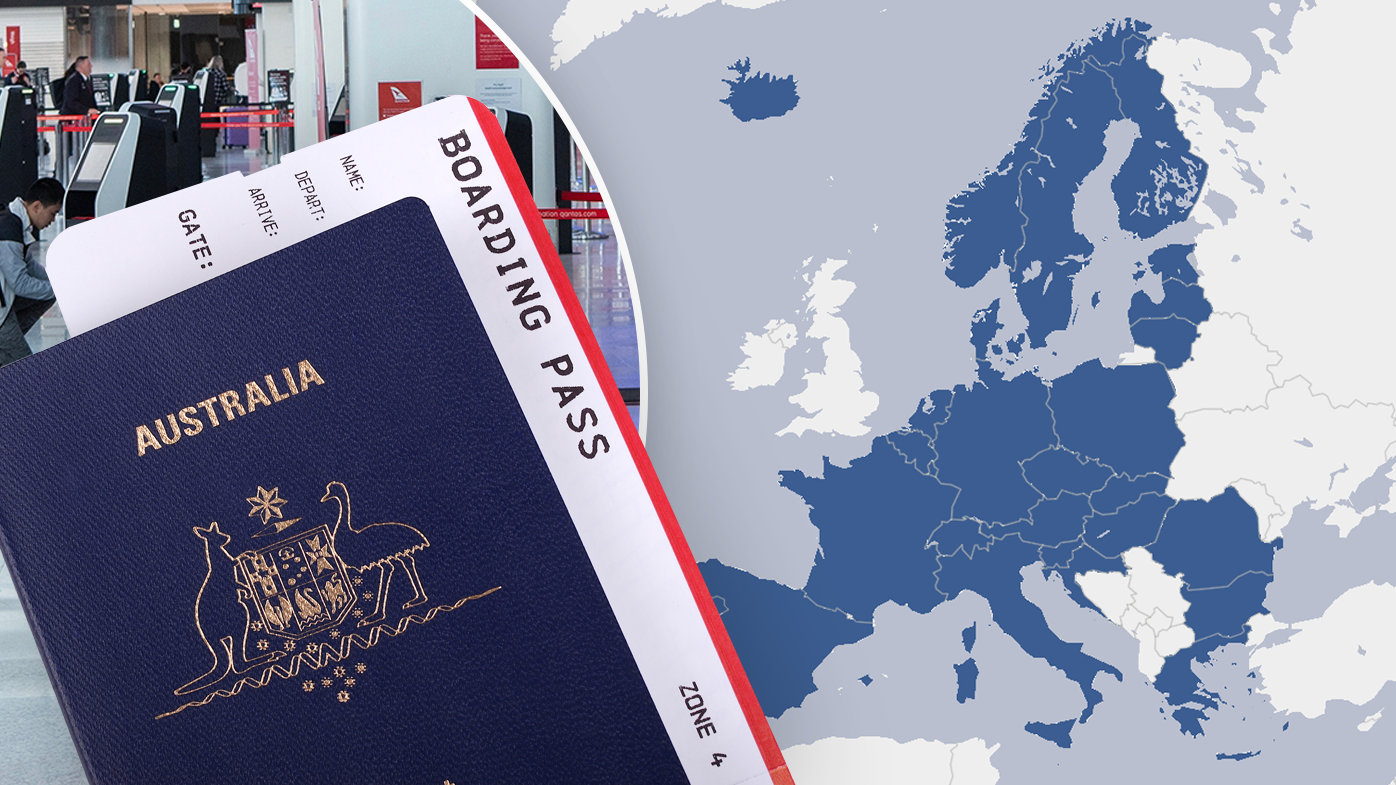
The era of the ink-stained passport page is officially over. If you’re an Australian landing in Paris, Rome, or Berlin today, don’t expect a border officer to thumb through your passport looking for a blank spot to stamp. Instead, prepare to stare into a camera and press your fingers against a glass scanner.
As of April 10, 2026, the European Union has flicked the switch on its long-awaited Entry/Exit System (EES). This isn’t just a minor tech upgrade; it’s a fundamental shift in how we move through 29 European countries. For Aussies used to the relatively breezy "G'day" and a stamp, the reality at the border just got a lot more digital—and, in the short term, a lot slower.
The end of the paper trail
Europe has finally decided that physical stamps are an archaic way to track visitors. The new EES replaces manual logging with a massive digital database that tracks every non-EU traveller in real-time. Whether you’re there for a quick business meeting in Frankfurt or a three-month sabbatical in the Greek Islands, the system now knows exactly when you arrived and, more importantly, exactly when you need to leave.
The biggest hurdle for Australians right now isn't the rules themselves—which haven't changed—but the collection of biometric data. The first time you cross a Schengen border from today, you have to provide:
- A high-resolution facial scan.
- Four fingerprints from your right hand.
- Full digital registration of your passport details.
This data stays in the system for three years. While that sounds like it should make your second or third trip faster, the initial registration is causing a massive bottleneck. Reports from major hubs like Charles de Gaulle and Frankfurt suggest that processing times are jumping by 70% per passenger. If you've got a tight connection in a European hub, you're going to want to rethink your itinerary.
Why this actually matters for your 90 day limit
Most Aussies know the "90/180 rule"—you can stay in the Schengen Area for 90 days within any 180-day period. Historically, plenty of people "accidentally" stretched that by a few days, hoping a tired border official wouldn't do the math on a dozen blurry stamps.
Those days are gone. The EES is a math machine. It calculates your remaining days instantly and flags overstayers to border guards before you even reach the desk. If the system shows you’ve stayed 91 days, there's no arguing with it. Overstaying now carries much higher stakes, including automated fines and potential bans from the entire Schengen Zone. It’s cold, it’s efficient, and it doesn't care if your train was delayed.
The kiosks are the new gatekeepers
At most large airports, you’ll now be directed to self-service kiosks before you even see a human. You’ll scan your passport, take your own photo, and answer a few questions about your stay.
It sounds easy, but early data shows these machines can be finicky. Poor lighting or a slightly misaligned finger can force a manual override, sending you to a different, much longer queue. If you’re travelling with kids under 12, they don't need to give fingerprints, but they still need the facial scan.
A few things the brochures don't tell you
- The "Travel to Europe" App: The EU has quietly released an app that lets you pre-upload your passport info and photo 72 hours before you land. Use it. It won't skip the border check entirely, but it can cut your kiosk time in half.
- Subsequent entries: Even after you’ve registered your biometrics, don't expect a "fast track" lane just yet. Most airports are still funnelling everyone into the same lines while they work out the kinks.
- Dual Citizens: If you’re an Aussie with an EU passport (like Irish or Italian), none of this applies to you. Use your EU passport and walk right through the e-gates. Just make sure you use the same passport to enter and exit.
The ETIAS shadow is looming
Don't confuse EES with ETIAS. Today’s change (EES) is about how you enter. The next big change, ETIAS, is about permission to enter. Scheduled for late 2026, ETIAS will be a mandatory €20 (about AUD$35) "travel authorisation" you’ll need to apply for online before you even leave Australia.
For now, you don't need to pay a fee or apply for anything before your flight. You just need a valid passport and a lot of patience for the new lines.
How to handle your next trip
If you’re flying into Europe this month, don't wing it. Border guards are stressed, the machines are new, and the person in front of you in line is probably struggling with the scanner.
- Download the app: Look for the official "Travel to Europe" app on the App Store or Google Play. Uploading your data early is the only way to gain an advantage.
- Buffer your connections: If you’re landing in a Schengen country and connecting to another (e.g., Perth to Paris, then Paris to Barcelona), ensure you have at least three hours between flights. The immigration line is now the most unpredictable part of your journey.
- Carry proof of exit: Because the system is new, keep a digital or paper copy of your return flight. If the EES hits a glitch and doesn't record your entry correctly, you’ll need that proof to avoid being flagged as an overstayer later.
- Check your passport validity: Your passport needs at least three months of life left after your intended departure date from Europe. The EES will reject you at the kiosk if your document is too close to expiry.
The romantic era of collecting stamps from every corner of the continent is dead. It’s been replaced by a digital net that’s tighter than ever. Make sure you’re ready for it before you hit the tarmac.