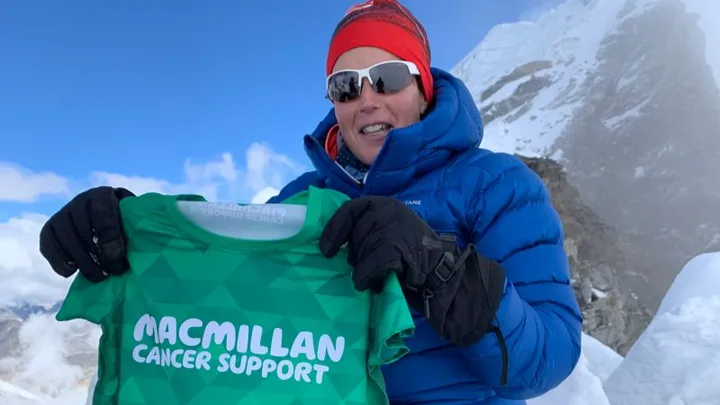
The Illusion of the Limitless Patient
A terminal diagnosis usually shrinks a life to the perimeter of oncology wards and the rhythmic drip of chemotherapy. When news broke of a woman summiting Mount Everest while battling Stage 4 cancer, the global media machine did what it always does. It minted an instant icon. The narrative was flawlessly packaged for social media feeds. It framed the achievement as a triumph of human will over biological destiny, a signaling flare to patients everywhere that physical limitations are entirely self-imposed.
But this inspiring vignette obscures a much harsher reality. Climbing Everest with advanced malignancy is not a blueprint for survival. It is an extraordinary, highly privileged anomaly that flirts with extreme medical peril. For the vast majority of Stage 4 cancer patients, the physiological stress of extreme altitude is not just contraindicated. It is lethal.
The romanticization of high-altitude feats by terminally ill individuals distorts public perception of cancer treatment. It places an unspoken, psychological burden on patients who find themselves exhausted merely by walking up a flight of stairs. By examining the intersection of extreme physiology and oncology, we can understand why the "limitless" narrative is a dangerous myth.
The Crushing Physiology of the Death Zone
To understand why climbing Everest with advanced cancer is a statistical and biological outlier, one must look at what happens to a healthy body above 8,000 meters. The human body requires oxygen to generate cellular energy. At the summit of Everest, the effective oxygen percentage is roughly one-third of what it is at sea level. This triggers severe hypoxia.
The heart must pump frantically to deliver dwindling oxygen to vital organs. Blood pressure spikes. The pulmonary arteries constrict, trying to force blood into areas of the lungs where it thinks more oxygen resides. In a healthy climber, this causes profound fatigue, mental confusion, and a heightened risk of high-altitude pulmonary edema (HAPE) or high-altitude cerebral edema (HACE).
Sea Level: 21% Effective Oxygen -> Normal Cellular Function
v
Death Zone (8,000m+): ~7% Effective Oxygen -> Rapid Cellular Starvation
Now, introduce advanced malignancy into this equation. Cancer is not a localized disease; it is a systemic assault. Stage 4 implies metastasis. The disease has migrated from its primary site to distant organs, frequently the lungs, bones, liver, or brain.
Consider a hypothetical patient with metastatic breast cancer that has spread to the lungs. Her baseline lung capacity is already compromised by tumor burden. If that patient enters the Death Zone, the remaining healthy lung tissue must work exponentially harder. The risk of developing HAPE skyrockets because the pulmonary vasculature is already structurally compromised by the disease. What causes a healthy climber to cough becomes a fatal event for an oncological patient within hours.
The Hidden Arsenal of Modern Oncology
No one climbs Everest with Stage 4 cancer on willpower alone. They do it with an unprecedented level of medical intervention, financial backing, and genetic luck.
The public sees the triumphant photo at the summit. They do not see the complex regimen of targeted therapies or immunotherapies making it possible. Traditional chemotherapy acts like a carpet bomb. It destroys rapidly dividing cancer cells but also decimates white blood cells, causes profound anemia, and leaves the patient entirely vulnerable to infection. A patient on standard cytotoxic chemotherapy cannot climb Everest. Their immune system would collapse in the unsanitary conditions of Base Camp, and their red blood cell count would be too low to carry sufficient oxygen.
The Targeted Therapy Exception
The few individuals who achieve these feats are almost exclusively on advanced targeted therapies or checkpoint inhibitors. These drugs do not kill cells indiscriminately. Instead, they block specific signals that tumors need to grow, or they unmask the cancer so the patient’s own immune system can fight it.
- Maintained Blood Counts: Unlike chemotherapy, these modern drugs often leave red and white blood cell counts relatively stable.
- Reduced Systemic Toxicity: Patients avoid the debilitating nausea and muscle wasting associated with older treatments.
- Preserved Physical Performance: This preservation of baseline physical health allows highly athletic individuals to maintain their training regimens despite their diagnosis.
However, these therapies are not a permanent cure for Stage 4 disease. They are a method of management. Tumors mutate. Resistance develops. The window of high physical function is often temporary, a brief period of stability before the disease inevitably finds a workaround. Framing this temporary stability as a permanent victory over human limitations misrepresents how these drugs work.
The Logistical and Financial Chasm
The narrative of the cancer patient conquering Everest relies heavily on the trope of individual grit. It ignores the massive financial and logistical scaffolding required to pull off such an operation safely.
An average Everest expedition costs anywhere from $40,000 to $100,000 per person. For a patient requiring specialized medical oversight, that cost multiplies exponentially. A standard climber might utilize a few bottles of supplemental oxygen. A Stage 4 patient requires a massive surplus. They need a dedicated support team capable of executing an immediate medical evacuation the moment blood oxygen levels dip below a critical threshold.
"The true dividing line in modern cancer survival is often financial, not emotional."
This level of care requires immense wealth or high-profile corporate sponsorship. The average Stage 4 patient is not deciding between a trip to Nepal or a quiet retirement. They are fighting with insurance companies to cover the cost of their next scan. They are managing co-pays for medications that cost thousands of dollars a month. By elevating the rare, hyper-funded exception as the standard of what is "possible," the media inadvertently shames the vast majority of patients who are financially and physically incapable of such feats.
The Toxicity of Positive Thinking
There is a psychological underbelly to the "fight and win" vocabulary that dominates cancer coverage. When a publication declares that a woman climbed Everest to show that possibilities are limitless, it sets up a toxic dichotomy. If the possibilities are limitless for those who try hard enough, then those who succumb to their illness simply lacked the determination to overcome it.
This is a devastating message for patients dealing with the reality of terminal illness. Cancer biology does not care about attitude. A positive outlook can improve quality of life and help a patient tolerate treatment side effects, but it cannot alter the genetic mutations driving a tumor's growth.
Oncology wards are filled with deeply courageous people who fight with every ounce of their being, yet still get sicker. When the public sphere celebrates only the extraordinary anomalies—the marathon runners, the mountain climbers, the CEOs who work through chemo—it marginalizes the quiet, agonizing reality of standard disease progression. It turns survival into a performance metric.
The Omitted Risks of the Mountain
The commercialization of Everest has already turned the mountain into a hazardous bottleneck. In recent years, pictures have emerged showing hundreds of climbers queued up in single file along the knife-edge ridges of the upper mountain. They wait for hours in freezing temperatures just to reach the summit.
Standard Climber -> Delayed in Queue -> Frostbite / Minor Hypoxia
v
Stage 4 Patient -> Delayed in Queue -> Rapid Hypercoagulability / Thrombosis / Organ Failure
For a cancer patient, these delays are significantly more hazardous than they are for a healthy climber. Many cancer treatments increase the risk of hypercoagulability, making the blood more prone to clotting. Combine this with the extreme dehydration and sluggish blood flow caused by high-altitude hypoxia, and the risk of a fatal pulmonary embolism or stroke increases dramatically.
Furthermore, the immune system of any patient undergoing active cancer treatment is inherently unpredictable. A minor respiratory virus sweeping through Everest Base Camp, which might give a healthy climber a mild cough, can quickly mutate into fatal pneumonia for someone whose system is compromised by advanced disease.
Redefining the True Value of Survival
The obsession with monumental achievements obscures the real value of what modern oncology can offer. The goal of extending life for a Stage 4 patient is not necessarily to prove that one can still perform superhuman tasks. The goal is often far more intimate, grounded, and profoundly human.
It is about gaining an extra year to see a child graduate. It is about having the energy to sit in a garden, to write a memoir, or to reconcile with an old friend. These quiet victories do not generate viral headlines or attract gear sponsors. They do not look impressive on an Instagram feed. Yet, they represent the true triumph of medicine and human resilience.
We must stop using the extreme exploits of a wealthy, genetically fortunate few to benchmark the worth or potential of all cancer patients. The woman who climbs Everest with Stage 4 cancer is an extraordinary curiosity of modern medicine and human endurance. She is not a standard to be emulated, nor is she proof that the laws of biology have been rewritten.
The most profound frontier of cancer survival is not found at 29,000 feet. It is found in the daily, unglamorous persistence of those who look a terminal diagnosis in the eye and choose to live deeply within their limits, rather than dying to escape them.
/i.s3.glbimg.com/v1/AUTH_5dfbcf92c1a84b20a5da5024d398ff2f/internal_photos/bs/2022/7/q/6M5eaAQBGuPVBPz0xKuQ/whatsapp-image-2022-12-24-at-17.52.03.jpeg)