The room smells of ozone, scrub solution, and frozen steel. If you have ever sat in a hospital waiting room at three in the morning, you know the specific silence of that world. It is a heavy, synthetic quiet, punctuated only by the rhythmic, mechanical sigh of a ventilator keeping a fading body tethered to the earth.
For hundreds of thousands of people worldwide, this silence is the backdrop of their final months. They are waiting for a phone call that usually never comes. They are waiting for someone else to die so that they might live.
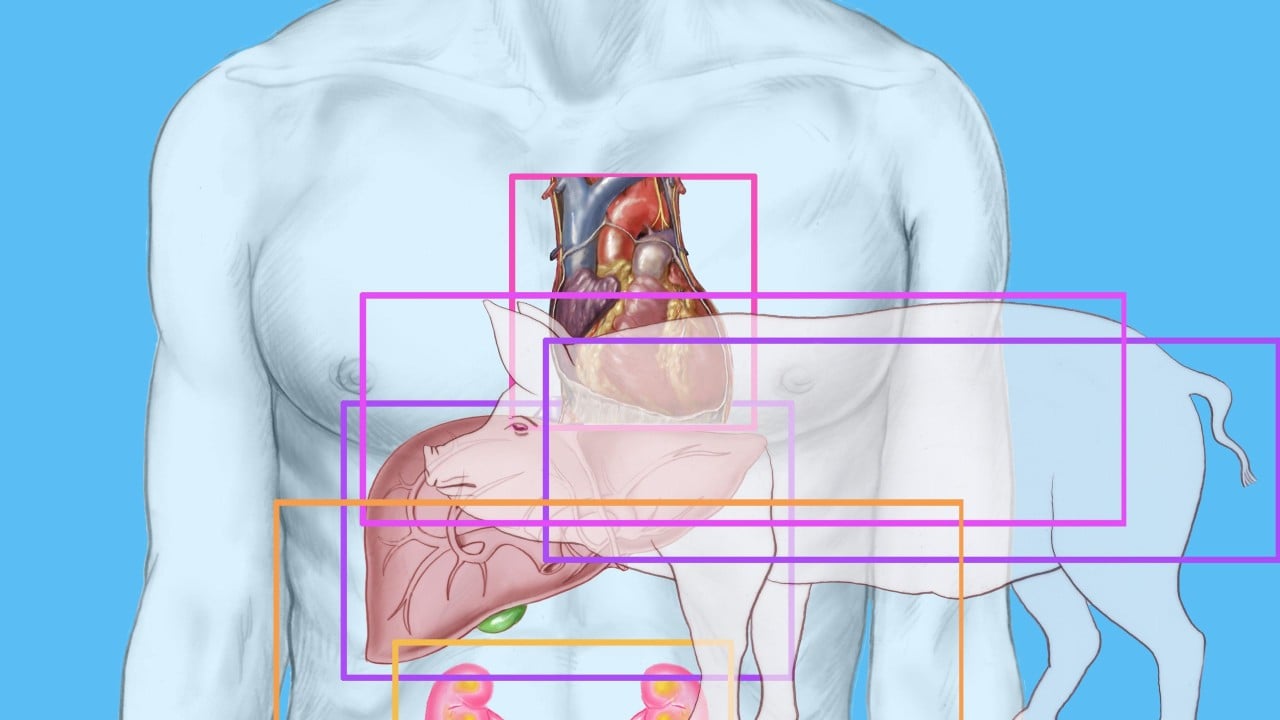
In May 2024, inside an operating theater at the Air Force Medical University’s Xijing Hospital in Xi'an, China, a team of surgeons prepared to blur the line between species to solve this crisis. They were not just performing surgery. They were attempting a biological coup. For the first time in human history, doctors successfully transplanted both a liver and a kidney from a genetically modified pig into a single human recipient.
The patient was a 50-year-old man, legally brain-dead, whose family had courageously permitted the study to proceed. For two weeks, his body became the testing ground for the future of medicine.
To understand the weight of what happened in Xi'an, you have to look at the math of human misery.
Every day, human organs fail. The liver degrades from disease; the kidneys stop filtering poison from the blood. We treat this with machines and chemistry, but dialysis is a pause button, not a cure. It leaves patients exhausted, washed out, and trapped in a loop of terminal waiting. In the United States alone, more than 100,000 people sit on the national transplant waiting list. Seventeen of them die every single day. The supply of human organs is a fixed, tragic pool, reliant entirely on untimely deaths and the agonizing generosity of grieving families.
Xenotransplantation—the transplanting of animal organs into humans—has been the holy grail of surgery for upwards of a century. But the human immune system is a ruthless border guard. It recognizes foreign tissue instantly and destroys it with terrifying speed, a process known as hyperacute rejection. Within minutes, a standard animal organ placed inside a human body turns black, clots, and dies.
The breakthrough did not happen in the operating room. It happened in the genome.
Scientists used gene-editing technology to strip the donor pig of specific antigens—essentially biological flags—that the human immune system recognizes as "invader." They knocked out three porcine genes that trigger rejection and introduced multiple human genes to make the organs appear, to the recipient's white blood cells, like friendly tissue.
Consider it a form of biological camouflage. The pig organs were altered so deeply at the cellular level that the human body's defenses looked right at them and saw nothing wrong.
The Dual Siege
Most previous high-profile xenotransplants focused on a single organ. We have seen porcine hearts and individual kidneys placed into human recipients with varying degrees of short-term success. But the human body is not a collection of isolated parts; it is an integrated ecosystem.
When a patient suffers from multi-organ failure, or when the failure of one system poisons another, a single transplant is a temporary bandage. The liver cleanses the blood and manufactures essential proteins; the kidneys filter waste and regulate fluid balance. They talk to each other constantly through chemical signals.
By transplanting both a pig liver and a pig kidney into the same patient, the Chinese surgical team, led by Dr. Dou Kefeng and Dr. Qin Weijun, took on a dual siege.
The technical execution was dizzying. The surgeons had to manage different blood vessel sizes, complex plumbing networks, and the constant threat of systemic shock. When they released the clamps and allowed the patient’s human blood to rush into the porcine liver and kidney, the entire room held its breath.
The organs turned pink.
They did not turn black. They did not clot. Almost immediately, the transplanted liver began secreting golden-yellow bile. The kidney began producing urine.
For fourteen days, the organs functioned. They cleared toxins. They maintained stability. The human body accepted the chimera.
The Ghost in the Machine
It is easy to get lost in the clinical triumphs of this achievement, but the ethics of xenotransplantation are muddy, uncomfortable, and deeply human.
We are talking about creating animals explicitly to harvest their interiors. For some, this raises profound animal welfare concerns. For others, the concept feels instinctively unsettling—an existential boundary crossed. It forces us to ask what makes us human. If a man lives with a pig’s heart, a pig’s liver, and a pig’s kidney beating and filtering inside him, where does the animal end and the human begin?
But these philosophical questions look very different when you are the one holding the hand of a dying parent, or when your own name is number 84,000 on a list that isn't moving.
The researchers chose a brain-dead recipient for a reason. This was a bridge study, designed to test viability without risking a conscious life, while gathering data that cannot be replicated in a petri dish or an animal model. The patient’s family allowed their tragedy to become a threshold for medical history. Through their grief, they provided the ultimate gift: certainty that the science works.
The trial was voluntarily terminated after two weeks, in accordance with the study's predetermined protocol, and the organs were removed for extensive pathological analysis. What they found was astonishing. There was no sign of the hyperacute rejection that had baffled scientists for decades.
The Horizon of Available Life
We are not yet at the point where pig organs will be stocked on hospital shelves like car parts. Regulatory hurdles are immense. The risk of porcine endogenous retroviruses—viruses embedded in pig DNA that could theoretically jump to humans—requires years of vigilant monitoring. Long-term durability remains an unwritten chapter.
But the architecture of the impossible has shifted.
The Xi'an surgery proved that multi-organ xenotransplantation is not a science fiction fantasy. It is an engineering problem. We now know that edited animal organs can co-exist, communicate, and sustain human physiology simultaneously.
Imagine the shift in the medical landscape when the waiting list ceases to exist. Imagine a world where a doctor does not have to tell a family to hope for a stranger’s fatal car crash, but can instead write a prescription for an organ manufactured to order, edited to match the patient's specific immune profile perfectly.
The silence of the three-a.m. intensive care unit will never completely disappear. Death will always find a way in. But because of two weeks in Xi'an, where human blood flowed through a pig's liver and kept a body alive, that silence may no longer be defined by the quiet agony of waiting for a call that comes too late.