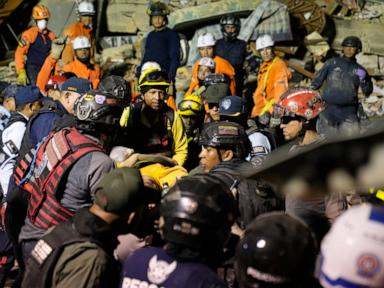
Independent crowdsourced registries have emerged as the primary source of survival data in Venezuela after two massive earthquakes left up to 41,000 citizens missing, effectively sidelining a broken state communications network.
The twin seismic shocks—a 7.2 magnitude quake followed forty seconds later by a catastrophic 7.5 upheaval—demolished the coastal infrastructure of La Guaira and sections of Caracas. As concrete slabs crushed old residential blocks, the country’s state-managed emergency apparatus stalled. Decades of underfunded infrastructure, combined with political censorship, left a void that families inside and outside the country are now trying to fill with digital missing-persons platforms. But this spontaneous digital grid faces a grim reality: online hope is colliding with a profound lack of physical rescue hardware on the ground.
The Disconnect Between Data and Diesel
While government statements initially acknowledged only a few hundred missing persons, grass-roots platforms like Desaparecidos Terremoto Venezuela quickly logged over 24,000 uncontacted individuals, a number that has since climbed past 40,000.
The disparity points to a structural breakdown. For years, state telecom providers failed to maintain fiber-optic lines and backup generators. When the shallow quakes struck near Morón, the domestic cellular grid pancaked along with the concrete. Relatives from the 8-million-strong Venezuelan diaspora could not place calls to La Guaira or Caracas. They turned instead to the only tools left: WhatsApp flyers, X posts, and decentralized spreadsheets hosted on foreign servers.
The citizen-led registries serve an essential psychological purpose, but their operational utility is bottlenecked by a harsh logistical truth. A name marked "unreachable" on a digital server in Madrid or Miami does nothing to clear a collapsed six-story apartment complex in Catia La Mar.
Volunteer teams are digging into the rubble with bare hands, buckets, and car jacks. Heavy lifting machinery is virtually nonexistent in the hardest-hit coastal zones, where the local government has resorted to begging private contractors to loan out excavators. The digital registry says where the missing ought to be, but there are no fuel supplies or hydraulic cutters to reach them.
The Legacy of Information Warfare
The speed with which the population bypassed official channels is a direct consequence of a deeply entrenched culture of information censorship.
Until the United Nations human rights mission pressured the interim administration of Delcy Rodríguez to ease local restrictions, access to major platforms like X and Signal had been systematically throttled for nearly two years. This throttling, originally implemented under the previous administration to stifle political dissent, meant that citizens inside Venezuela had already spent years training themselves to navigate around state blockades using virtual private networks (VPNs) and alternative mesh applications.
Earthquake Shock Profile (USGS Predictive Data)
--------------------------------------------------
First Shock:   Magnitude 7.2 (Depth: 22 km)
Second Shock:  Magnitude 7.5 (Depth: 10 km)
Impact Ratio:  Double the energy displacement of standard single shocks
When the disaster hit, the population did not wait for state media broadcasts that historically downplayed domestic crises. They utilized their existing digital bypass habits to upload coordinates, building floor plans, and family photographs.
This hyper-reliance on informal networks introduces a distinct secondary hazard: systemic misinformation. Without a centralized, verified data clearinghouse, old civilian addresses are being mixed with current ones, and duplicate entries are bloating the missing lists. In the chaotic aftermath of a disaster, false positives drain the attention of the few organized search teams operating on the ground.
Structural Vulnerability Beyond the Fault Line
The staggering volume of missing persons is not just an accident of geology. It is the architectural bill coming due.
Most of the multi-story residential buildings that collapsed in La Guaira were built before the strict seismic updates of the early 1970s. Decades of hyperinflation and lax code enforcement meant that even newer structures were frequently modified with heavy, unreinforced concrete additions to maximize living space. When the ground moved at a shallow depth of ten kilometers, these top-heavy buildings folded instantly.
The international community has offered satellite mapping and advanced search assets, with the United States waiving specific sanctions to expedite relief transactions. However, the closure of Simón Bolívar International Airport due to extensive runway cracking means these specialized foreign teams cannot land close to the disaster zone.
Until regional roads are cleared of landslides and alternative airfields are secured, the massive digital ledger of the missing will continue to grow, outstripping the capacity of the desperate, empty-handed crowds digging through the dust.