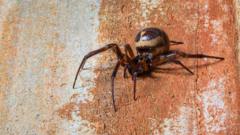
The perception of a "spider bite epidemic" in England is a byproduct of three converging variables: shifting ecological baselines for synanthropic species, a systemic medical diagnostic bias toward arachnid-related causality for skin lesions, and an amplification loop within digital media. While the absolute frequency of spider bites remains statistically negligible relative to other dermatological emergencies, the relative presence of specific species—notably the Noble False Widow (Steatoda nobilis)—has fundamentally altered the urban biological risk profile.
To understand the trajectory of these incidents, one must move beyond anecdotal reporting and analyze the structural drivers of spider-human interactions.
The Triad of Arachnid Proliferation
The expansion of spider populations in England, specifically those capable of piercing human skin, is governed by a specific set of environmental and logistical constraints. The growth is not a random occurrence but a function of the following pillars:
1. Thermal Niche Expansion
Climate shifts have facilitated the permanent establishment of Mediterranean and Macaronesian species. The Steatoda nobilis, first recorded in Torquay in the late 19th century, was historically restricted by frost lines. Current temperature models show a northward migration of the 5°C winter isotherm, allowing these spiders to survive year-round across most of Southern England and the Midlands. This increases the probability of human-spider proximity within domestic structures where these spiders seek thermal refuge.
2. Urban Symbiosis and Infrastructure
Spiders are not invading; they are occupying optimized niches. The modern English home provides a high-density environment for prey (such as flies and moths) and structural complexity for web-building. The Noble False Widow is highly synanthropic, meaning it thrives in human-made environments. The expansion of suburban housing developments creates a fragmented yet connected network of habitats that allow for rapid colonization via "ballooning" (aerial dispersal) and accidental human transport.
3. Prey Availability and Ecological Competitors
Changes in local biodiversity often leave ecological voids. As native spider populations face pressure from habitat loss or pesticide use in specific regions, the more resilient and adaptable Steatoda species often fill these gaps. Their high reproductive rate and generalist diet give them a competitive advantage in disturbed urban ecosystems.
The Diagnostic Gap: Why Bites are Over-Reported
A critical disconnect exists between clinical presentation and biological confirmation. In the vast majority of cases where a patient presents with a necrotic or inflamed lesion attributed to a spider, the spider was never seen, captured, or identified.
The Default Diagnosis Trap
Medical practitioners often use "spider bite" as a wastebasket diagnosis for unexplained skin lesions. This creates a feedback loop where public health data becomes skewed. Research indicates that the majority of supposed spider bites are actually:
- Staphylococcal infections: Specifically Methicillin-resistant Staphylococcus aureus (MRSA), which mimics the necrotic center of a bite.
- Lyme Disease: The early-stage bullseye rash (erythema migrans) is frequently misidentified by the patient as a bite.
- Other Arthropods: Ticks, fleas, and bedbugs are significantly more likely to bite humans for sustenance, whereas spiders only bite defensively when pressed against the skin.
The Mechanism of Envenomation
Human skin is a formidable barrier. Most of the 650 spider species in the UK lack the cheliceral strength to penetrate the epidermis. Only about 12 species possess the hardware to deliver venom to a human. The Steatoda nobilis produces a venom containing alpha-latrotoxins, similar to the true Black Widow but significantly less potent. The physiological response is generally limited to local pain, erythema, and occasionally mild systemic symptoms like lethargy or nausea. Severe complications are almost universally the result of secondary bacterial infections introduced through scratching the site, rather than the venom itself.
Quantifying the Risk: False Widows vs. Native Species
To assess the threat level, one must categorize the spiders based on their actual capacity for harm. The risk is often misallocated in public consciousness.
The Steatoda Complex
The Steatoda nobilis (Noble False Widow), Steatoda grossa, and Steatoda bipunctata represent the primary concern. They are nocturnal and reclusive. Bites typically occur when a spider is trapped in clothing or bedding. The venom's primary function is paralyzing insects; in humans, the effect is comparable to a wasp sting.
Native Heavyweights
The Giant House Spider (Eratigena group) and the Tube Web Spider (Segestria florentina) are also capable of biting. The latter, identifiable by its iridescent green fangs, has become increasingly common in coastal towns and London. While their bite is painful, they lack the specific neurotoxins found in the Steatoda genus that cause prolonged discomfort.
Psychological Amplification and Media Mechanics
The "rise" in spider bites is as much a sociological phenomenon as a biological one. The mechanism of viral information distribution creates a distorted perception of risk. A single case of a secondary infection requiring surgery—often labeled "flesh-eating" by tabloids—generates thousands of digital impressions. This creates a cognitive bias known as the Availability Heuristic, where people judge the probability of an event based on how easily examples come to mind.
When a person finds a lesion, they search for "spider bite England." The search results prioritize sensationalist stories, leading the individual to self-diagnose. This self-diagnosis is then reported to a GP, who may subconsciously validate the patient's concern, further inflating the perceived statistics.
Strategic Mitigation and Household Management
Addressing the presence of spiders requires an integrated pest management approach rather than chemical saturation. Arachnicides are often ineffective because spiders do not groom themselves like insects, meaning they do not ingest the poison, and their long legs keep their bodies away from treated surfaces.
Physical Exclusion
The primary defense is the reduction of entry points. This involves:
- Sealing gaps around window frames and doors using silicone-based sealants.
- Installing fine-mesh screens on air bricks and vents.
- Removing heavy vegetation (like ivy) from the exterior walls of the home, which acts as a ladder for climbing species.
Habitat Manipulation
Spiders follow food. Reducing interior lighting at night decreases the number of phototropic insects drawn to the house, thereby reducing the spiders' food source. Clearing clutter in garages, sheds, and attics removes the secluded, dark voids required for web construction.
Professional Identification
In the event of a suspected bite, the immediate priority is not medical intervention but specimen recovery. If the spider can be safely captured or photographed, an arachnologist can confirm the species. This information is vital for medical professionals to rule out more serious conditions. If a lesion exhibits rapid spreading, red streaks, or is accompanied by a fever, the focus should shift immediately to treating a potential bacterial infection.
The reality of arachnology in England is a shift toward a more diverse, Mediterranean-influenced ecosystem. While the presence of venomous spiders is increasing in a literal sense, the danger they pose remains low. The challenge for the coming decade is not an "invasion" of spiders, but the calibration of public health responses and media literacy to match the actual biological risk.
Individuals should prioritize the "Capture and Identify" protocol over the "Panic and Self-Diagnose" cycle. Management of the domestic environment through structural sealing remains the most effective deterrent against the rising synanthropic spider populations. As urban environments continue to warm, the integration of arachnid-aware architecture and public education will be the only sustainable way to manage the human-spider interface.