The operational matrix of modern asymmetric warfare contains a structural distortion: the asymmetric cost curve of low-cost unmanned aerial systems (UAS) versus high-cost kinetic interceptors. While a precision-guided loitering munition or first-person view (FPV) strike drone can be assembled for less than $1,000, the baseline cost of a kinetic defense missile ranges from $40,000 to over $1 million per engagement. In high-intensity conflict zones, this math creates an economic depletion bottleneck, where defense architectures risk bankruptcy through successful attrition.
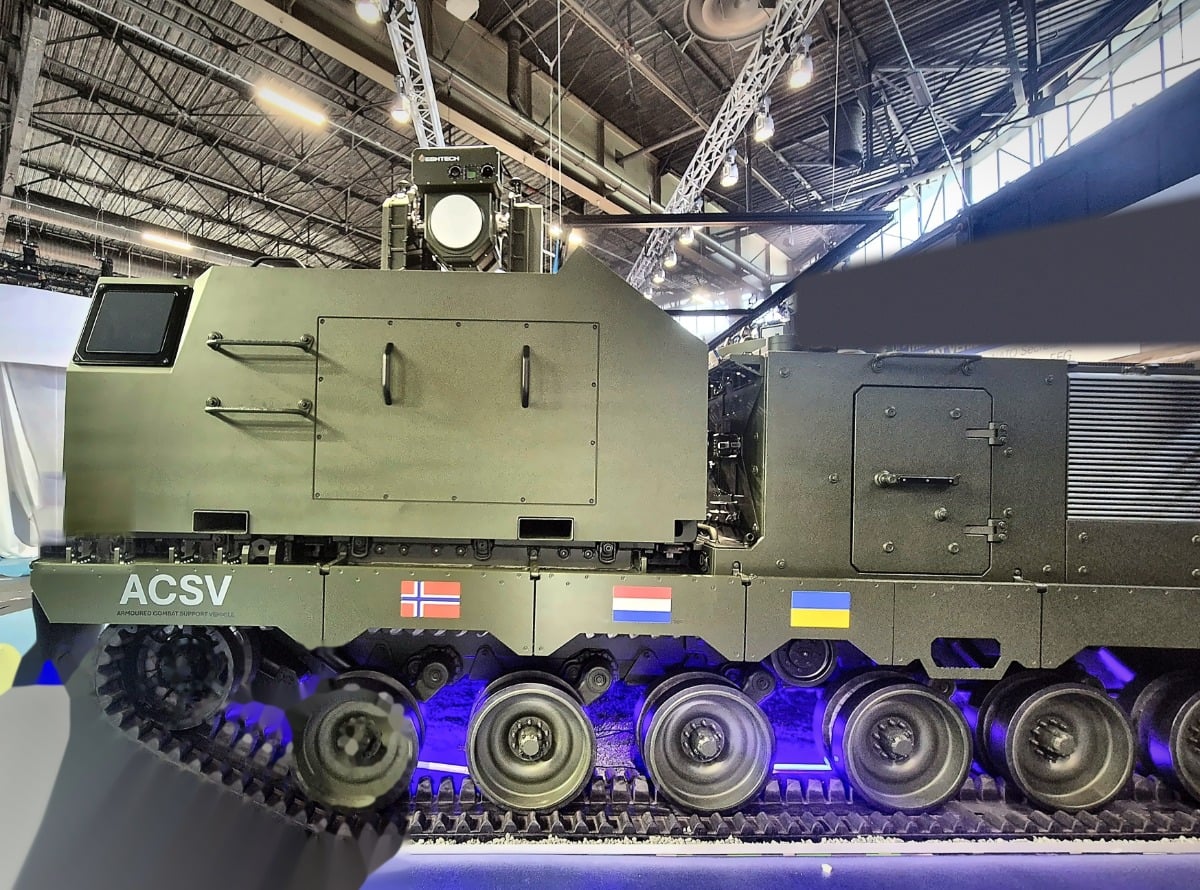
The entry of Esh-Tech’s $18 million funding round to scale its DroneLight pulsed-laser counter-UAS (C-UAS) system points directly to the commercial inflection point of a technical alternative: transitioning from continuous wave (CW) lasers to pulsed thermal shock mechanics.
The Architectural Limits of Continuous Wave Systems
To understand the operational disruption of pulsed laser systems, the limitations of traditional High-Energy Laser (HEL) architectures must first be quantified. Standard directed-energy programs, such as the 100-kilowatt (kW) continuous wave architectures, operate on a thermal accumulation model.
Thermal Blooming and Atmospheric Extinction
A CW laser continuously projects a high-energy photon stream onto a single coordinate of an incoming target. The defensive mechanism relies on melting through the target's outer skin or igniting onboard fuel and lithium-polymer batteries. This approach introduces two primary operational liabilities:
- Extended Time-on-Target (ToT): A CW system must dwell on a precise point for several seconds to transfer sufficient thermal energy ($J/cm^2$) to cause structural failure.
- Atmospheric Thermal Blooming: As a continuous high-energy beam travels through air, the atmosphere absorbs a fraction of the optical energy. This warms the air molecules, creating a localized low-density lens that defocusses the beam, scattering its energy and expanding the spot size on the target.
This dwelling requirement degrades capability when facing multi-directional swarms. If an engagement takes three to five seconds per drone, a single CW laser turret is mathematically capped at neutralizing roughly 12 to 20 targets per minute under ideal conditions.
The Mechanics of Pulsed Thermal Shock
Pulsed-laser technology alters the engagement model by trading sustained thermal accumulation for sudden kinetic ablation. Rather than projecting a continuous stream of light, the architecture compresses high optical energy into exceptionally short time intervals.
Continuous Wave (CW) Laser:
[======================= Sustained Thermal Heat =======================] -> Target Melts

Pulsed Laser (DroneLight):
[|||] -> 10ms Pulse (Mechanical Ablation / Drilling Action)             -> Target Structurally Fails
The system operates on a 5 Hz pulse repetition frequency (PRF), meaning it emits five distinct pulses per second. Each individual pulse lasts only 10 milliseconds. Within this brief window, the instantaneous peak power density is sufficient to induce vaporization of the target's surface material. This process, known as material ablation, generates an explosive miniature plasma plume that mechanically drills through the target's structure.
This ablation mechanism introduces three engineering advantages:
- Reduced Average Power Demand: Because the laser is active for only 50 milliseconds out of every second—a 5% operational duty cycle—the aggregate energy consumption drops compared to a 20+ kW CW system.
- Mitigation of Atmospheric Defocusing: The 10-millisecond pulse duration is shorter than the time required for thermal blooming to manifest in the ambient air path.
- Decreased Stabilization Tolerances: Because the destructive energy is delivered almost instantly, the tracking and gimbal stabilization requirements relax. The turret does not need to maintain millimeter-level tracking on a violently maneuvering FPV drone for multiple seconds; it needs only to align during the ultra-short pulse window.
The Engagement Capacity Function
The ultimate metric governing tactical air defense is throughput—the number of simultaneous or rapid-succession threats an interceptor can neutralize within a specified window. The operational envelope of a pulsed-laser system yields a significantly higher saturation threshold than CW counterparts.
With a tactical defensive radius optimized for a 1-kilometer safety bubble, the system matches tracking capabilities with fast-cycling engagement windows. The tracking mounts operate at an angular speed of 120 degrees per second with an acceleration rate of 60 degrees per second squared. Combined with a total target destruction time of one to two seconds, the calculated engagement throughput reaches approximately 30 drones per minute.
Atmospheric Gating via High-Frequency Feedback
To maximize energy transmission efficiency through changing atmospheric conditions, the system integrates a 1,000 frames-per-second (fps) closed-loop optical tracking sensor. This camera feeds raw image data into edge-compute algorithms that calculate real-time atmospheric micro-turbulence and density fluctuations.
The system utilizes this data as an atmospheric gate. While the pulse duration remains fixed at 10 milliseconds, the firing controller can dynamically introduce micro-delays—up to 50 or 60 milliseconds between pulses—to align the energy release with temporary windows of high atmospheric clarity. This real-time optimization yields up to a 50% improvement in energy density delivery at maximum range, mitigating performance drops caused by mist, smoke, or dust.
Capital Inversion and Scale Bottlenecks
The $18 million funding round led by Kinetica Partners highlights a strategic shift toward lower-capital tactical manufacturing. Directed energy systems historically required massive defense prime capitalization due to complex chemical or fiber-laser architectures. By shifting the complexity from exotic raw material cooling structures to high-speed software gating and standard optical components, the unit production cost drops.
The capital allocation strategy for this manufacturing scale-up faces two distinct friction points:
- Optical Component Supply Chains: High-power pulsed optics require specialized coatings capable of enduring extreme peak energy thresholds without suffering catastrophic optical damage. Scaling production requires secure access to precise glass fabrication and coating facilities.
- Sensor Boresight Calibration: The design integrates both the tracking optics and the laser emitter through a single 300 mm diameter optical aperture. While this removes mechanical alignment errors and simplifies vehicle integration, assembling a coaxially aligned optical path demands high-precision manufacturing environments.
The Tactical Integration Framework
Laser systems do not operate in isolation. Active combat theaters require a multi-layered sensor feed to defeat low-altitude, low-radar-cross-section threats. The system functions as an open effector node, accepting target cues from external radar, acoustic arrays, or passive radio-frequency (RF) direction finders.
The primary operational constraint remains line-of-sight dependency. A laser cannot bend over terrain features, buildings, or dense vegetation. Therefore, the strategic application of pulsed-laser C-UAS requires deployment on elevated masts for static perimeter defense or installation directly onto mechanized vehicle platforms to provide mobile defense bubbles for maneuvering forces.
The short-range, rapid-pulse effector fills the inner defensive layer. It addresses the micro-UAS threats that penetrate the longer-range envelopes of continuous wave systems like Rafael's 100 kW Iron Beam or traditional kinetic interceptors, establishing a predictable, flat-cost mechanism for handling high-volume threat profiles.