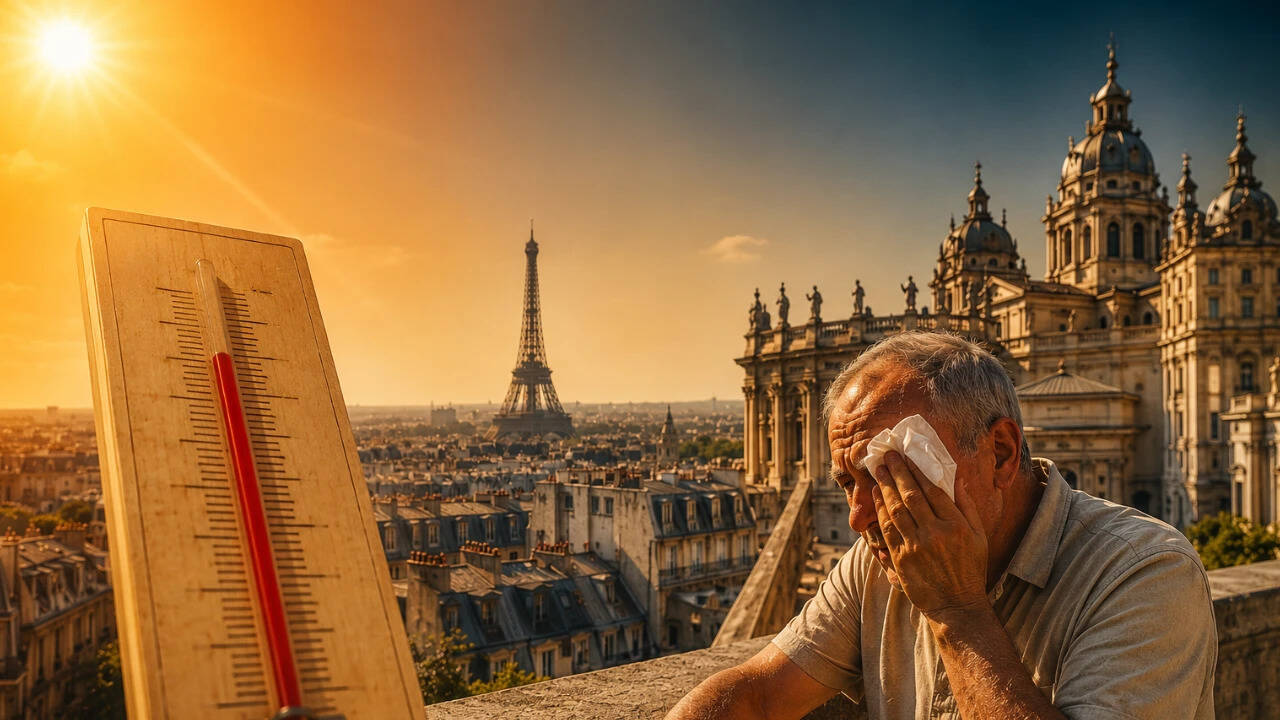
Europe is trapping its own people in ovens. That sounds dramatic, but if you walked through Madrid, Paris, or Frankfurt during recent summers, you know it's the truth. For centuries, European architecture had one main job. Keep the heat in. Builders used thick stone walls, small windows, and steep roofs designed to shed snow and trap every single scrap of warmth. It worked brilliantly for a long time.
Now, that exact design is a liability.
As temperatures routinely cross the 40°C mark across the continent, the built environment is working against the population. The bricks, concrete, and asphalt absorb the blistering daytime sun and radiate it back out all night. This is the urban heat island effect in action, and Europe is uniquely unprepared for it. Air conditioning is rare, power grids are fragile, and the classic European apartment has become a trap.
The Flaw in Old World Engineering
We love European charm. The narrow streets, the historic brick buildings, the cozy top-floor apartments. But from a climate perspective, these structures are failing.
Thick masonry walls have high thermal mass. That means they take a long time to heat up, but once they do, they hold onto that energy for hours. During a prolonged heatwave, buildings never cool down. The indoor temperature stays dangerously high right through the night, preventing the human body from recovering from daytime heat stress.
Data from the European Environment Agency shows that heatwaves are the deadliest natural disasters on the continent. In 2022 alone, intense heat caused over 60,000 excess deaths in Europe. The majority of these deaths happened indoors, inside homes that were supposed to protect their occupants.
Top-floor apartments, often called chambres de bonne in Paris, are notoriously dangerous. They sit right under zinc or slate roofs that bake in the sun, turning tiny living spaces into literal saunas.
Then there is the glass problem. Modern European office districts, like Canary Wharf in London or the European Quarter in Brussels, love glass facades. Without massive, energy-intensive cooling systems, these buildings turn into greenhouses.
The Air Conditioning Catch-22
Walk down a street in New York, Tokyo, or Dubai in July. You will hear the constant hum of air conditioning compressors. Walk down a street in Berlin or Amsterdam, and you will hear silence, broken only by the occasional weak whir of a plastic desk fan.
Historically, air conditioning was seen as an American luxury or an unnecessary expense in Europe. Less than 10% of European households have AC, compared to over 90% in the United States. Changing this isn't as simple as buying a unit at the local hardware store.
First, many European electrical grids can't handle the sudden surge in demand. When everyone turns on an AC unit at the same time, transformers blow.
Second, historical preservation laws make retrofitting old buildings incredibly difficult. You can't just drill a hole through a 400-year-old protected facade to hang a metal compressor box outside your window.
Third, AC units dump heat outside. On a narrow medieval street, thousands of AC units pumping hot air into the alleyways would raise the outdoor sidewalk temperature by several degrees, making life even worse for pedestrians and anyone without cooling.
It is a vicious cycle. We pump heat out of our rooms to survive, which makes our cities hotter, requiring even more power.
Shifting From Grey to Green Infrastructure
If mechanical cooling isn't a quick fix, what is? The answer lies in changing the fabric of the cities themselves. We need to move away from "grey" infrastructure like concrete and asphalt, and lean heavily into "green" and "blue" infrastructure.
Trees are the most effective cooling technology we have. They don't just provide shade; they actively cool the air through a process called evapotranspiration. A mature tree transpires hundreds of liters of water a day, acting like a natural evaporative cooler.
Look at Vienna. The city has been aggressively planting trees and installing "cool straight alleys" where misting systems and light-colored pavements lower local temperatures by up to 5°C.
Paris is trying to transform its famous asphalt schoolyards into "oases" with porous soil, vegetation, and water features. The goal is to create a network of cool islands across the city that residents can reach within a five-minute walk.
We also need to change the color of our roofs. Dark slate and zinc absorb up to 90% of solar energy. Painting roofs white or covering them with living green plants reflects that energy back into space. It's a cheap, low-tech solution that yields massive results.
Surviving the New Normal
The climate has shifted permanently, and European lifestyle habits have to change along with the infrastructure. The traditional southern European tradition of the siesta isn't about laziness; it's a survival mechanism. Coping with 40°C requires a complete rethink of how we use our homes and manage our days.
If you are living in a building designed for the winter, you have to actively manage its temperature manually.
Keep windows completely sealed and shuttered from the moment the sun hits your building until it goes down. Only open them late at night when the outside air is cooler than the indoor air. Use heavy, light-colored curtains or external blinds to bounce sunlight away before it passes through the glass.
Ditch the rugs and heavy textiles for the summer months to let bare floors absorb excess indoor heat.
Local governments must invest in public cooling centers, retrofit public transport with reliable cooling systems, and loosen red tape around exterior building modifications like external shutters and solar shading. The alternative is a seasonal health crisis that overwhelms hospitals every single summer. Europe was built to keep the cold out, but the new battle is keeping the heat from breaking in.


