Brussels is finally waking up to the reality that it cannot build a green future on Chinese goodwill. With Beijing tightening its grip on heavy rare earth exports, European Union officials are scrambling across the Atlantic to secure alternative supplies. The latest battlefield is Brazil, a nation sitting on roughly 21 million tonnes of rare earth reserves—about 23% of the entire global supply.
But Europe isn't the only suitor knocking on Brasília's door. Both Washington and Beijing have spent years trying to lock down South American mineral assets. To cut through the noise, the EU is pitching what it calls a "more beneficial" deal. It's a calculated gamble that relies less on raw cash and more on appealing to Brazil's deep-seated desire to stop being just another resource colony for global superpowers.
Shifting the Extraction Model
For decades, the standard playbook for Western and Chinese mining companies in Latin America has been simple: dig up the dirt, throw it on a ship, and process it elsewhere. That leaves the host country with environmental scars, minimal job creation, and tiny profit margins.
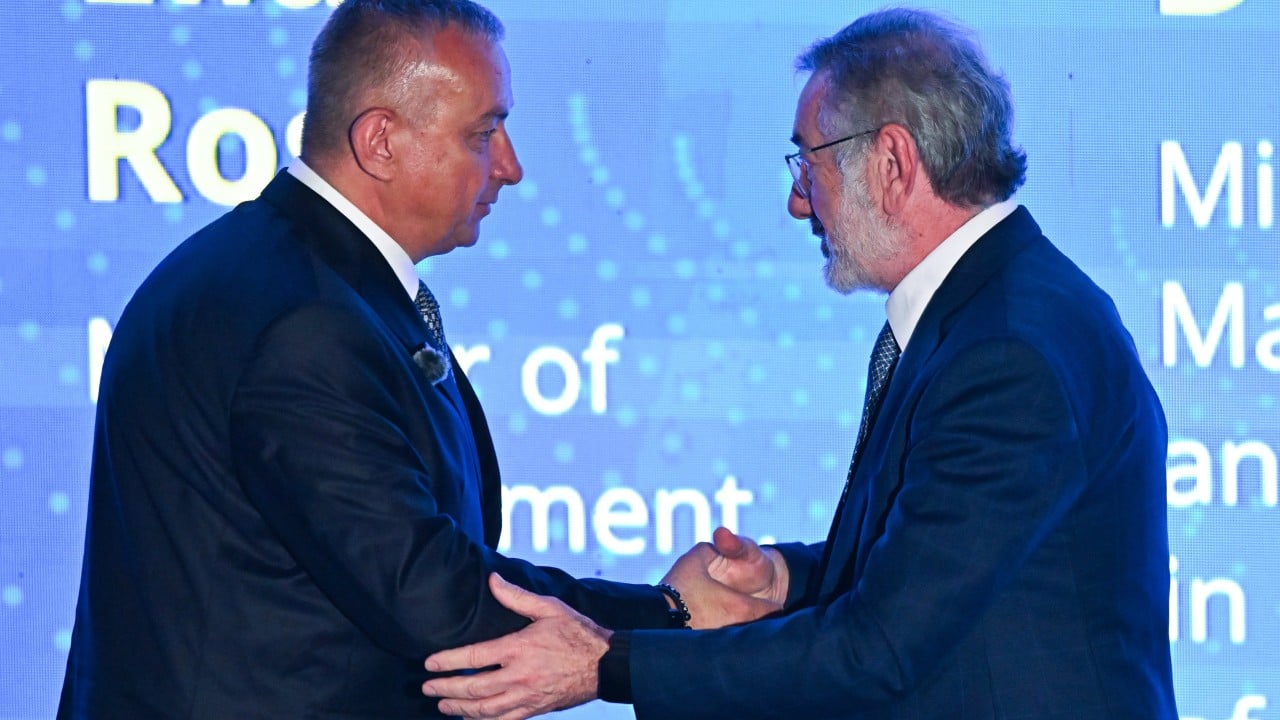
Europe's new strategy, spearheaded by EU Commissioner for International Partnerships Jozef Síkela during his mid-2026 tour of Brazil, seeks to flip that dynamic. The EU is offering to finance and build domestic processing and refining infrastructure right inside Brazilian borders. It's an approach that directly addresses the core demands of President Luiz Inácio Lula da Silva's administration, which has insisted that any future mineral deals must foster local industrialization.
The numbers back up why this shift is happening now. The European Court of Auditors recently revealed that Europe's current domestic processing capacity for lithium and rare earths sits at a clean zero percent. Under the 2024 Critical Raw Materials Act, the EU wants to process 40% of its strategic materials internally by 2030. Realizing that building factories at home is moving too slowly, Brussels is pivoting to "greenshoring"—moving energy-intensive refining to countries like Brazil, where the local power grid is already heavily backed by clean, renewable energy.
The Boots on the Ground in Minas Gerais
This isn't a theoretical policy paper. The concrete reality of Europe's push is visible in the Poços de Caldas region of Minas Gerais. Here, an Australian firm called Viridis Mining and Minerals is developing the Colossus rare earth project.
Viridis Mining (Colossus Project) Target Output
|— Current Pilot Phase: 100 kg of ore processed per hour
|— Planned Commercial Facility (2028 Target): 15,000 tons of MREC per year
|— Total Estimated Investment: $360 million
Viridis recently signed a letter of intent with Belgian chemical giant Solvay to supply mixed rare earth carbonate (MREC). Crucially, Viridis executives opted to build their new research and processing facility locally, aiming to bypass Chinese value chains entirely.
The geology of these deposits gives Brazil a massive competitive edge. Unlike the hard-rock mining typical in other regions, Brazil’s reserves are largely ionic clay deposits. They contain highly sought-after heavy rare earths—like neodymium, praseodymium, terbium, and dysprosium—which are vital for electric vehicle motors, wind turbines, and defense hardware. Ionic clays are easier to mine and require significantly less energy and chemical processing to extract than hard rock.
A Soft Power Play Against Hard Cash
Brussels knows it can't outspend the US or China in a pure bidding war. Washington has already deployed billions through government agencies to help American firms buy up strategic assets, such as the Serra Verde ionic clay mine. Meanwhile, China remains Brazil's largest overall trading partner, buying up massive quantities of iron ore and agricultural products.
To compete, the EU is leaning heavily on regulatory and legal frameworks to win long-term trust. The provisional entry into force of the long-awaited EU-Mercosur trade agreement has given European companies a powerful tool.
Unlike the volatile, transactional approach often associated with competing superpowers, the EU framework locks in specific legal protections that matter to a developing economy:
- Ban on Tariff Escalation: The agreement eliminates the practice of placing higher import tariffs on processed goods than on raw materials, making it financially viable for Brazil to export high-margin refined products to Europe.
- Industrial Policy Carve-Outs: Brazil retains the right to apply export restrictions or taxes on critical minerals when necessary to protect its domestic manufacturing sector.
- Environmental Safeguards: Aligning with European corporate responsibility standards gives local communities leverage against the wild-west environmental degradation often seen in unregulated mining booms.
Moving Beyond Raw Commodities
Brazil's leadership isn't naive. Lula openly states that Brazil has no permanent preferences and welcomes anyone willing to invest in local processing. The country's congress is actively pushing bill PL2780 to establish a National Policy for Critical and Strategic Minerals, setting up formal mechanisms to ensure the country isn't taken advantage of.
For European manufacturers, the clock is ticking. China’s decision to expand export controls on heavy rare earths and magnets means European tech and defense firms are exposed to sudden supply cutoffs.
If you're managing a supply chain or investing in the green tech sector, the next step isn't waiting for these state-level memorandums to fill your inventory. Diversifying away from single-source dependencies means actively tracking projects that are successfully building processing capacity outside of Asia. Watch the progress of the commercial facilities in Minas Gerais over the next 24 months. Their ability to hit commercial scale by 2028 will dictate whether Europe’s alternative supply chain is a viable business reality or just a well-intentioned political pitch.
An investigative report on the environmental and social challenges facing Brazil's surging mineral sector can be seen in this analysis of Brazil's lithium and rare earth rush, which highlights the delicate balance between rapid industrial expansion and local community safeguards.