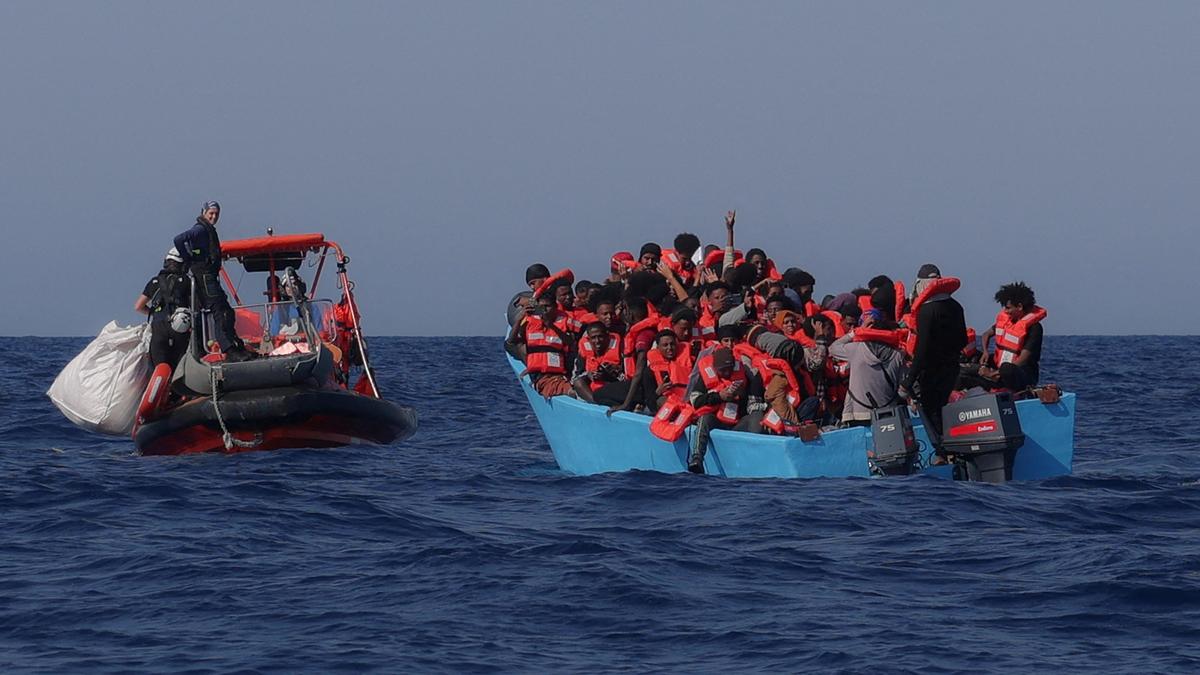
The UN recently dropped a bombshell: 7,900 people died or disappeared on migration routes in 2025. The headlines did exactly what they were designed to do. They triggered a wave of digital mourning, a few "thoughts and prayers" from Brussels, and a fresh round of funding requests for NGOs.
But here is the truth that makes everyone uncomfortable: These numbers are a distraction. They are the ultimate "lazy consensus" metric. By focusing on the body count at the border, we are ignoring the structural machinery that makes these deaths inevitable. We treat these tragedies like natural disasters—unpredictable storms that just happen—rather than the predictable output of a broken global labor market and a fossilized visa system.
Stop looking at the 7,900 as a tragedy of "illegal migration." Start looking at it as a massive, violent failure of supply and demand.
The Myth of the "Tragic Accident"
International agencies love to frame these deaths as "unforeseeable tragedies." They aren't. If you close every legal door and leave a window open on the third floor, you don't get to act surprised when people fall trying to climb the siding.
The current migration "landscape"—to use a word I actually despise—is essentially a black market created by bad policy. When the price of a legal visa is "impossible" and the price of a smuggler is $5,000, the market doesn't disappear. It just moves to the shadows.
Every time a politician talks about "securing borders" without mentioning "expanding work permits," they are effectively signing the death warrants for the next thousand people. We are operating on a 1950s understanding of borders in a 2026 reality of global connectivity.
The Data Trap: Why Counting Doesn't Help
The UN's Missing Migrants Project does noble work, but data without a directive is just noise. Highlighting that 7,900 people died serves a specific political purpose: it fuels the "crisis" narrative.
When we call migration a "crisis," we authorize "emergency measures." Emergency measures usually involve more fences, more drones, and more naval blockades. Paradoxically, the more "secure" we make a border, the more dangerous the routes become.
I’ve seen this play out in boardrooms and government offices for a decade. If a shipping company loses 5% of its cargo to shipwrecks, they don't just keep counting the boxes; they change the route or the ship. In migration, we just keep counting the boxes and blaming the ocean.
The Smuggler is a Symptom, Not the Disease
The standard villain in the 7,900-death narrative is the "vile human smuggler." It’s an easy sell. Smugglers are often brutal, exploitative, and indifferent to life.
But smugglers are service providers. They exist because there is a massive gap between the desire to move and the legal ability to do so. They are the "unauthorized travel agents" of the world’s poor.
If you want to put smugglers out of business, you don't need more gunboats in the Mediterranean. You need a functional, low-cost visa application for seasonal labor. If a young man from Senegal could apply for a $200 work permit on his phone, he wouldn't pay $3,000 to sit in a leaking rubber dinghy.
The "vile smuggler" narrative is a convenient shield for Western governments. It allows them to outsource the violence of border enforcement to criminals and then wash their hands of the results.
The Economic Delusion of "Stay at Home"
A common response to these death tolls is the push for "addressing root causes." This is usually code for throwing a few million dollars at agricultural projects in the Global South and telling people to "stay at home and build your country."
This is economically illiterate.
Development actually increases migration in the short to medium term. As people get a little bit more money, they finally have the capital to afford the journey. Migration isn't a sign of failure; it’s a sign of aspiration.
By framing migration as something that needs to be "stopped" by fixing poverty, we ignore the fact that the aging populations of Europe and East Asia desperately need these people. We are literally watching people die in the sea while our nursing homes and construction sites face labor shortages that threaten to collapse the economy.
Stop Asking "How Do We Stop Them?"
The premise of the question is flawed. You cannot stop the movement of people in an age of instant communication and massive wealth inequality. It is like trying to stop the tide with a bucket.
The real question is: "How do we make this movement safe and taxable?"
The current system is the worst of all worlds. It is:
- Deadly for the migrant.
- Expensive for the taxpayer.
- Profitable for organized crime.
- Inefficient for the labor market.
The Logic of the Open Window
Imagine a scenario where we treated migration like we treat any other high-demand commodity. We don't try to "stop" the demand for iPhones; we regulate the supply chain.
If we replaced the billions spent on Frontex and border walls with a robust system of regional processing centers, the 7,900 figure would drop to nearly zero overnight. People die because they are forced into the shadows. In the light, there are safety standards, manifestos, and accountability.
The contrarian truth is that the "humane" people who want to "send aid" and the "tough" people who want to "build walls" are both wrong. They both start from the assumption that migration is a problem to be solved rather than a reality to be managed.
The Professional Grief Industry
There is a whole ecosystem that lives off these 7,900 deaths. NGOs need the tragedy for fundraising. Media outlets need the photos for clicks. Politicians need the "crisis" to scare or rally their base.
None of these stakeholders have a real incentive to fix the underlying system because the "fix" involves a loss of control. It involves admitting that the nation-state’s ability to fully control its borders is a myth.
We have built a global economy that depends on the cheap labor of people we refuse to recognize as legal entities. That dissonance is what killed those 7,900 people.
The Brutal Reality of Choice
We like to think of migrants as "vulnerable victims" with no agency. This is a patronizing lie. The people making these journeys are often the most driven, risk-tolerant, and entrepreneurial members of their communities.
They know the risks. They know the 7,900 figure. And they go anyway.
Why? Because the "risk of staying" (poverty, lack of future, climate collapse) is weighed against the "risk of going." For thousands, the math still favors the boat.
If you want to honor the 7,900 who died in 2025, stop crying about the statistics. Stop blaming the smugglers. Stop calling it a crisis.
Admit that the border is an artificial barrier to a natural economic force. Until the legal pathways match the economic reality, the sea will keep taking its cut.
Stop trying to save the world with empathy and start trying to fix it with an Excel sheet and a dose of honesty.
Accept that the current system is not broken—it is performing exactly as designed. It is designed to keep the "wrong" people out at any cost, and 7,900 lives is simply the price we have decided we are willing to pay for the illusion of control.