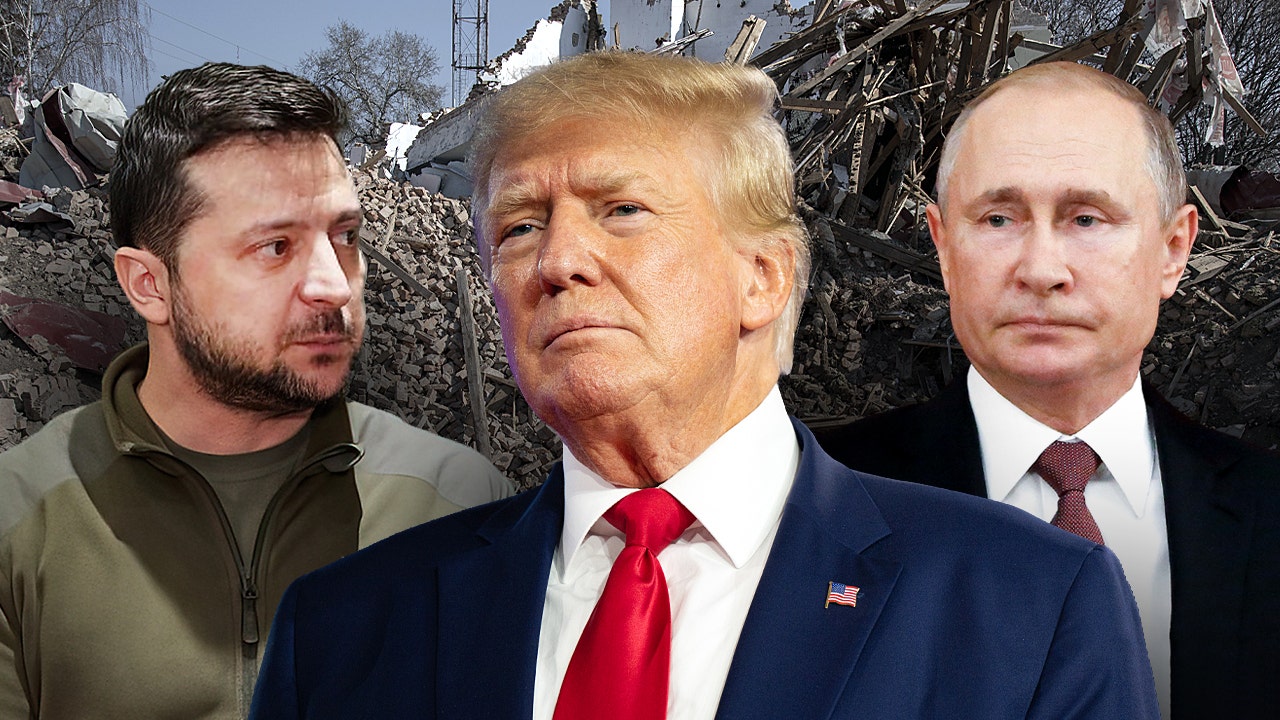
The sequential sequencing of superpower summits in Beijing reveals the underlying structural mechanics of contemporary multipolar diplomacy. Russian President Vladimir Putin’s two-day state visit to China on May 19, arriving less than 48 hours after U.S. President Donald Trump concluded his first bilateral meetings in China in nearly a decade, is not an accident of scheduling. It is a calculated diplomatic counterweight. The timing illustrates an ongoing geopolitical arbitrage strategy by Beijing, which positions itself as the primary clearinghouse for global economic and security settlements. While media analysis often reduces these interactions to symbolic optics, a rigorous examination reveals a calculated effort by Moscow and Beijing to formalize a parallel international architecture designed to neutralize Western sanctions and manage regional conflicts on their own terms.
Evaluating this summit requires analyzing the specific economic dependencies, security architectures, and strategic constraints operating across the Washington-Beijing-Moscow triangle.
The Triangulation Framework: Asymmetric Interdependence
The sequence of these visits highlights China’s role as the central node in a hub-and-spoke model of international relations. By hosting the United States and Russia back-to-back, Beijing minimizes the risk of a unified opposing front while maximizing its leverage over both parties.
       [United States]
          /       \
  Security         Trade & Debt
 Competing          Tensions
    /               \
[Russia] --------- [China]
     Energy Exports &
     Asymmetric Dependency
The structural drivers of this triangular dynamic can be broken down into three core elements:
- The Tactical Interval: The immediate transition from the Trump-Xi talks to the Putin-Xi summit limits the United States' ability to build momentum from its diplomatic overtures. Beijing effectively resets the geopolitical baseline, signaling to Washington that any bilateral understandings reached with the U.S. remain contingent upon China's broader, "no-limits" strategic commitments to Russia.
- The 2001 Treaty Baseline: The meeting marks the 25th anniversary of the Treaty on Good-Neighbourliness, Friendship and Cooperation. This institutional foundation has evolved from a basic border-settlement pact into a comprehensive framework for joint military exercises, technology sharing, and alternative financial messaging systems.
- The Leverage Differential: Russia enters these talks facing severe economic isolation from European and North American markets due to the protracted war in Ukraine. This asymmetry shifts the terms of trade in China's favor, allowing Beijing to extract long-term concessions regarding energy pricing, infrastructure access, and technology transfers.
The Economic Cost Function: Energy Liquidity vs. Secondary Sanctions
The economic relationship between Moscow and Beijing is anchored in a basic commodity-for-manufactured-goods exchange, yet its operational mechanics are increasingly complex. Russia relies heavily on China to sustain its fiscal balance, while China treats Russia as a critical, overland energy buffer that avoids maritime vulnerabilities like the Malacca Strait.
The Energy Clearinghouse
China remains the world's largest buyer of Russian crude oil and natural gas. This transaction matrix provides the Kremlin with the hard currency inflows required to offset frozen Western assets. However, this trade relationship operates under strict structural constraints:
- Pricing Asymmetry: Russia is forced to sell its ESPO (Eastern Siberia-Pacific Ocean) blend and Power of Siberia gas at a structural discount relative to Brent and Henry Hub benchmarks. Beijing uses its position as the sole viable large-scale buyer to maintain these depressed inputs, directly subsidizing its own industrial sector.
- The Currency Corridor: Bilateral trade has largely shifted away from the SWIFT network and the U.S. dollar, migrating to the Renminbi (RMB) and the Ruble via the Cross-Border Interbank Payment System (CIPS). While this insulates the trade from direct U.S. asset seizures, it locks Russian capital into the Chinese financial ecosystem, as the RMB is not fully convertible on the global capital account.
The Dual-Use Supply Chain Bottleneck
The primary friction point identified during President Trump's preceding visit to Beijing was the transfer of Chinese dual-use technologies—such as microelectronics, machine tools, and nitrocellulose—to Russia's defense industrial base. The strategic calculation for Chinese Premier Li Qiang and President Xi Jinping involves balancing two competing economic risks:
$$\text{Risk}{\text{Total}} = f(\text{Sanctions}{\text{Secondary}}, \text{Market Loss}{\text{Western}}) - f(\text{Resource Security}{\text{Russian}})$$
The threat of secondary U.S. sanctions targeting major Chinese state-owned banks presents a significant risk to China's export-driven economy. If Washington cuts off these institutions from the dollar clearing system, the damage to China's financial system could outweigh the benefits of its trade with Russia. Consequently, Beijing's strategy focuses on decentralizing these trade channels, moving transactions to smaller, regional rural banks that lack international exposure and are therefore immune to U.S. financial leverage.
The Security Architecture: Theater Management and Strategic Deterrence
Beyond economic transactions, the May 19 summit seeks to coordinate policy across two distinct military theaters: Eastern Europe and the Middle East.
The Ukraine-Iran Nexus
The ongoing Russia-Ukraine war and the escalation of the conflict involving Israel and Iran have shifted global security alignments. The U.S.-led attempts to broker a peace framework in Ukraine have stalled, complicated by shifting American foreign policy priorities and Russia's refusal to consider ceasefires without significant territorial concessions from Kyiv.
In this context, the Beijing summit serves to formalize a shared approach to these deadlocks. Russia and China view Western military assistance to Ukraine not as a defensive measure, but as an effort to sustain a Euro-Atlantic security monopoly. By framing Western arms shipments as the primary obstacle to peace, Beijing maintains a position of nominal neutrality while providing Russia with the diplomatic coverage necessary to pursue a war of attrition.
The Taiwan-Hormuz Strategic Trade-Off
A key structural development during the Trump-Xi talks was Beijing’s explicit warning that mismanaging the Taiwan issue could lead to direct conflict. President Trump's subsequent hesitation regarding a major arms package for Taipei highlights how China uses regional flashpoints to influence U.S. policy.
During the subsequent meeting with Putin, this leverage is internalized. Moscow consistently supports Beijing's position on Taiwan in exchange for China's continued diplomatic shielding at the United Nations Security Council. This creates a dual-theater challenge for Washington:
- Indo-Pacific Theater: The United States must maintain a credible deterrent stance in the Taiwan Strait and South China Sea amid rising regional tensions.
- Middle Eastern/European Theater: Simultaneously, U.S. resources are strained by ongoing security commitments in Eastern Europe and efforts to keep critical maritime corridors, like the Strait of Hormuz, open to international shipping.
Strategic Limitations of the Sino-Russian Alignment
While the summit emphasizes a unified front, the partnership faces real institutional limits. This alignment is a marriage of convenience based on shared opposition to Western primacy, rather than a formal military alliance built on shared institutional values.
First, a deep-seated historical mistrust persists regarding regional influence in Central Asia. As Russia's focus is occupied by its military campaigns in Ukraine, China has expanded its economic influence into former Soviet republics through infrastructure investments and the development of alternative trade corridors that bypass Russian territory.
Second, China’s global economic integration limits its willingness to fully back Russia's geopolitical aims. China’s economic model depends on access to consumer markets in the United States and the European Union. Beijing will support Moscow only up to the point where it threatens to trigger broad, systemic Western sanctions against its own core industries.
Finally, the limits of their financial cooperation are evident in the delayed progress of major infrastructure projects, such as the Power of Siberia 2 pipeline. Negotiations have slowed because Beijing refuses to fund the construction costs entirely and demands pricing parity with domestic, subsidized Chinese energy markets—terms that Moscow has so far resisted.
The Strategic Outlook
The joint declaration scheduled for the conclusion of the May 19 state visit will likely emphasize alternative frameworks for global governance, citing the expanded BRICS bloc and the Shanghai Cooperation Organisation (SCO) as preferred venues for international dispute resolution.
For corporate strategists and geopolitical analysts, the takeaway from this back-to-back summitry is clear: do not mistake tactical flexibility for a shift in long-term strategy. China's willingness to host President Trump does not signal a break with Russia, nor does its meeting with President Putin imply a total disregard for stable trade relations with the West. Instead, Beijing is executing a balancing strategy designed to extract economic concessions from a isolated Russia while maintaining a stable trade relationship with the United States.
The definitive outcome of this summit will not be a sudden military pact, but a steady expansion of non-dollar financial infrastructure and specialized supply chains designed to withstand Western economic pressure. Organizations must prepare for a permanently bifurcated global trade environment, where compliance architectures must account for two distinct, parallel financial and technological ecosystems.