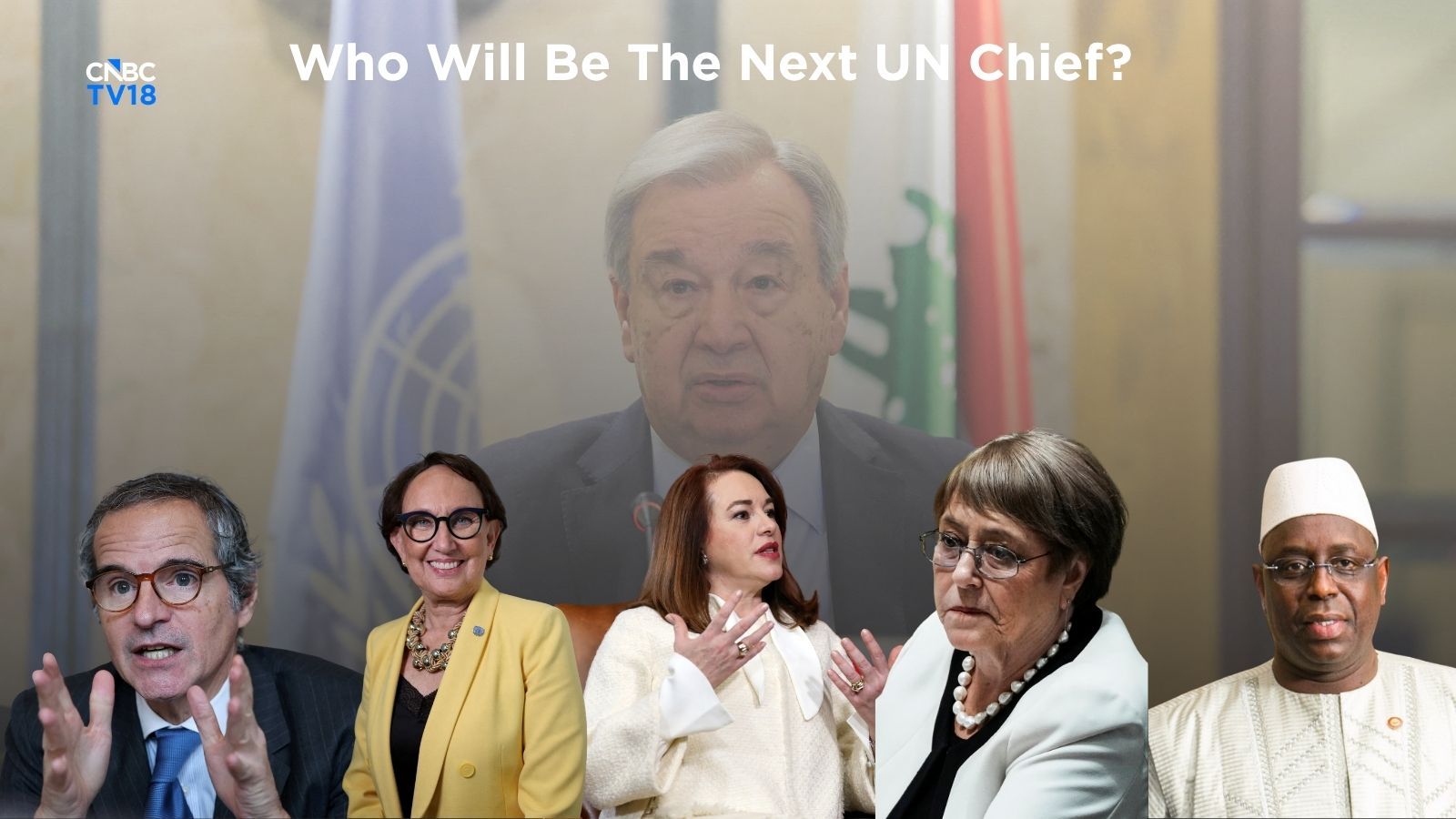
The selection of the United Nations Secretary-General (UNSG) is not a democratic election but a high-stakes exercise in veto-alignment and regional rotation. As António Guterres nears the end of his second term on December 31, 2026, the international community enters a period of structural maneuvering where the "most impossible job in the world" becomes the centerpiece of a friction-filled transition. The process is governed by Article 97 of the UN Charter, creating a power bottleneck where the five permanent members of the Security Council (P5) hold absolute gatekeeping authority before the General Assembly performs its ratifying vote.
The Institutional Constraints of Selection
The selection process is defined by three rigid, albeit informal, variables: regional rotation, gender equity pressure, and the "Least Objectionable Candidate" (LOC) principle.
- Regional Rotation Dynamics: Traditionally, the office rotates among the UN’s five regional groups. While not a codified law, the Latin American and Caribbean Group (GRULAC) and the Eastern European Group (EEG) currently hold the strongest claims. Eastern Europe is the only region that has never held the post, yet the current geopolitical schism—specifically the ongoing conflict in Ukraine—makes a consensus candidate from this bloc statistically improbable. Any candidate perceived as too aligned with NATO will face a Russian veto, while any candidate seen as a Moscow sympathizer will be blocked by the US, UK, and France.
- The Gender Equity Mandate: There is a surging institutional momentum to appoint the first female Secretary-General in the organization’s 80-year history. Of the 13 candidates who ran in 2016, seven were women, yet Guterres emerged as the victor. For 2026, the "Group of Friends for a Woman Secretary-General" has already begun mobilizing. This creates a filtered candidate pool where qualified male candidates may find their path structurally blocked regardless of merit.
- The Veto Power Bottleneck: The P5 (China, France, Russia, the United Kingdom, and the United States) prioritize a "Secretary" over a "General." They rarely seek a visionary leader who might challenge sovereign interests; they seek an efficient administrator who can manage the bureaucracy without encroaching on the prerogatives of the great powers.
The GRULAC Frontrunners: Assessing the Latin American Contingent
Given the Eastern European deadlock, the Latin American and Caribbean Group (GRULAC) represents the path of least resistance. The region offers several high-profile candidates with the requisite diplomatic "scar tissue" to manage the UN’s fractured departments.
Mia Mottley (Barbados)
Prime Minister Mia Mottley has positioned herself as the voice of the Global South, specifically regarding climate finance and debt restructuring (The Bridgetown Initiative).
- The Strategic Advantage: Mottley possesses high oratorical impact and strong support from developing nations. Her focus on the climate crisis aligns with the UN’s primary existential mandate.
- The Bottleneck: Her outspoken nature and push for radical reform of the Bretton Woods institutions may alienate the United States and China, both of whom prefer a more predictable, status-quo-oriented administrator.
Alicia Bárcena (Mexico)
The current Foreign Secretary of Mexico and former Executive Secretary of ECLAC (Economic Commission for Latin America and the Caribbean) represents the "technocratic ideal."
- The Strategic Advantage: Bárcena understands the internal machinery of the UN. She has a proven track record of managing complex economic data and multi-state negotiations. She is viewed as a "safe pair of hands" by the P5.
- The Bottleneck: Mexico’s traditional foreign policy of non-intervention (the Estrada Doctrine) can be double-edged; while it prevents friction, it may also be perceived as a lack of leadership on critical human rights or security issues.
Maria Fernanda Espinosa (Ecuador)
As a former President of the UN General Assembly, Espinosa has already cleared the hurdle of presiding over the world's most diverse body.
- The Strategic Advantage: She has high name recognition within the New York diplomatic circles and a deep understanding of General Assembly procedures.
- The Bottleneck: Domestic political shifts in Ecuador and the internal competition within GRULAC could dilute her candidacy if the region fails to coalesce around a single name early in the process.
The Eastern European Dilemma: High Risk, High Reward
If the Eastern European Group (EEG) attempts to claim their "rightful turn," the selection process will likely devolve into a series of straw polls characterized by "encourage" and "discourage" votes.
Kristalina Georgieva (Bulgaria)
The current Managing Director of the IMF remains a perennial favorite.
- The Strategic Advantage: She has navigated the highest levels of global finance and humanitarian aid (via the World Bank). She is perhaps the most qualified "crisis manager" in the field.
- The Bottleneck: Her previous candidacy in 2016 was marred by a late entry and internal Bulgarian political maneuvering. Furthermore, her role at the IMF—a Western-dominated institution—makes her a difficult sell for a Russia-China bloc looking to diminish Western influence.
Sigrid Kaag (Netherlands/Western Europe)
While technically from the Western European and Others Group (WEOG), Kaag is often mentioned due to her current role as the UN Senior Humanitarian and Reconstruction Coordinator for Gaza.
- The Strategic Advantage: Unmatched field experience in the most volatile conflict zones.
- The Bottleneck: The WEOG group just held the seat (Guterres). A move back to WEOG would be viewed by the Global South as an act of diplomatic hegemony, potentially triggering a backlash in the General Assembly.
Quantifying the Secretary-General’s Power Function
The effectiveness of a UNSG is determined by the intersection of three specific variables:
$$E = f(M, B, S)$$
Where:
- M (Mandate): The clarity of the instructions provided by the Security Council.
- B (Bureaucracy): The ability to reform the Secretariat and manage a 15,000-person staff with a stagnant budget.
- S (Soft Power): The "bully pulpit" capacity to shame sovereign states into compliance without losing access to their leaders.
The primary failure of the current model is the "S" variable. As the world moves toward a multipolar or fragmented order, the UNSG’s soft power is being neutralized by the rise of transactional diplomacy. The next candidate will not just be "meeting" the P5; they will be negotiating the very relevance of the United Nations in a post-consensus world.
The Cost Function of a Failed Selection
A deadlock in the 2026 selection process carries high institutional costs. If the P5 cannot agree on a candidate, the UN faces a "Lame Duck" extension of the current term or an interim leadership that lacks the political capital to address escalating regional wars.
- Erosion of the Veto Value: If the P5 continues to use the veto to block competent candidates in favor of "blank slates," the General Assembly may accelerate its use of Resolution 76/262 (the Veto Initiative), forcing P5 members to justify their blocking votes in a public forum.
- Budgetary Paralysis: The UN is currently facing a liquidity crisis. A weak or contested leader will be unable to extract the necessary dues from major contributors like the US or China, leading to a further decay of peacekeeping operations.
Strategic Projection: The "Stealth Candidate" Path
Historical data suggests that the eventual winner is rarely the frontrunner in the first year of speculation. Guterres was a surprise; Ban Ki-moon was an underdog.
The successful 2026 candidate will likely emerge from a secondary tier of high-ranking regional officials who have avoided taking hard public stances on the Ukraine or Gaza conflicts. Look for candidates from "Middle Power" nations—such as Singapore, Jordan, or Chile—who can bridge the gap between the G7 and the BRICS+ coalitions.
The ultimate pivot point will be the 2024-2025 US and UK election cycles. A shift in Washington’s or London’s foreign policy posture will immediately recalibrate which candidate profiles are considered "veto-proof."
The most viable strategic play for the UN General Assembly is to demand a "shortlist" from the Security Council rather than a single name. This would shift the power dynamic slightly toward the GA, allowing for a more transparent vetting process and forcing the P5 to defend their selections against a broader set of global priorities. However, until the P5 perceives a greater risk in deadlock than in a strong Secretary-General, the selection will remain a closed-door negotiation of tactical trade-offs.


