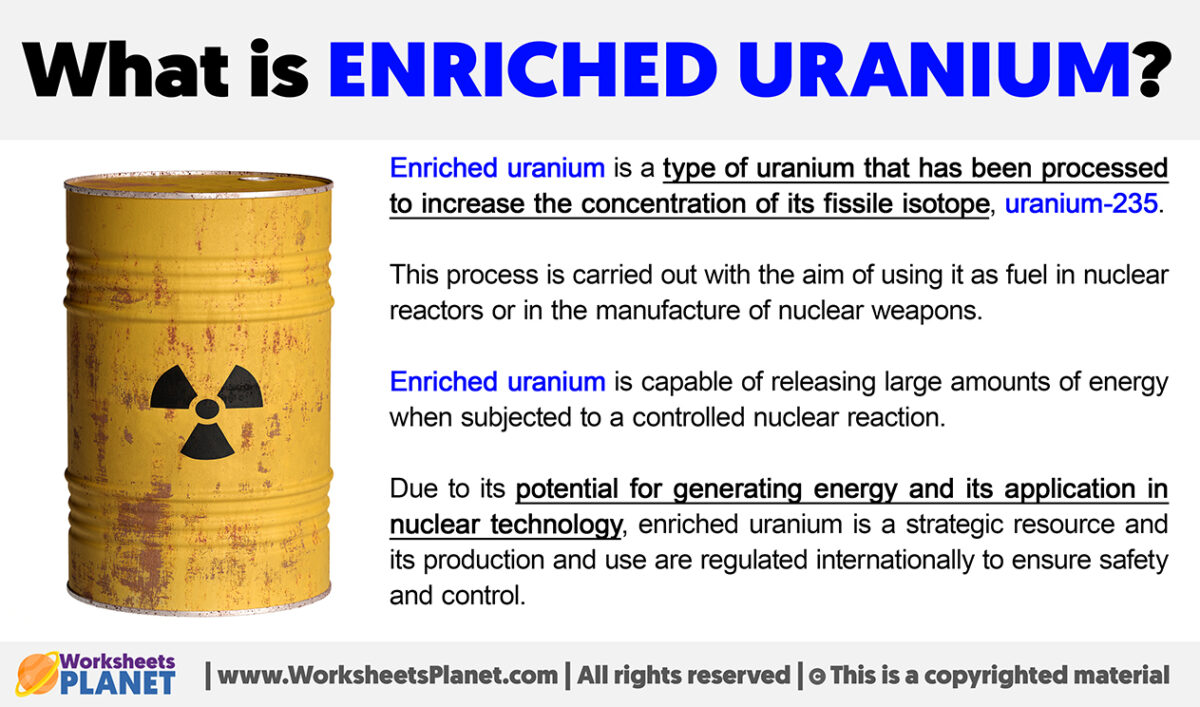
The current standoff regarding Iran’s enriched uranium stockpile is not merely a dispute over physical inventory but a clash of irreconcilable strategic axioms. President Donald Trump’s assertion that the United States would secure and remove Iran's highly enriched uranium (HEU) assumes a post-conflict "spoils of war" framework. In contrast, Tehran’s emphatic rejection—framing the material as "sacred as Iranian soil"—reasserts a doctrine of sovereign deterrence. This friction point represents the primary obstacle to transitioning from the current unstable ceasefire to a durable settlement.
The Inventory Crisis: Quantification of the HEU Stalemate
The logistical and technical reality of Iran’s nuclear stockpile has shifted significantly since the military actions of June 2025. Before the degradation of Iran's primary enrichment sites, International Atomic Energy Agency (IAEA) data indicated a stockpile that provided Tehran with a significant "breakout" capability.
- Stockpile Volume: As of early 2026, the estimated stockpile includes approximately 440.9 kilograms of uranium enriched to 60% purity.
- The 90% Threshold: This material is technically a short, modular step from the 90% weapons-grade enrichment required for a nuclear device.
- Verification Gap: Since the 2025 strikes on Isfahan and Fordow, the IAEA has lacked physical access to verify the exact location or chemical state of this material. High-confidence intelligence suggests much of it is stored in hardened tunnel complexes or buried under debris, creating a high-risk recovery environment.
The Three Pillars of Iranian Resistance
Tehran’s refusal to transfer the material is dictated by three strategic necessities that go beyond simple political posturing.
- Sovereign Leverage (The Bargaining Chip): The HEU serves as the ultimate insurance policy. Transferring the material to the U.S. or a third party without first securing the "10-point plan" for sanctions relief and reparations for war damage would leave Tehran with zero residual leverage.
- Deterrence Continuity: Even a damaged nuclear infrastructure maintains a "latent deterrent" effect. The physical presence of enriched material on Iranian soil forces any adversary to calculate the risks of a desperate, rapid weaponization.
- Domestic Legitimacy: The Iranian leadership has linked the nuclear program to national identity. Relinquishing the "dust"—as President Trump referred to it—under perceived duress would constitute a symbolic capitulation that the current administration in Tehran cannot survive internally.
The Mechanics of the U.S. Extraction Proposal
The White House strategy appears to treat the uranium as "nuclear dust" to be swept up and removed via military-led recovery operations. This approach fails to account for the Radiation Safety and Chemical Stability (RSCS) bottleneck.
- Extraction Risks: Moving 60% enriched uranium in a war zone is an engineering nightmare. It requires specialized shielding, stable temperature controls, and a secure chain of custody to prevent environmental contamination or diversion.
- The Excavator Fallacy: Using "excavators" to recover material buried in collapsed mountain facilities risks breaching containment vessels. The dispersal of uranium hexafluoride ($UF_6$) would create a localized radiological disaster, complicating any diplomatic "leisurely pace" envisioned by Washington.
Potential Third-Country Mediation Frameworks
While the U.S. demands direct transfer and Iran insists on zero transfer, history suggests a "Deadlock-Neutralization" model could be the only viable path. This involves a third-party intermediary to break the binary choice.
- The Russian Option: Russia has previously acted as a repository for Iranian material under the 2015 JCPOA. Moscow has indicated readiness to receive the material again, though Washington currently rejects this due to broader geopolitical tensions.
- The China Down-Blending Model: Beijing has proposed a technical solution where the 60% material is down-blended on-site to 3.67% (civilian grade) under joint IAEA-Chinese supervision. This removes the weapons threat without the "humiliation" of a physical transfer to the United States.
Strategic Stalemate in the Strait
The nuclear issue is now inextricably linked to the maritime blockade. Tehran has signaled that any attempt to forcibly seize the uranium or maintain the naval blockade of Iranian ports will result in the re-closure of the Strait of Hormuz.
The immediate strategic priority for international observers is to monitor the Islamabad talks. If the U.S. continues to insist on physical possession of the material as a prerequisite for lifting the blockade, the ceasefire is unlikely to hold. The most probable outcome is a protracted "frozen conflict" where the material remains in situ, unverified by the IAEA, and shielded by a fragile, high-stakes military standoff.
The final strategic move for Washington will likely involve pivoting from "Physical Removal" to "Permanent Monitoring." Acceptance of a monitored, on-site neutralization of the stockpile is the only path that avoids a resumption of active hostilities or a catastrophic radiological incident during a forced extraction.