Marie-Thérèse Petit spent thirty-five years listening to the first cries of newborns under West and Central African skies. As a French midwife working across Gabon, Togo, and Côte d'Ivoire, she entered the most intimate spaces of human life. She delivered babies, consoled mothers, and wove herself into the fabric of communities thousands of miles from her home in southwestern France.
Along the way, she collected.
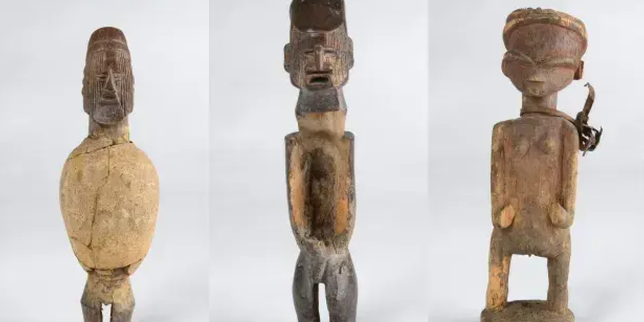
A statue carved from dark, heavy wood. A pair of silver Tuareg earrings, smoothed by generations of desert wind. A delicate terracotta vessel. By the time Marie-Thérèse returned to France, her home near Bayonne housed fifty-three distinct pieces of African art, jewelry, and sacred objects. She called it her "little African museum." It was a deeply personal archive of a life spent in service, a physical manifestation of her love for a continent that had shaped her.
When she passed away, her final will contained a simple, affectionate command: her beloved collection must be given to the City of Bordeaux. She wanted the objects preserved, displayed, and appreciated by the public in the Musée d’Aquitaine. She viewed it as an act of ultimate generosity.
But a gift is a complicated thing when it carries the weight of history.
On a quiet Monday afternoon, the Bordeaux city council did something completely counterintuitive. They voted to reject the inheritance. They walked away from a collection valued at over thirty thousand euros.
To understand why a modern city would willingly refuse a treasure trove of free art, you have to look past the financial valuation and step into the quiet, tectonic shift currently rewriting the rules of global heritage.
The Anatomy of an Inheritance
Imagine opening an old trunk in your grandmother's attic. Inside, you find beautiful things. They are covered in dust but undeniably valuable. You want to show them off, to share them with the world, to anchor her memory in a public space. That was the perspective of Marie-Thérèse’s surviving family, who fully supported her final wishes.
But then you look closer at the items. You notice that these objects were never meant to sit in a glass case in southwestern France. Some of them are sacred Tsogo statues from Gabon, used in rituals to communicate with ancestors. Others are traditional insignia from Niger, Nigeria, Burkina Faso, and the Democratic Republic of Congo.
Consider what happens next when the rightful owners notice the trunk is open.
For decades, the conversation around African art in European museums focused almost exclusively on state-sponsored looting during the colonial era. Giant bronze plaques taken by invading armies, royal treasures stripped from burning palaces. But the story of the Petit collection highlights a much vaguer, more intimate gray area. These were not items taken at gunpoint by soldiers. They were acquired by a well-meaning healthcare worker over three decades of expatriate life.
Yet, the fundamental imbalance remains. While Marie-Thérèse was packing these objects into crates to ship back to France, the communities that created them were being emptied of their tangible history. Entire generations grew up in Gabon and Togo without ever seeing the artistic masterpieces of their own grandfathers.
When the news of the midwife’s pending legacy reached West Africa, the phone in Bordeaux began to ring.
The Message from Libreville
The turning point did not happen in a courtroom. It happened via a letter.
The National Museum of Arts, Rites, and Traditions in Libreville, Gabon, reached out to Bordeaux officials with a direct, dignified request. They explained that thirty-three of the pieces in the midwife's collection belonged to Gabonese heritage. Specifically, the Tsogo cultural artifacts were incredibly rare—so rare, in fact, that public collections inside Gabon itself barely possessed any examples.
The Gabonese curators weren't angry; they were urgent. They faced a cultural drought, and a small apartment near Bayonne held the water.
This created a massive legal and ethical dilemma for Bordeaux. Under traditional French law, once a public museum accepts a donation or a legacy, those objects become part of the state’s permanent collection. They become "inalienable." They are locked away in a bureaucratic vault, legally impossible to give back without an act of parliament.
The real problem lay elsewhere. If Bordeaux accepted Marie-Thérèse’s gift, they would essentially be locking these fifty-three items in a golden cage forever.
The city council chose a different path. By formally refusing the legacy, Bordeaux prevented the items from becoming official French state property. The refusal was a deliberate legal maneuver to keep the objects "free." It allowed the city to bypass the usual red tape and work directly with the families and the originating nations to send the items home.
A New Protocol for Old Belongings
It is incredibly uncomfortable to admit that our good intentions can sometimes perpetuate old harms. Marie-Thérèse Petit did not view herself as a thief, and by all accounts, she wasn't. She was a woman who loved the culture she lived alongside.
But love also means knowing when to let go.
The modern push for restitution is often met with defensiveness. Critics worry that emptying European museums will leave them bare, or that African institutions lack the infrastructure to care for the art. But the reality on the ground is far more collaborative.
Bordeaux is not simply dumping these artifacts at an airport. The city is pioneering a framework of patrimonial cooperation. The thirty-three Gabonese pieces are heading straight to Libreville, met by a delegation that traveled to France to witness the historic council vote. For the remaining pieces from Togo, Côte d’Ivoire, and the other nations, a two-year window has been established. Bordeaux is actively searching for the proper institutional homes in those countries, ensuring the objects land where they can be understood, revered, and contextualized properly.
This is what a responsible cultural policy looks like. It is hesitant. It is vulnerable. It requires a city to look at a free asset and say, "This does not belong to us."
The Empty Pedestal
Walking through the grand galleries of European museums, it is easy to feel a sense of awe. The lighting is perfect. The descriptions are clean.
But look closer at the spaces between the displays. The most profound narratives today are not told by the objects on the pedestals, but by the empty spaces where those objects used to be. Those gaps represent a conscious choice to heal an old fracture.
The fifty-three pieces of the Marie-Thérèse Petit collection will never sit under the spotlights of the Musée d’Aquitaine. The midwife’s name will not be etched onto a donor plaque by the gallery entrance.
Instead, her legacy is shifting into something far deeper. By letting her collection go, her memory becomes tied to an act of historical humility. Somewhere in Libreville, a young student will walk into a museum and stand face-to-face with a sacred Tsogo carving, feeling an immediate, unbroken connection to their ancestors.
They will never know the name of the French midwife who kept it safe in a living room for decades. And that is exactly how it should be.