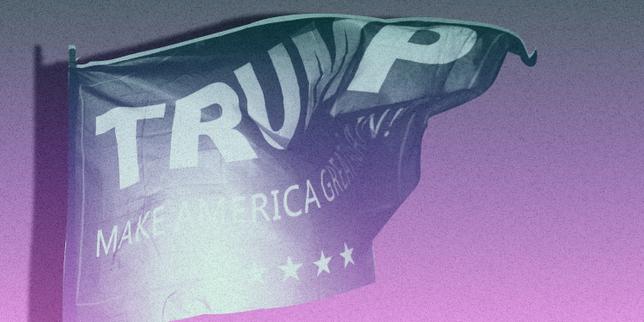
The mahogany table in the Cabinet Room is not just furniture. It is a weight. When a presidency fractures, the air in that room thickens with a specific kind of silence, the kind that precedes a landslide. We often talk about the 25th Amendment as if it were a sleek, modern emergency exit, a "break glass in case of madness" button designed for the quick removal of a leader who has lost the thread. But history and law tell a grittier story.
It is a blunt instrument made of fragile glass.
Think of a hypothetical Vice President—let’s call him Miller. He sits at the end of that long table, staring at a piece of paper that could legally decapitate the executive branch. To his left, the Secretary of State; to his right, the Secretary of Defense. For Miller to sign that paper, he isn't just citing a policy disagreement or a tweet gone wrong. He is declaring, under the eyes of God and the Constitution, that the Commander-in-Chief is "unable to discharge the powers and duties of his office."
This isn't a surgical strike. It’s a civil war in a fountain pen.
The 25th Amendment was born from the trauma of the Kennedy assassination. It was designed for the comatose, the stroke-ridden, the physically shattered. It was meant for the moments when the President is a body but not a mind. When we try to stretch that definition to cover a President like Donald Trump—or any leader whose "incapacity" is defined by his critics as a lack of temperament or a surplus of ego—the metal begins to fatigue.
The Architect’s Intent
Birch Bayh, the senator who championed the amendment, didn't build a trapdoor for unpopularity. He built a bridge for survival. In 1963, the world watched a young President die, and the terrifying vacuum that followed haunted the halls of power. The amendment was the answer to a very specific nightmare: a President who is alive but absent.
Section 4 of the amendment is the part that makes pundits salivate and lawyers sweat. It allows the Vice President and a majority of the Cabinet to seize the reins. But look closely at the mechanics. If the President says, "No, I’m fine," and sends a letter to Congress, he gets his power back. Instantly.
To keep him out, the Vice President and the Cabinet have to double down. They have to send another letter. Then it goes to Congress. Now, the clock starts. Two-thirds of both houses must vote to keep the President sidelined. Two-thirds. In a divided Washington, you can barely get two-thirds of Congress to agree on the time of day, let alone the forced removal of a man who received seventy-four million votes.
The math of the 25th is not the math of justice; it is the math of an impossible consensus.
The Ghost in the Oval Office
Consider the psychological toll on the people in that room. These are not career bureaucrats found in a phone book. They are the President’s hand-picked allies. They are people who have tied their legacies, their reputations, and their futures to the man at the head of the table. For a Cabinet member to vote for Section 4, they are not just betraying a boss. They are admitting their own judgment failed when they agreed to serve him.
They are also staring down the barrel of a populist revolt.
If Miller signs that paper, he isn't just the Acting President. To a massive swath of the electorate, he is a usurper. He is the leader of a "palace coup." The 25th Amendment doesn't require a trial. It doesn't require evidence of "high crimes and misdemeanors" like impeachment does. It requires a medical or mental diagnosis that the people in the room are usually unqualified to give.
The friction is the point. The writers of the amendment made it difficult because they knew that an easy exit is an invitation to instability. If you make it simple to remove a President for being "unfit," you have turned the American presidency into a parliamentary system where the executive serves at the pleasure of the legislature. You have broken the singular, direct link between the voter and the person they put in the White House.
A Weapon That Recoils
When critics of Donald Trump called for the 25th, they were often looking for a shortcut. Impeachment is loud, slow, and public. The 25th feels like a quick, quiet injection of political anesthesia. But the side effects are lethal to a democracy.
Imagine the scene if Section 4 were actually invoked against a defiant President. You would have two men claiming to be the rightful Commander-in-Chief. You would have a military wondering whose orders to follow. You would have a nuclear football with two different codes. This is the "unfathomable" scenario that legal scholars dread. It isn't a transition of power. It is a fracture of the state.
The 25th Amendment is a parachute. You only pull the cord when the plane is literally falling out of the sky and the pilot is unconscious at the yoke. If the pilot is just flying the plane into a storm you don’t like, you don’t pull the parachute. You wait for the next election, or you go through the grueling, public, and high-bar process of impeachment.
There is a deep, human craving for a "deus ex machina"—a god from the machine who steps in and fixes the narrative when it gets too dark or too chaotic. We want the rules to save us from our choices. But the 25th Amendment was never meant to be a safety net for a democracy that can’t agree on its own direction. It was meant to be a clinical solution to a biological problem.
When we try to use it as a political weapon, the weapon breaks in our hands.
The Cabinet members who sat in those rooms during the final days of the Trump administration knew this. They weren't just protecting a man; they were protecting the office. They understood that the moment you use the 25th to settle a political or moral crisis, you have signaled to every future administration that the Vice President is a shadow assassin, waiting for the President to stumble.
Trust is the invisible currency of the West Wing. Without it, the government is just a collection of people in expensive suits, looking over their shoulders.
The Mirror in the Room
We often look at the law as a set of cold instructions, but the 25th Amendment is a mirror. It reflects our own comfort with the democratic process. If we believe that a group of unelected Cabinet officials should have the power to override the will of millions because they find a leader dangerous or erratic, we are admitting that we no longer trust the voters to hold the line.
The improbability of the 25th being used isn't a failure of the law. It is the law’s greatest success. It was designed to be so difficult, so socially and politically radioactive, that it would only be used when there was absolutely no other choice.
If the 25th had been invoked in 2021, the fire that was burning at the Capitol might have spread to every corner of the country. Not because the President was right, but because the method of his removal would have looked like a betrayal of the democratic contract. It would have felt like a secret meeting in a mahogany room had decided the fate of the nation, rather than the ballot box.
Power is a heavy thing to carry, but the responsibility to remove it is even heavier.
The next time a crisis flares and the talking heads begin to whisper about Section 4, remember Miller at the table. Remember the weight of the pen. The 25th Amendment is a dormant volcano—powerful, terrifying, and best left exactly where it is, unless the ground begins to melt beneath our feet.
The survival of the republic doesn't depend on our ability to remove a leader through a legal loophole. It depends on our ability to endure the consequences of our own democracy until the people themselves decide it is time for a change. Anything else is just a temporary fix for a permanent wound.
The silence in the Cabinet Room remains. The mahogany table waits. The glass is still there, unbroken, and for the sake of the stability we often take for granted, we should hope it stays that way.