Walk into any big-box retail store on a Tuesday afternoon, and you are immediately swallowed by a sea of aggressive beige. Fluorescent lights buzz with a clinical hum. The air smells vaguely of cardboard, cleaning chemicals, and industrial floor wax. It is an environment engineered entirely for utility. You are there to buy laundry detergent, or a bottle of generic ibuprofen, or a pack of athletic socks. It is a space designed for chores, for adulthood, for the mundane reality of running a household.
But lately, if you walk past the pharmacy counter or navigate the towering aisles of consumer electronics, something strange happens. The beige gives way to a blinding flash of neon pink. The sterile air suddenly feels charged with the scent of synthetic vanilla and cheap plastic gems.
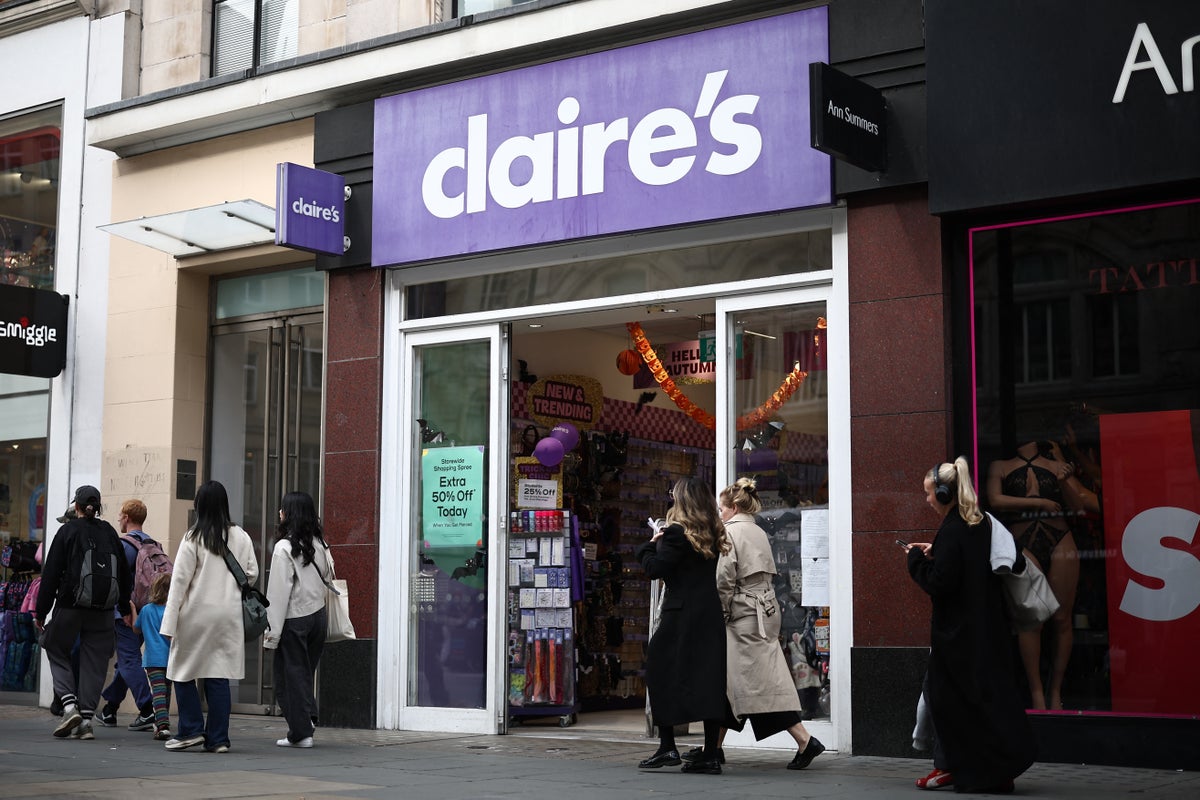
You are standing in front of a Claire’s boutique, transplanted entirely into the heart of a corporate behemoth.
It feels like a glitch in the retail matrix. For decades, Claire’s was a sacred rite of passage safely contained within the neon-lit corridors of the suburban shopping mall. It was the place where you suffered through the terrifying, exhilarating sting of a piercing gun while holding your best friend’s hand. It was where you spent your meager allowance on butterfly clips, mood rings, and glitter hair gel.
Now, that entire subculture is breaking out of the mall and invading 7,000 everyday retail locations across the country, including corporate giants like CVS and Walmart.
This is not just a standard distribution deal or a routine corporate expansion. It is a desperate, brilliant, and deeply calculated bid to capture the attention of a generation that is abandoning traditional retail spaces faster than any before them. To understand why a drugstore chain known for prescription refills is suddenly selling faux-diamond nose rings, you have to understand the quiet tragedy of the dying American mall, and the fierce battle for the pockets of Generation Z.
The Extinction of the Saturday Afternoon
Consider a hypothetical teenager named Maya.
Maya is fourteen years old. She does not remember a world before smartphones. When she wants to hang out with her friends, they don't ask their parents to drop them off at the local shopping center for four hours. They open a group chat. They watch TikTok videos in their bedrooms, perfectly content to exist in a digital slipstream where trends are born and discarded in the span of forty-eight hours.
For Maya's mother, the mall was a physical ecosystem. It was the only place where independence could be tasted. You could walk away from your parents, wander into a store playing loud alternative music, and reinvent yourself through a pair of velvet chokers.
When the malls began to crater—emptied out by e-commerce and accelerated by years of shifting social habits—brands like Claire’s faced an existential crisis. If the physical destination that defined your entire business model ceases to be a destination, where do you go?
The answer is simple: you go where the chores are.
By embedding themselves inside Walmart and CVS, Claire’s is executing a massive geographical pivot. They are betting on the fact that while Maya might not beg to go to a traditional mall on a Saturday, she will absolutely ride along with her parents to pick up groceries or a prescription if she knows there is a wall of holographic makeup bags waiting for her in aisle seven.
It is a play for convenience, but more importantly, it is a play for impulse. The modern teenager may be digitally native, but the human desire for tactile, immediate gratification has not changed. You cannot download the feeling of a new pair of cherry-shaped earrings. You have to hold them in your hand.
The Economics of a Nostalgia Trap
The mechanics of this retail invasion are fascinating because they benefit both sides of a very uneven equation.
For a giant like Walmart or a neighborhood staple like CVS, the challenge has always been foot traffic and demographic relevance. Drugstores, in particular, struggle to attract younger consumers who view them merely as places to go when they are sick. By carving out real estate for a highly recognizable, vibrant brand like Claire’s, these massive corporations are injecting a dose of youthful energy into their aisles.
It turns a boring errand into an experience.
But for Claire’s, the stakes are significantly higher. Operating a standalone store in a struggling mall is an expensive proposition. The rent is high, the foot traffic is declining, and the overhead can be brutal. By transitioning into a wholesale and shop-in-shop model across thousands of mass-market locations, Claire’s effectively decentralizes its brand.
They no longer need you to make a dedicated trip to see them. They are already there, waiting for you, right next to the toothpaste.
This strategy relies heavily on an emotional trigger that psychologists call "kidulting"—the phenomenon of adults buying toys, games, and accessories that remind them of their childhood. When a thirty-five-year-old mother walks into CVS to buy allergy medication and sees that familiar cursive logo, a switch flips in her brain. She remembers her own first ear piercing. She remembers the smell of the mall food court.
Suddenly, she isn't just buying a pack of glittery hair ties for her daughter. She is buying a tiny piece of her own youth for ten dollars.
The Risk of Becoming Invisible
There is, however, a profound danger lurking within this aggressive expansion.
When a brand is inextricably linked to an experience, changing the environment can dilute the magic. The mall was exclusive. It was a destination away from the watchful eyes of parents, a micro-kingdom ruled by teenagers. There was a thrill to entering that space.
What happens to that thrill when it is placed directly across from the adult diaper aisle?
There is a real risk that by trying to be everywhere, Claire’s risks becoming background noise. The magic of the brand was always wrapped up in the sensory overload of its standalone stores—the dense walls of silver and gold, the upbeat pop music playing over the speakers, the specific chaos of a Saturday crowd. When you compress that down into an endcap display or a small kiosk inside a cavernous grocery store, you lose the atmosphere. You turn a cultural touchstone into a mere commodity.
Furthermore, the competition in these spaces is fierce. Claire’s is no longer just competing with other mall mainstays; they are competing with the beauty aisles of Target, the hyper-cheap imports on digital marketplaces, and the fast-fashion giants that can replicate a TikTok trend in a matter of days.
But perhaps the corporate strategists behind this move understand something deeper about the current cultural moment. We live in an era of intense fragmentation. Our entertainment is fragmented, our news is fragmented, and our social circles are mediated by algorithms that isolate us into highly specific niches.
In a world where everyone is looking at a different screen, physical ubiquity becomes a superpower.
By placing themselves in 7,000 locations where everyday life happens, Claire’s is attempting to create a new kind of common ground. It is an acknowledgment that while the grand, glittering cathedrals of twentieth-century consumerism are crumbling, the human desire for a little bit of affordable sparkle hasn't diminished.
The venue has just changed.
The next time you find yourself standing in a brightly lit aisle, holding a basket filled with mundane necessities, look around. You might just spot a rack of neon scrunchies gleaming underneath the harsh industrial lights, a small, stubborn outpost of teenage rebellion sitting quietly between the vitamins and the laundry detergent.