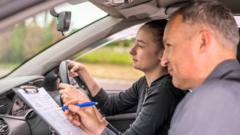
Scottish ministers are demanding the power to impose sweeping post-test driving curfews, passenger limits, and stricter drink-drive limits on newly qualified motorists. This aggressive push for a strict Graduated Driver Licensing (GDL) framework stems from a stark reality: Transport Scotland data reveals that between 2020 and 2024, the casualty rate for car users aged 16 to 22 was 1.19 per thousand population, compared to just 0.58 for the general driving public. Holyrood claims Westminster’s current UK-wide proposals for a simple six-month minimum learning period do not go far enough to stop young drivers from dying on rural roads.
Yet, beneath the surface of this road safety crusade lies a constitutional gridlock and a bitter economic debate. While safety advocates point to international success stories, critics warn that blanket curfews will disproportionately penalize rural youths, kill off nighttime shift work, and criminalize necessary social habits.
The Devolution Deadlock
Scotland cannot simply change its own driving laws. Because driver licensing remains a matter reserved to Westminster under the Scotland Act, Holyrood ministers must explicitly beg the UK Department for Transport (DfT) for the devolved powers to implement these curfews.
The political friction is palpable. Northern Ireland is already using its own devolved powers to launch a comprehensive GDL system, which mandates a six-month minimum learning period, a 24-month "R" (restricted) plate period, and a six-month nighttime driving ban for new drivers under 24. Holyrood wants the exact same legislative freedom.
Westminster, however, is dragging its feet. The DfT recently launched a wider consultation on a new road safety strategy aiming to cut road deaths by 65% over the next decade. Their focus remains squarely on pre-test preparation, such as mandating a three-to-six-month minimum learning window, rather than policing drivers after they pass. A DfT spokesperson explicitly stated they want to protect young people's access to employment and education, ruling out sweeping blanket restrictions like passenger bans or late-night curfews for England and Wales. This leaves Scotland trapped in a system it views as dangerously inadequate.
The Carnage on the A-Roads
To understand why Scottish ministers are willing to risk a political fight over this, one must look at the topography of Scottish risk. It is not urban motorways causing the most severe trauma; it is high-speed, poorly lit, undulating rural A-roads.
Tragedies like the 2024 Bannockburn crash on the A91, which claimed the lives of two teenagers in a vehicle driven by a newly qualified driver, have galvanized public fury and political will. For grieving families, the current probation system—which merely revokes a licence if a novice incurs six penalty points within two years—feels like an ambulance at the bottom of a cliff.
"Young people are not taught to drive at speed in adverse conditions like ice, snow, and night-time on rural roads," says Alan Knox, a campaigning father who lost his son in a fatal crash. "A car full of excited friends can be highly distracting to those who lack experience behind the wheel. It makes sense to place reasonable limits."
The physiological and psychological vulnerabilities of young motorists are well-documented. Peer distraction acts as an accelerator for risk. Insurers note that a young driver carrying two peers is twice as likely to suffer a fatal accident than one driving alone. When that number rises to three passengers, the mortality risk quadruples.
The Economic Casualty of a Curfew
While the safety statistics are undeniable, the economic counter-arguments are equally ferocious. A mandatory curfew between 11pm and 5am effectively cuts off young workers from the foundational rungs of the modern economy.
Consider a 19-year-old apprentice mechanic or a night-shift hospitality worker in the Highlands. Public transport is not an option. Scotland’s much-vaunted free bus travel scheme for under-22s sounds excellent in Edinburgh, but it is entirely useless when the last bus left at 8pm.
If a young driver cannot legally drive home from a shift that ends at midnight, they are faced with an impossible choice: quit their job, move to an expensive urban center, or break the law. Rural business owners argue that GDL systems will trigger a localized labor shortage in agriculture, hospitality, and logistics—industries heavily reliant on young, mobile workers willing to work unconventional hours.
The Enforcement Illusion
Even if Holyrood secures these powers from Westminster, a glaring logistical question remains. How do you police a curfew?
Police Scotland is already stretched to its absolute limits. Traffic police numbers have faced years of budgetary pressures, and rural patrols are sparse. A curfew cannot realistically be enforced by random stops without bordering on civil liberties violations and age discrimination.
Instead, any realistic enforcement would inevitably rely on two methods.
- Event-driven policing: Officers only discover a restriction has been breached after a vehicle has already crashed or been pulled over for an unrelated moving violation.
- Corporate surveillance: Mandating the installation of black box telematics insurance devices for all drivers under a certain age.
Relying on insurance data to enforce criminal law is a legal minefield. While black boxes naturally incentivize safer speeds and discourage late-night driving through steep premium penalties, using them as a direct extension of state-mandated curfews shifts the burden of law enforcement onto private insurance companies.
Learning from Global Models
Advocates for the restrictions point to a deep well of international precedent. Graduated licensing is not an experimental concept; it is standard practice across Australia, New Zealand, multiple Canadian provinces, and dozens of US states.
The public health data from these regions is compelling. When Ontario introduced a multi-tier GDL system including nighttime and passenger restrictions, fatal crashes involving teenage drivers dropped significantly. New Zealand reported a massive reduction in youth car crash hospitalizations almost immediately after implementing its restrictions.
The fundamental structural difference, however, is geography and infrastructure. A young driver in suburban Toronto or Auckland generally enjoys access to secondary transit infrastructure, ride-sharing networks, or dense urban hubs. Applying those same rigid structural limitations to a young motorist navigating the isolated geography of Aberdeenshire or the Borders, without robust state-funded transport alternatives, treats a diverse national population with a single, blunt instrument.
The Middle Ground No One is Discussing
The current debate is polarized into a false binary choice. Either the state implements blanket, age-based curfews that limit personal freedom, or it leaves the current system intact and accepts a higher baseline of youth mortality.
A far more precise solution exists, but it requires regulatory imagination. Instead of a blanket time-based curfew, restrictions could be strictly tied to vehicle occupancy and purpose. For example, exceptions can be explicitly carved out for verified employment, medical emergencies, and education.
Furthermore, the focus could shift heavily toward reforming the driving test itself. The practical driving test in its current form is an outdated evaluation of basic technical competency. It does not test a candidate's ability to recover from a skid on a wet rural bend, nor does it require mandatory night-driving assessment before a examiner signs off on a full licence. If the ultimate goal is creating resilient, safe drivers, the training phase must mirror the hazardous realities of the road, rather than treating the period after passing as an probationary extension of childhood.
Transport Scotland has made its goals explicit. It wants to slash deaths and serious injuries among 17 to 25-year-olds by 70% before 2030. Achieving that target without decimating the economic independence of rural youth will require a level of policy nuance that neither Holyrood nor Westminster has yet shown a willingness to display.