A merchant seaman named Chen stands on the deck of a container ship, watching the sun dip below the horizon of the Strait of Hormuz. To him, the water looks like hammered silver. To the rest of the world, this narrow stretch of blue is a jugular vein. Chen doesn’t think about geopolitical chess or the strategic calculus of Washington and Tehran. He thinks about the vibration of the engine under his boots and the fact that his wife back in Fuzhou is complaining about the price of cooking oil.
We often treat international conflict like a spectator sport, a series of headlines that flash across our screens before we scroll to the next distraction. But for Asia, the escalating tension between the United States and Iran isn't a headline. It is a slow-motion seismic event. The ground is already shifting.
The "Maximum Pressure" campaign wasn't just a policy memo; it was a stone thrown into a pond. The ripples have traveled thousands of miles, crossing the Indian Ocean to land on the shores of the world’s most populous continent. While Western analysts debate the efficacy of sanctions, the butcher in Mumbai and the factory owner in Hanoi are the ones checking the exchange rates with trembling hands.
The Geography of Vulnerability
Asia is the world’s energy engine, but it is an engine that runs on a fuel source located in someone else’s backyard. Roughly 70% of the oil moving through the Persian Gulf is destined for Asian ports. China, India, Japan, and South Korea are not just casual observers of Middle Eastern stability. They are hostages to it.
Imagine a power grid where the main switch is located in a room where two people are fighting over a lighter. That is the reality for the Asian economy. When the U.S. tightened the noose on Iranian exports, it didn't just hurt the mullahs in Tehran. It forced Asian refineries to rewire decades of logistical infrastructure overnight.
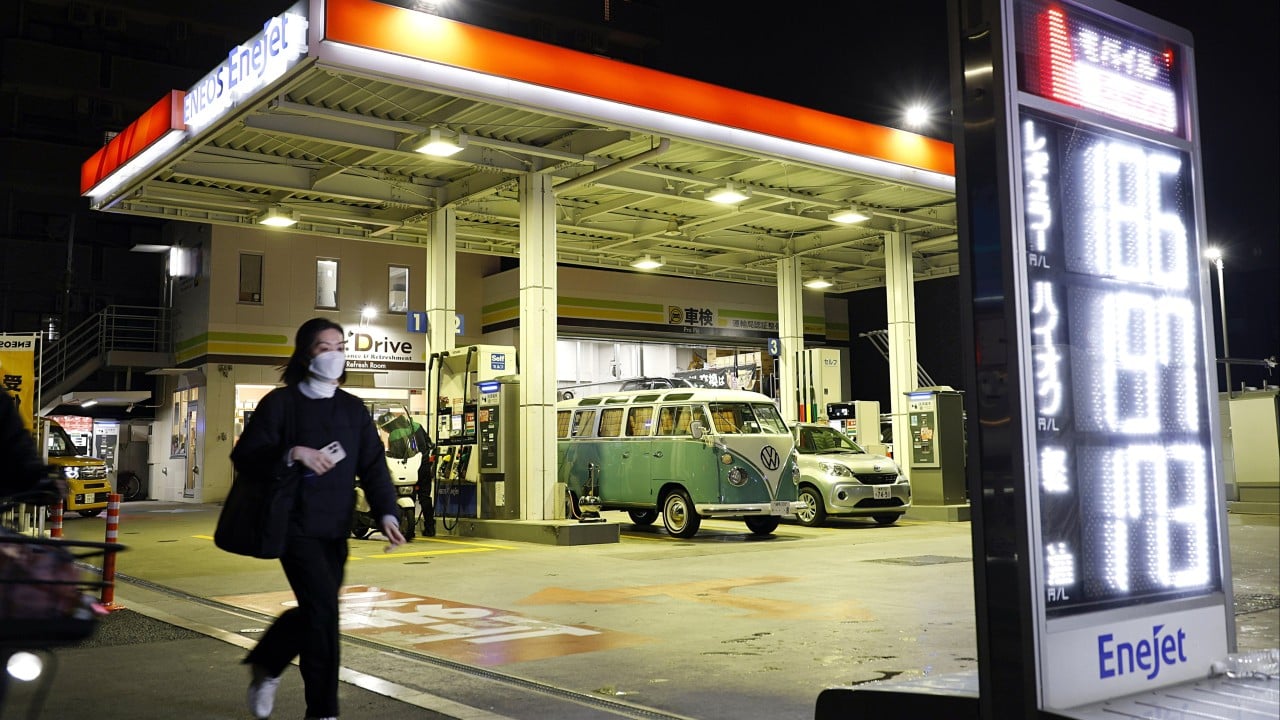
The shift is visceral. When a refinery in South Korea, designed specifically to process Iranian light condensate, is told it can no longer buy that product, the result isn't a simple "oops." It’s a multi-billion dollar mechanical and economic nightmare. They have to find substitutes. They have to bid against rivals. They have to pay a premium. And eventually, the person driving a scooter in Seoul pays for that friction at the pump.
The Ghost Ships of the Malacca Strait
The sanctions didn't stop the oil from flowing; they just turned it into a ghost story. To navigate the blockade, a "shadow fleet" has emerged. These are aging tankers, some held together by rust and prayer, that turn off their transponders and vanish from satellite tracking. They engage in ship-to-ship transfers in the dead of night, moving Iranian crude into vessels that claim the oil originated elsewhere.
This is where the human stakes get terrifying.
These "dark" transfers often happen in the crowded waters of Southeast Asia. If one of these un-insured, poorly maintained ghost ships suffers a hull breach or a fire, the environmental catastrophe would dwarf the Exxon Valdez. The fishing communities of Malaysia and Indonesia would see their livelihoods vanished by a slick of "sanctioned" oil that officially doesn't exist.
We are playing a game of chicken with the ecology of the Indo-Pacific to satisfy a diplomatic standoff in the West. The risk is localized. The reward is theoretical.
The Fragile Bridge of the Yuan
For decades, the U.S. dollar has been the undisputed language of global trade. If you wanted oil, you spoke in greenbacks. But the aggressive use of the dollar as a weapon of war has forced Asia to start looking for a new vocabulary.
China, seeing the way Iran was severed from the SWIFT banking system, recognized a terrifying truth: if it happened to them, their entire economic miracle could be deleted with a few keystrokes in New York. This has accelerated the push for the "petroyuan."
But switching currencies isn't like changing a shirt. It’s like trying to change the foundation of a skyscraper while people are still working on the 50th floor. It creates instability. It creates friction. For the small-to-medium business owners across Asia who trade across borders, this fragmentation of the global financial system means more risk, more fees, and less certainty. The "war" on Iran is effectively a tax on the Asian middle class.
The Security Vacuum
When the U.S. focuses its military and diplomatic energy on the Persian Gulf, it leaves a hollow space elsewhere. For many Asian nations, the real threat isn't a missile in the desert; it’s the erosion of the rules-based order in their own waters.
As Washington gets bogged down in the cycle of "strike and retaliate" with Tehran, its ability to act as a stabilizing force in the South China Sea or the Taiwan Strait diminishes. Nature—and geopolitics—abhors a vacuum. While the world watches drones over Isfahan, the balance of power in the Pacific is being quietly, firmly recalibrated.
Consider the hypothetical case of Haruto, a logistics manager in Osaka. He doesn't care about the JCPOA or the nuances of the IRGC’s regional influence. He cares that the shipping insurance for his company’s vessels has tripled. He cares that the "safe" routes are suddenly looking a lot more crowded and unpredictable. He feels a sense of vertigo, realizing that the stability his father took for granted is now a luxury.
The Quiet Squeeze
The most insidious effect isn't the threat of a "Big War." It’s the constant, grinding pressure of the "Small Peace."
It’s the inflation that eats away at the savings of a family in Manila. It’s the factory in Thailand that has to cut hours because the cost of electricity—driven by global gas prices—has spiked. It’s the realization that Asia is the "collateral damage" of a Western foreign policy that often fails to look past its own electoral cycles.
We talk about "strategic autonomy" in hushed tones in the halls of power in New Delhi and Tokyo. It sounds like a dry academic term. In reality, it is a cry of desperation. It is the sound of nations realizing they can no longer afford to let their futures be decided by a 12-hour time difference.
The worst effects are not the explosions. They are the things that don't happen. The investments not made because the risk is too high. The schools not built because the national budget was swallowed by an energy crisis. The dreams deferred because the world got too expensive, too fast.
Chen is still on that deck. The engine is still humming. But the water is no longer silver; it is the color of an ink-stain spreading across a map. He knows, perhaps better than the pundits, that when the giants in the West stumble, it’s the people on the other side of the world who feel the thud.
The storm isn't over. It’s just moving East.
Would you like me to analyze the specific economic data regarding Asian energy imports from the Middle East to further ground this narrative? Or perhaps we could explore the environmental risks of the "shadow fleet" in the Malacca Strait in more detail?