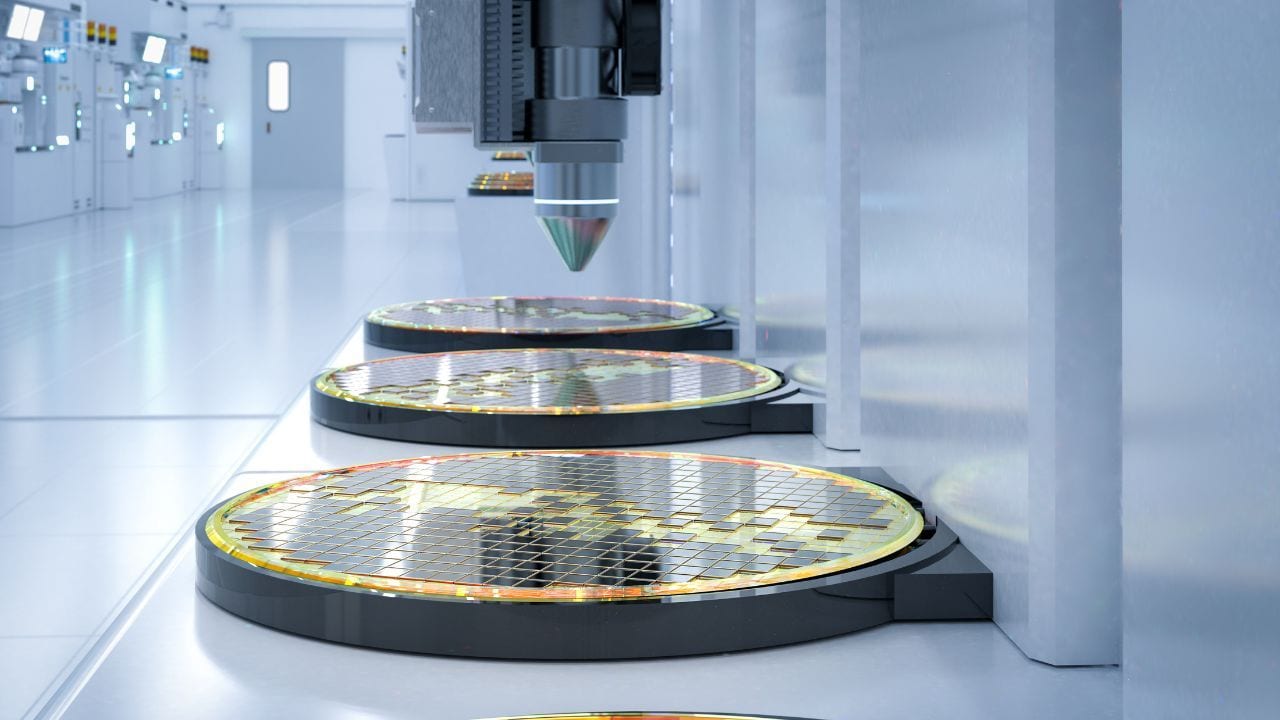
Nvidia CEO Jensen Huang recently stood on a stage and told the public exactly what they wanted to hear: AI is going to save manufacturing, bring back the glory days of the American factory floor, and trigger a hiring boom. He is zeroing in on Texas as the proving ground for this glorious new era of "physical AI."
It is a beautiful narrative. It is also a spectacular piece of corporate misdirection.
The lazy consensus among tech executives and desperate regional politicians is that adding advanced computing to factories creates a high-tech workforce. They want you to believe that a factory flooded with digital twins, autonomous mobile robots, and edge computing will require an army of highly paid human supervisors.
The exact opposite is true.
I have spent years looking at manufacturing pipelines, evaluating corporate capital expenditure budgets, and watching executive teams make automation decisions behind closed doors. When a company spends $10 million on advanced robotics and enterprise AI models, their internal metric is never "how many workers can we upskill." Their metric is labor displacement. It is always labor displacement.
Huang is selling tools to factory owners by telling them they can squeeze more output out of fewer human headaches. To turn around and tell the public that this creates an employment boom is the ultimate corporate double-speak. The Texas manufacturing miracle is not about to get a boost; it is about to get hollowed out.
The Myth of the "Upskilled" Assembly Line
The core argument from the techno-optimist camp hinges on a single, flawed premise: that automation changes the nature of the job rather than eliminating it. The theory goes that instead of turning a wrench, a worker will now monitor a dashboard that controls twenty robotic arms.
Let us run the math on that assumption.
If one worker on a dashboard can manage twenty machines that previously required fifteen humans to operate, you have not upgraded fifteen workers. You have upgraded one and made fourteen others redundant.
In industrial manufacturing, this is known as the displacement-to-reinstatement ratio. Economists Daron Acemoglu of MIT and Pascual Restrepo of Boston University documented this extensively in their landmark research on automation. Historically, rapid automation creates a massive "displacement effect" where tasks are taken over by machines, outstripping the "reinstatement effect" where new human roles are created.
When you introduce physical AI—systems capable of real-time computer vision, predictive maintenance, and autonomous pathfinding—the need for human intervention drops to near zero.
Imagine a modern electronics assembly plant in Austin or a heavy machinery facility in Houston. Traditionally, you need:
- Assembly technicians to put the components together.
- Quality assurance inspectors to manually check for defects under microscopes.
- Logistics personnel to drive forklifts and move materials across the floor.
- Maintenance crews to fix machines when they break down.
Physical AI eliminates the middle three categories entirely. Computer vision systems spot sub-millimeter defects faster than any human eye. Autonomous carts navigate the floor without drivers. Predictive AI analyzes the acoustic signature of a ball bearing and schedules its own mechanical replacement before a human even hears a squeak.
The only role left for the human is to be the carbon-based fallback for when the system suffers a catastrophic software glitch. That is not a high-tech manufacturing boom. That is a security guard job with a fancier title.
Why Texas Is the Perfect Sacrificial Lamb
Tech leaders love Texas right now because of its regulatory environment, cheap energy, and massive industrial footprint. The state has built its modern economy on being a manufacturing powerhouse, luring giants from California and the Midwest with the promise of space and low taxes.
But that makes Texas incredibly vulnerable.
The Texas manufacturing sector relies heavily on mid-skilled labor—workers who possess specialized trade skills but lack advanced computational engineering degrees. When physical AI models are deployed across the state's automotive, semiconductor, and aerospace facilities, it targets that exact demographic.
Furthermore, the state's infrastructure is built to support companies, not to retrain displaced populations at scale. When a factory shifts from 2,000 floor workers to 150 automated systems technicians, the local economy takes a direct hit. The surrounding ecosystem of diners, gas stations, and local service providers that depended on those 2,000 workers dries up.
We have seen this playbook before. The rust belt did not collapse because American workers forgot how to build things; it collapsed because the efficiency metrics of automated assembly lines made their hands obsolete. The only difference this time is that the software is smarter, the rollout is faster, and the marketing budget behind it is larger.
Dismantling the "People Also Ask" Propaganda
If you look into what people are searching for regarding this trend, the questions are deeply rooted in anxiety and corporate-sponsored half-truths. It is time to answer them without the public relations filter.
Does advanced automation increase industrial competitiveness?
Yes, but competitiveness does not equal payroll. A factory can become 400% more competitive on the global market by wiping out its domestic labor costs. When US manufacturing output rises, look closely at the labor share of income in those regions. The wealth generated goes directly to capital owners and software licensing fees, not to the local zip codes.
Will AI create more tech jobs in manufacturing states than it destroys?
Not even close. The software developers building these physical AI models do not live in the industrial towns where the factories are located. They live in Silicon Valley, Seattle, or specialized tech hubs. A factory in Fort Worth adopting an AI-driven logistics system might hire two data engineers locally, but it will lay off 80 warehouse workers. The net job creation for that community is deeply negative.
Can the existing workforce be retrained fast enough?
This is the most disingenuous narrative of all. Training a 45-year-old machinist who has spent twenty years mastering CNC milling to suddenly become a Python developer or a neural network diagnostic specialist is a pipe dream. The cognitive and structural shift is immense, and corporate retraining programs are notorious for being superficial compliance exercises. Companies do not retrain their way out of a technological shift; they hire a new, younger, cheaper cohort of specialized grads and let the old workforce fade into early retirement or the gig economy.
The Brutal Reality of the Bottom Line
Let us be completely transparent about the downside of looking at this with clear eyes: it is bleak. There is no comforting silver lining here. If you are an investor or a business owner, your fiduciary duty actually forces you to pursue this labor-gutting efficiency.
If I am running a high-volume manufacturing plant in Dallas and my competitor adopts Nvidia’s full stack of physical AI tools—slashing their operational costs by 40% and running their facility 24/7 without breaks, unions, or healthcare costs—I have two choices. I can either adopt the same technology and fire my workforce, or I can go bankrupt.
The market rewards the elimination of human friction. Jensen Huang knows this because his entire business model relies on selling the hardware that enables that elimination. Nvidia is not a job-creation engine; it is an efficiency infrastructure provider.
The true cost of this transition will not be borne by Nvidia’s shareholders, nor will it be felt in the executive suites in Santa Clara. It will be felt by the communities that bought into the promise that technology would always create more than it destroyed.
Stop asking how many jobs AI will boost in manufacturing. Start asking how your community is going to survive when the factories don't need the town anymore.
Do not wait for a corporate retraining voucher. If your job involves a repeatable physical task, a predictable diagnostic process, or the manual movement of material, the clock is ticking. The software is already written. The chips are already shipping. The factory floor is getting quiet, and no amount of optimistic executive spin can change the silence that is coming.