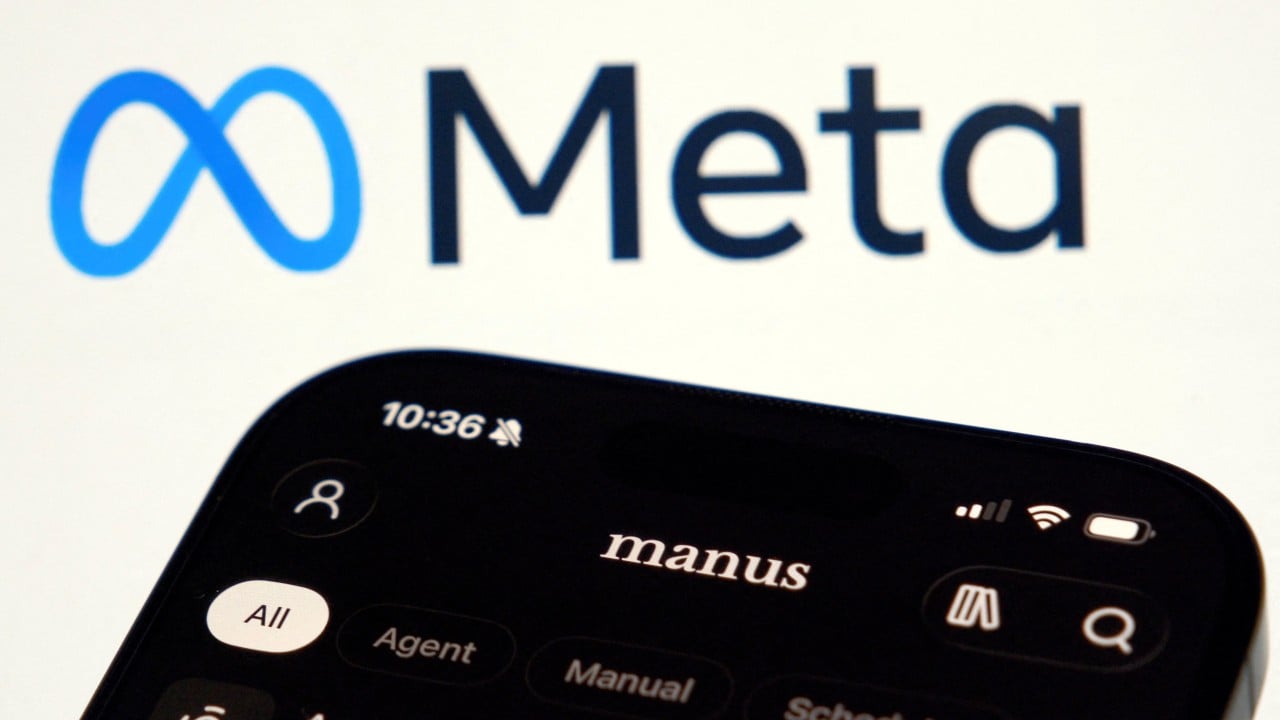
Meta’s pivot from a social graph company to an artificial intelligence infrastructure entity has created a fundamental decoupling between technical capability and capital efficiency. While the Llama series demonstrates a narrowing delta between open-weights performance and proprietary closed-source leaders, the market's skepticism resides in the widening gap between GPU inventory accumulation and incremental Average Revenue Per User (ARPU). The current investment cycle is not a product of speculative optimism but a defensive necessity to preserve the ad-tech stack's auction efficiency against signal loss.
The Three Pillars of Meta’s AI Infrastructure Strategy
The transition from the Llama 3 architecture to the Llama 4 roadmap represents a structural shift in how Meta manages its three core operational vectors: Compute Sovereignty, Open-Source Hegemony, and Ad-Stack Integration.
1. Compute Sovereignty and the Capex Floor
Meta’s decision to procure H100 and B200 clusters at an unprecedented scale is a hedge against the vertical integration of competitors like Google (TPUs) and Amazon (Trainium). By owning the largest independent GPU fleet, Meta secures its ability to retrain foundational models without dependency on third-party cloud providers. However, this creates a massive depreciation load that pressures operating margins. The "Capex Floor" is now defined by the minimum compute required to sustain a competitive generative model while simultaneously running the real-time ranking and recommendation engines for 3.2 billion daily active people.
2. Open-Source Hegemony as a Talent and Cost Moat
Meta releases high-performance weights not out of altruism, but to commoditize the underlying layer of the AI stack. By establishing Llama as the industry standard, Meta achieves three strategic objectives:
- External Optimization: Thousands of independent developers optimize the Llama codebase, effectively providing Meta with free R&D and performance tuning.
- Recruitment Efficiency: Top-tier researchers prefer working on models that see public release, reducing the premium Meta must pay for scarce talent.
- Anti-Vendor Lock-in: If Llama remains the dominant framework, the ecosystem remains hardware-agnostic, preventing Nvidia or cloud hyperscalers from dictating software terms.
3. Generative Ad-Stack Integration
The immediate revenue engine for these models is not a standalone chatbot but the automated creation of ad creative. By using AI to dynamically generate images and copy for small-to-medium businesses (SMBs), Meta increases the pool of viable advertisers who previously lacked the creative resources to compete. This creates a direct correlation between model sophistication and auction density.
The Cost Function of Inference at Scale
A critical oversight in standard market analysis is the failure to distinguish between training costs and inference costs. While training Llama 4 might cost upwards of $10 billion in compute time, the true long-term risk to Meta’s P&L is the cost of serving billions of AI-generated responses daily.
The unit economics of a standard Facebook feed scroll are measured in fractions of a cent. Conversely, a multi-modal AI interaction can be orders of magnitude more expensive. To reach profitability on these interactions, Meta must achieve a 10x reduction in inference latency or a corresponding increase in ad load within the AI interface without triggering user churn.
The Inference Bottleneck
As Meta integrates "Meta AI" across WhatsApp, Instagram, and Facebook, it faces a hardware utilization problem.
- High Latency/High Precision: Large models provide better answers but slow down the user experience and consume more power.
- Low Latency/High Efficiency: Distilled models are cheaper to run but risk "hallucination" or lower engagement.
Meta's strategy involves a "cascading model architecture" where a small, ultra-fast model handles initial queries, only escalating to a larger model (like Llama 400B+) when the complexity threshold is met. This tiered approach is the only path to maintaining a manageable margin profile.
Quantifying the Strategic Risk in Reality Labs
The "Zuckerberg Strategy" is often conflated with a singular bet on the Metaverse. In reality, the strategy is a two-pronged attack on the mobile hardware duopoly of Apple and Google. Meta’s AI advancements are the "software brains" for its wearable hardware initiatives (Ray-Ban Meta glasses and Orion AR).
The causal link is direct: if Meta can win the "AI Wearable" category, it bypasses the "App Store Tax" and regains the signal it lost during Apple’s App Tracking Transparency (ATT) rollout. The AI model is the operating system for the face. Without a dominant AI, the hardware is a commodity; without the hardware, the AI remains a guest on a competitor's platform.
Reality Labs as a Distribution Hedge
The $15B+ annual burn in Reality Labs is essentially a premium on an insurance policy against mobile OS obsolescence. The market’s frustration stems from the fact that this insurance policy has no definitive "expiration" or "payout" date. The current logic suggests that AI will accelerate the utility of AR glasses by providing a reason for users to wear them (e.g., real-time translation, object identification), thereby shortening the time-to-market for the hardware.
The Revenue Conversion Matrix
To evaluate Meta’s performance over the next 24 months, analysts must look past the headline Capex and focus on the Efficiency-to-Revenue Ratio. This can be measured through three specific metrics:
- AI-Influenced Revenue Growth: The percentage of ad revenue derived from Advantage+ campaigns and AI-generated creative.
- Tokens Per Watt: The energy efficiency of Meta’s data centers as they scale, which will dictate the long-term floor for OpEx.
- User Dwell-Time Volatility: Whether AI-suggested content (Discovery Engine) increases time spent or merely cannibalizes existing social interaction.
The "Promise" mentioned in competitor reports is meaningless without a "Conversion Mechanism." Meta's conversion mechanism is the transition from a Deterministic Ad System (targeting users based on past likes) to a Predictive Generative System (creating the content that will cause the user to engage).
Strategic Recommendation for Institutional Positioning
The primary risk is not that Meta's AI will fail technically, but that the cost of maintaining a top-tier model will become a "Red Queen’s Race"—where Meta must spend billions just to stay in the same competitive position relative to Google and OpenAI, with no incremental pricing power.
Investors should monitor the GPU Utilization Rate. If Meta continues to buy chips but does not show a corresponding increase in "unstructured data processing" (video analysis for Reels), the Capex is being wasted on over-provisioning. Conversely, if Meta begins to license its specialized AI silicon (MTIA), it signals a shift from a software company to a vertically integrated infrastructure provider, which would warrant a higher valuation multiple similar to a cloud hyperscaler.
The immediate play is to track the "Creator AI" rollout. If Meta successfully enables millions of creators to deploy AI versions of themselves to handle fan engagement, it unlocks a new layer of platform activity that requires zero incremental human effort but generates massive high-margin data. This is the ultimate "Zero Marginal Cost" scaling lever that the current stock price has yet to fully bake in.
The focus must remain on the Infrastructure-to-Application cycle time. If the gap between a new Llama release and its integration into the Instagram ad-manager exceeds six months, Meta is losing the execution war. If that cycle time stays under 90 days, the Capex is not a cost—it is a compounding asset.