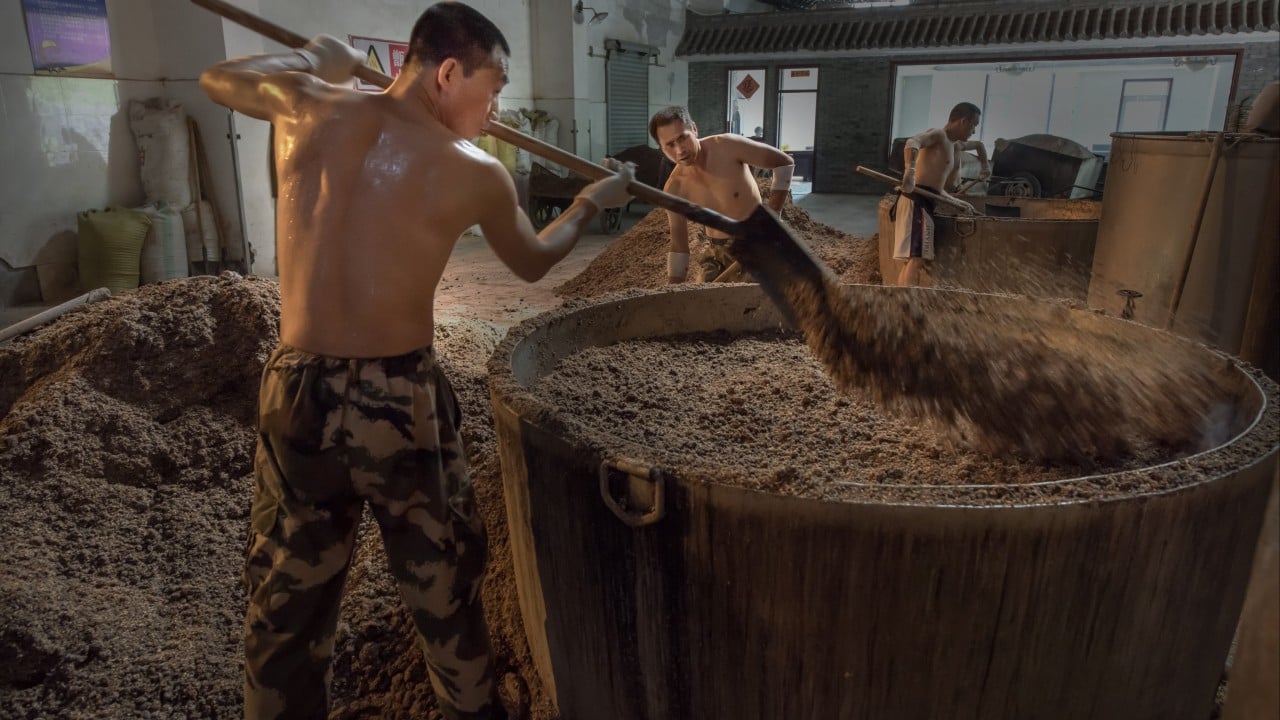
The trajectory of global alcohol production is fundamentally a history of solving a biochemical bottleneck: the efficient conversion of complex starches into fermentable sugars. While Western industrial brewing historically relied on a two-step process—malting to sprout grains and activate endogenous amylase enzymes, followed by yeast fermentation—ancient Chinese brewing developed an entirely different engineering pathway. By utilizing a solid-state microbial matrix known as qu, early Chinese brewers pioneered simultaneous saccharification and fermentation (SSF). This single-step biochemical mechanism achieved conversion efficiencies and flavor complexities that modern industrial biotechnology is only now fully codifying.
Understanding this legacy requires moving past cultural aesthetics and analyzing the hard thermodynamics and microbiology of ancient Chinese fermentation. The survival, evolution, and eventual dominance of qu-based systems over alternative methods reveal structural efficiencies that continue to dictate the economics of the modern spirits industry.
The Bifurcated Divergence: Qu vs Nie
During the Warring States period (475–221 BC) and the subsequent Han Dynasty, Chinese brewing operated on two competing technological tracks. These two systems relied on completely different biological drivers to break down the starches in grains like broomcorn millet, wheat, and rice.
The Nie Framework (Malted Malting Engine)
The nie method utilized cereal malts. This process mirrored traditional Western brewing. Grains were soaked in water, allowed to germinate to trigger the synthesis of alpha-amylase and beta-amylase within the grain itself, and then dried and ground into a powder. This powder was added to steamed grains and water. The nie process possessed clear operational boundaries:
- Thermal Constraints: Active germination required strict temperature controls, making it highly seasonal.
- Attenuation Limitations: The resulting beverage, known as li, was highly opaque, naturally sweet, and possessed low alcohol by volume (typically under 4% ABV). The enzymatic breakdown was distinct from the fermentation step, meaning that wild yeasts often exhausted their fuel or were inhibited before completing total attenuation.
- Obsolescence Vector: Because nie required significant water inputs and yielded low-ABV outputs prone to rapid spoilage, its economic utility decayed. The technique fell entirely out of favor by the 1700s, surviving only as a historical footnote.
The Qu Framework (Solid-State Bioreactor)
Conversely, the qu method relied on a completely different paradigm: the cultivation of filamentous fungi on raw or cooked grain substrates to create an exogenous multi-enzyme network. Instead of utilizing the grain’s internal machinery, qu acted as an engineered natural bioreactor. This approach yielded a distinct, highly concentrated starter block containing a dense consortium of molds, yeasts, and bacteria.
The competitive advantage of qu over nie was structural. By combining saccharification (breaking starches into sugars) and fermentation (converting sugars into ethanol) into a simultaneous reaction chamber, qu bypassed the thermodynamic losses associated with multi-stage processing.
The Mechanics of Simultaneous Saccharification and Fermentation
The core innovation of the qu matrix lies in its execution of simultaneous saccharification and fermentation. In a standard Western wash, starch conversion must finish before yeast can begin fermentation, because high temperatures required for mashing (typically 60°C to 65°C) would instantly kill Saccharomyces cerevisiae.
The qu method eliminates this sequential dependency through a complex, symbiotic microbial succession.
[Complex Starches (Sorghum/Millet/Rice)]
                 │
                 ▼  ◄─── [Aspergillus / Rhizopus / Mucor] (Synthesize Amylase)
       [Simple Sugars]
                 │
                 ▼  ◄─── [Saccharomyces cerevisiae / Non-Saccharomyces] (Fermentation)
       [Ethanol + Esters]
Filamentous fungi such as Aspergillus, Rhizopus, and Mucor populate the solid-state starter. These molds colonize the grain substrate, boring into the starch endosperm and secreting highly stable amylolytic enzymes. Because this occurs at ambient or solid-state fermentation temperatures (typically 28°C to 40°C depending on the qu type), the micro-environments within the mash allow yeasts and acid-producing bacteria to co-exist alongside the molds.
This creates a self-regulating kinetic loop:
- Rate-Matching Carbon Flux: Molds break down complex polysaccharides into glucose at a steady, metered rate.
- Immediate Consumption Intercept: Rather than building up high sugar concentrations—which would trigger the osmotic stress response in yeast or induce the Crabtree effect—yeasts immediately consume the glucose as it is generated, converting it directly to ethanol.
- Efficiency Maximization: Because sugar accumulation remains near zero throughout the active phase, feedback inhibition on the fungal amylase enzymes is minimized. The system runs at peak kinetic efficiency, regularly pushing natural, undistilled fermentations to alcohol concentrations above 15% ABV.
The Taxonomy of Industrial Microenvironments
As qu-centered technologies scaled from agrarian folk practice into imperial state monopolies, production methodology split into three distinct categories. Each category represents a targeted calibration of moisture, temperature, and substrate porosity designed to cultivate specific microbial profiles.
Daqu (Large Starter Blocks)
Daqu uses large, mechanically compressed cakes made of wheat, barley, and peas. Weight profiles typically range from 2 to 5 kilograms per block.
- Microbial Ecosystem: The high thermal mass of these large blocks, combined with low initial moisture levels, drives internal temperatures during incubation up to 50°C to 60°C. This extreme heat selects for thermophilic bacteria, specifically Bacillus strains, alongside robust filamentous molds.
- Metabolic Output: Bacillus species synthesize massive quantities of proteases and lipases. These enzymes break down substrate proteins and fats into amino acids and fatty acids, which function as critical precursors for complex aroma compounds. This makes Daqu the foundational engine for high-flavor distilled spirits like Baijiu, particularly those classified under strong-aroma and sauce-aroma profiles.
Xiaoqu (Small Starter Spheres)
Xiaoqu relies on small, hand-rolled spheres or cakes consisting primarily of rice powder, rice bran, and frequently a blend of traditional medicinal herbs.
- Microbial Ecosystem: The small physical scale of the cakes prevents heat retention, keeping incubation temperatures low and aerobic. This environment favors Rhizopus molds and specific non-Saccharomyces yeasts like Saccharomycopsis fibuligera.
- Metabolic Output: Rhizopus is a highly efficient amylase producer but yields minimal proteolytic breakdown. Consequently, Xiaoqu produces clean, highly attenuated, sweet fermentations with low volatile acidity, serving as the primary driver for light-aroma spirits and traditional huangjiu (rice wine).
Fuqu (Bran Starter Mesh)
Developed much later as an industrial optimization strategy, Fuqu utilizes pure wheat bran as a loose, non-compressed substrate.
- Microbial Ecosystem: The loose, uncompressed nature of the bran maximizes surface area and oxygen exposure, allowing for pure-culture inoculation of specific, high-yielding Aspergillus niger or Aspergillus oryzae strains.
- Metabolic Output: Fuqu functions as an accelerated enzyme factory. It drastically shortens production cycles from months to days, sacrificing complex secondary flavor metabolites in favor of raw ethanol throughput.
Flavor Matrix Engineering: The Chemistry of Pit Fermentation
The evolutionary pinnacle of this ancient biotechnology is modern solid-state distillation, where fermented grain mash is loaded directly into specialized stills without adding water. The flavor profile of the final distillate is not generated during distillation; it is engineered inside the fermentation vessel through long-term interaction between the qu enzymes and the physical structure of the fermentation pit.
In traditional strong-aroma distilleries, mud-lined subterranean pits function as continuous, non-sterile bioreactors. Over decades and centuries of uninterrupted use, the anaerobic mud walls develop a deeply entrenched, highly specialized microflora.
[Lactic Acid (from Yeast/Lactobacillus)] + [Ethanol]
                          │
                          ▼ ◄─── [Clostridium / Caproiciproducentium] (Metabolic Engine)
                  [Caproic Acid]
                          │
                          ▼ ◄─── [Esterification Enzymes]
               [Ethyl Caproate] (Strong Aroma Marker)
The chemical synthesis follows a strict multi-generational metabolic pathway:
- Substrate Inflow: Yeasts and Lactobacillus strains within the grain mash produce ethanol and lactic acid during the initial aerobic and facultative anaerobic phases.
- Acid Chain Elongation: In the deep anaerobic zones near the mud interface, specialized bacteria—primarily from the Clostridium genus, including Caproiciproducentium—utilize the ethanol and lactic acid as electron donors. Through a process called chain elongation, they synthesize short- and medium-chain fatty acids, specifically butyric and caproic acids.
- Esterification: Over extended fermentation cycles lasting anywhere from 30 to 90 days, endogenous esterifying enzymes convert these volatile fatty acids and ethanol into their corresponding ethyl esters.
The primary marker for strong-aroma spirits, ethyl caproate, is synthesized entirely via this mud-grain interface. This compound delivers an intense, fruity, pineapple-like aromatic profile that cannot be replicated via standard liquid-wash fermentation.
The age of the fermentation pit functions as the primary determinant of metabolic diversity. Pits that have operated continuously for more than a century exhibit higher concentrations of uncultured anaerobic bacteria, which significantly reduces the production of harsh, low-boiling-point aldehydes while maximizing premium ester yields.
Modern Bioprocessing Applications and Structural Limitations
The simultaneous saccharification and fermentation architecture perfected by ancient Chinese brewers is no longer just a historical artifact; it is a primary blueprint for modern industrial biotechnology.
Modern Scale Adaptations
The efficiency profile of the qu matrix matches the operational requirements of modern biofuel production and industrial enzyme isolation:
- Cellulosic Ethanol Processing: Second-generation biofuel facilities utilize advanced, engineered iterations of SSF to break down lignocellulosic biomass. By processing agricultural waste using genetically optimized variants of the same Aspergillus and Saccharomyces pairings found in Daqu, these plants bypass feedback inhibition, keeping energy inputs minimal.
- Consolidated Bioprocessing (CBP): Current metabolic engineering aims to create single-microorganism systems capable of both enzyme secretion and ethanol conversion. This target is essentially a synthetic replication of the multi-species synergy naturally present within the traditional qu ecosystem.
Systemic Volatility and Structural Limitations
Despite its high thermodynamic efficiency, the traditional qu method possesses inherent operational vulnerabilities that prevent universal adoption in standard commercial bioprocessing:
- Batch Inconsistency: Because traditional qu reliance stems from open-air, spontaneous inoculation, the resulting microbial community fluctuates based on micro-climatic shifts, ambient humidity, and regional spore counts. This variance poses an ongoing quality control challenge for industrial scaling.
- Toxigenic Vulnerabilities: The open nature of solid-state fermentation carries a persistent risk of co-culturing undesirable, mycotoxin-producing wild molds, such as certain Aspergillus flavus strains. Eliminating these risks requires rigorous, resource-intensive chromatographic verification of every production batch.
- Mass Transfer Bottlenecks: Solid-state fermentation lacks the uniform nutrient distribution and heat dissipation of modern stirred-tank liquid bioreactors. Thermal spikes inside uncooled Daqu blocks can accidentally pasteurize active yeast cells, stalling the fermentation loop and leaving unconsumed simple sugars vulnerable to spoilage by opportunistic, acid-producing wild contaminants.
The Strategic Outlook for Global Spirit Production
The global spirits landscape is undergoing a structural shift driven by premiumization and a growing demand for complex flavor profiles. For producers outside of China, the traditional Western distillation model—relying on highly rectified, neutral spirits passed through copper columns—faces margin compression due to rising energy costs and market saturation.
The strategic play for forward-looking beverage conglomerates lies in integrating solid-state, multi-species fermentation mechanics into existing production lines. Utilizing pure-culture, controlled-environment iterations of the qu model (similar to the Fuqu approach) allows western distilleries to bypass the capital-intensive malting phase entirely, cutting raw grain handling costs by an estimated 15% to 20%. Furthermore, introducing controlled bacterial symbiosis during the fermentation stage offers a reliable pathway to generate deep, ester-heavy flavor matrices natively within the wash. This reduces reliance on prolonged wood aging to mask structural spirit neutrality, significantly accelerating inventory turnover and unlocking free cash flow currently tied up in barrel warehouses.