The air in northeastern Nigeria does not stir after midnight. It hangs heavy, thick with the scent of dry earth, charred acacia wood, and the faint, metallic tang of latent anxiety. For the people living in the scattered villages of Borno State, silence is not peace. Silence is a suspenseful intermission.
You lie on a woven mat, listening to the breathing of your children. Every distant engine whine or rustle of tall grass forces a choice: Is it a passing truck, a wandering hyena, or the men with black flags?
For a decade, the Islamic State West Africa Province (ISWAP) has owned the night here. They are a mutation of Boko Haram, slicker, more bureaucratic, and ruthlessly efficient. They don't just raid; they tax. They don't just terrorize; they govern through the barrel of an assault rifle. To the global community, this is a line item in a counter-terrorism brief. To the mother holding her breath in the dark, it is the entire universe.
Then comes the sound.
It is not the chaotic thunder of a local militia’s technical truck. It is a deep, rhythmic thrumming that vibrates in the chest before it reaches the ears. A low-altitude drone, miles up, invisible against the canopy of stars.
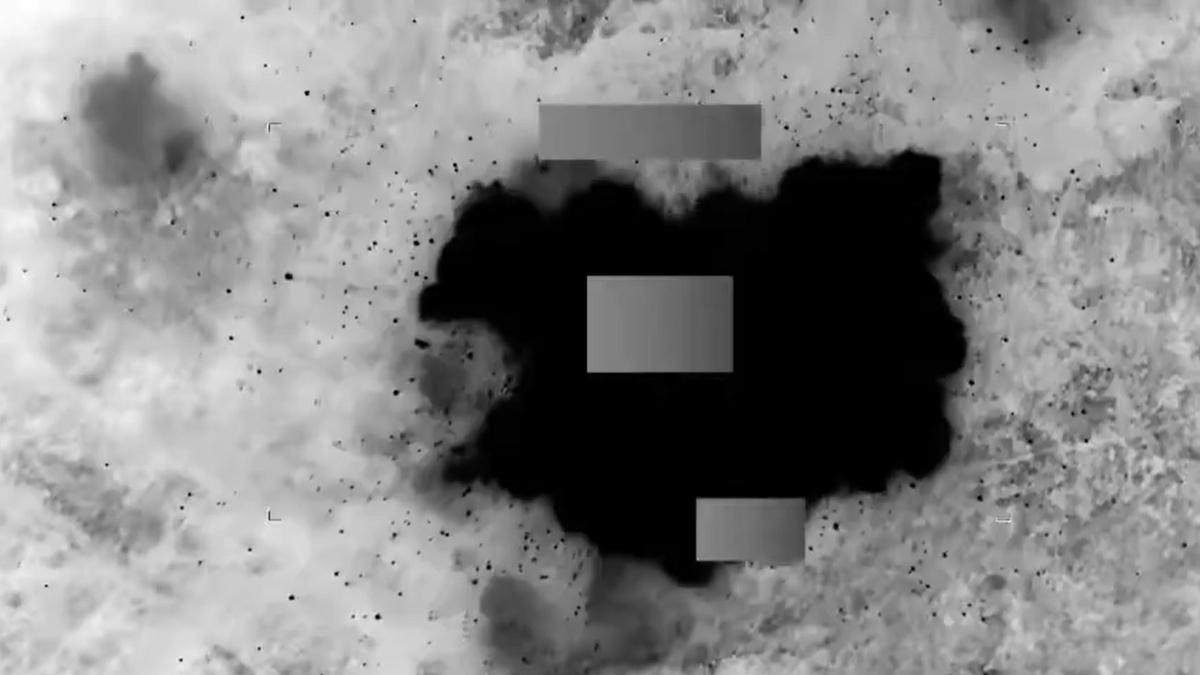
Suddenly, the horizon flashes. A muted thud ripples through the earth. Far out in the Sambisa forest, a convoy of heavily armed pickup trucks dissolves into scrap metal and fire.
The United States Africa Command (AFRICOM), operating out of remote bases, has just shaken hands with the Nigerian military in the stratosphere. Another joint strike. Another disruption in the network. The dry news wires will report it tomorrow in forty words or less, citing coordinates and generic casualty estimates. But beneath those statistics lies a complex, terrifying dance of high-altitude technology and boots-on-the-ground survival that is reshaping the geopolitical landscape of West Africa.
The Invisible Network in the Clouds
To understand how a missile finds a hidden camp in a forest the size of a European country, you have to look past the hardware. You have to look at the data.
Imagine a massive, invisible spiderweb stretched across the Sahel. Every time an insurgent makes a phone call, moves a vehicle, or flashes a weapon on a propaganda video, a strand of that web vibrates.
The partnership between AFRICOM and the Nigerian Armed Forces relies on a division of labor that is as much about digital choreography as it is about firepower. The United States brings the eyes. High-altitude reconnaissance aircraft, sophisticated signals intelligence, and satellite arrays track anomalies in the terrain. They map the sudden appearance of tire tracks where no roads exist. They intercept encrypted whispers moving through the ether.
But data without context is just noise. That is where the Nigerian military comes in.
Local intelligence is the blood in the veins of this operation. A satellite cannot tell you if a group of men gathering under a baobab tree are farmers discussing the millet harvest or an ISWAP logistics unit planning an ambush on a military outpost. It takes local scouts, deep-cover informants, and an intimate knowledge of tribal dynamics to translate a thermal signature into a legitimate target.
Consider a hypothetical scenario, based on the operational patterns of these recent strikes: A Nigerian reconnaissance unit notes a sudden drop in commercial traffic along a vital trade route near Lake Chad. Simultaneously, an AFRICOM drone detects an unusual concentration of heat signatures in an abandoned fishing village nearby. The data points click together like pieces of a puzzle. The authorization is given. The strike is executed.
It is precise. It is devastating. But it is only a temporary pause button on a machine that keeps rebuilding itself.
The Anatomy of an Adaptable Enemy
Why does this war persist despite the overwhelming technological superiority of the allied forces?
The answer lies in how ISWAP operates. They are not a conventional army. You cannot seize their capital because they don't have one. You cannot destroy their factories because their weapons are smuggled, stolen, or improvised from the detritus of past conflicts.
Instead, they function like a predatory corporation. When a joint strike eliminates a mid-level commander, the hierarchy doesn't collapse. A replacement steps forward within hours, often younger, more radicalized, and eager to prove his loyalty to the global franchise. They have turned the harsh geography of the Lake Chad basin into an ally. The region is a labyrinth of seasonal islands, swampy marshes, and shifting sand dunes that cross four international borders: Nigeria, Niger, Chad, and Cameroon.
When the pressure in Nigeria becomes too intense, the insurgents simply slide across a porous border into a neighboring jurisdiction, exploiting the friction and communication gaps between different national militaries.
The strikes carried out by AFRICOM and Nigerian forces are designed to break this fluidity. By targeting command-and-control nodes and moving convoys, the alliance aims to restrict the insurgents' mobility, forcing them out of the shadows and into positions where they must either fight at a disadvantage or disband.
Yet, every explosion in the forest creates a ripple effect in the villages.
The Human Ledger
There is a cost to precision that cannot be measured in the price of a Hellfire missile.
When a strike occurs, the immediate reaction in distant capitals is one of tactical victory. But in the communities surrounding the target zones, the reaction is a mixture of relief and profound dread.
The relief is obvious. A destroyed ISWAP unit means one less raid, one less forced conscription of young boys, one less market day disrupted by a suicide bomber. But the dread is more insidious. The insurgents are vindictive. If they suspect that a strike was enabled by local informants, their retaliation against nearby villages is swift and merciless.
There is also the psychological weight of living beneath an unseen arbiter of life and death. The constant drone of aircraft overhead, a sound that signifies protection to some, is a reminder to everyone that their home has become a permanent battleground.
This is the vulnerability that strategic reports often omit. The civilian population is caught in a vice. On one side is an extremist group that demands absolute submission and offers only terror. On the other is a military apparatus that, while fighting for liberation, operates from such a high altitude that the distinction between combatant and bystander can feel terrifyingly thin.
Progress is slow. It is measured not in captured territory, but in the gradual return of normalcy. A school that reopens after three years of closure. A farmer who ventures five miles past the village perimeter to plant crops without being abducted. A night where the silence is just silence, and nothing more.
The recent strikes are a testament to what can be achieved when global technology aligns with local resolve. They prove that the sanctuary of the forest is no longer absolute. But military might alone is a bandage on a deep, systemic wound. Until economic opportunity, education, and governance fill the vacuum left by the falling missiles, the roots of the insurgency will remain in the dry soil, waiting for the next rain to sprout again.
The thrumming of the drone fades into the northern sky, leaving behind a quiet broken only by the first, tentative calls of morning birds. The fire in the distance will smolder for days, a scar on the landscape, a reminder that the night was won, but the dawn still requires watching.