The waiting room of an oncology clinic has a specific kind of silence. It is not peaceful. It is dense, heavy with the collective weight of people trying not to look at the clock, trying not to catch the eye of the person sitting across from them, trying to pretend that the magazine in their lap is deeply fascinating.
For anyone who has ever heard the word melanoma, life splits neatly into two eras: before the diagnosis, and under the shadow.
Skin cancer is often trivialized in popular culture as a minor consequence of too many beach days—a spot scraped off at the dermatologist's office, a temporary bandage, a lesson learned. But for those with high-risk, resected stage III or IV melanoma, the reality is entirely different. The surgeon’s blade might remove the visible tumor, but it cannot guarantee that a few microscopic, rogue cells haven’t already slipped into the lymphatic highway.
So, you wait. You scan your body. Every new freckle feels like an ambush. Every routine checkup is a trial.
For decades, the standard treatment after surgery was a brutal waiting game, sometimes accompanied by therapies that felt like poisoning the well to kill the weeds. Even with modern immunotherapy, the recurrence rate remained a terrifying specter. Close to half of these patients would see their cancer return within a few years.
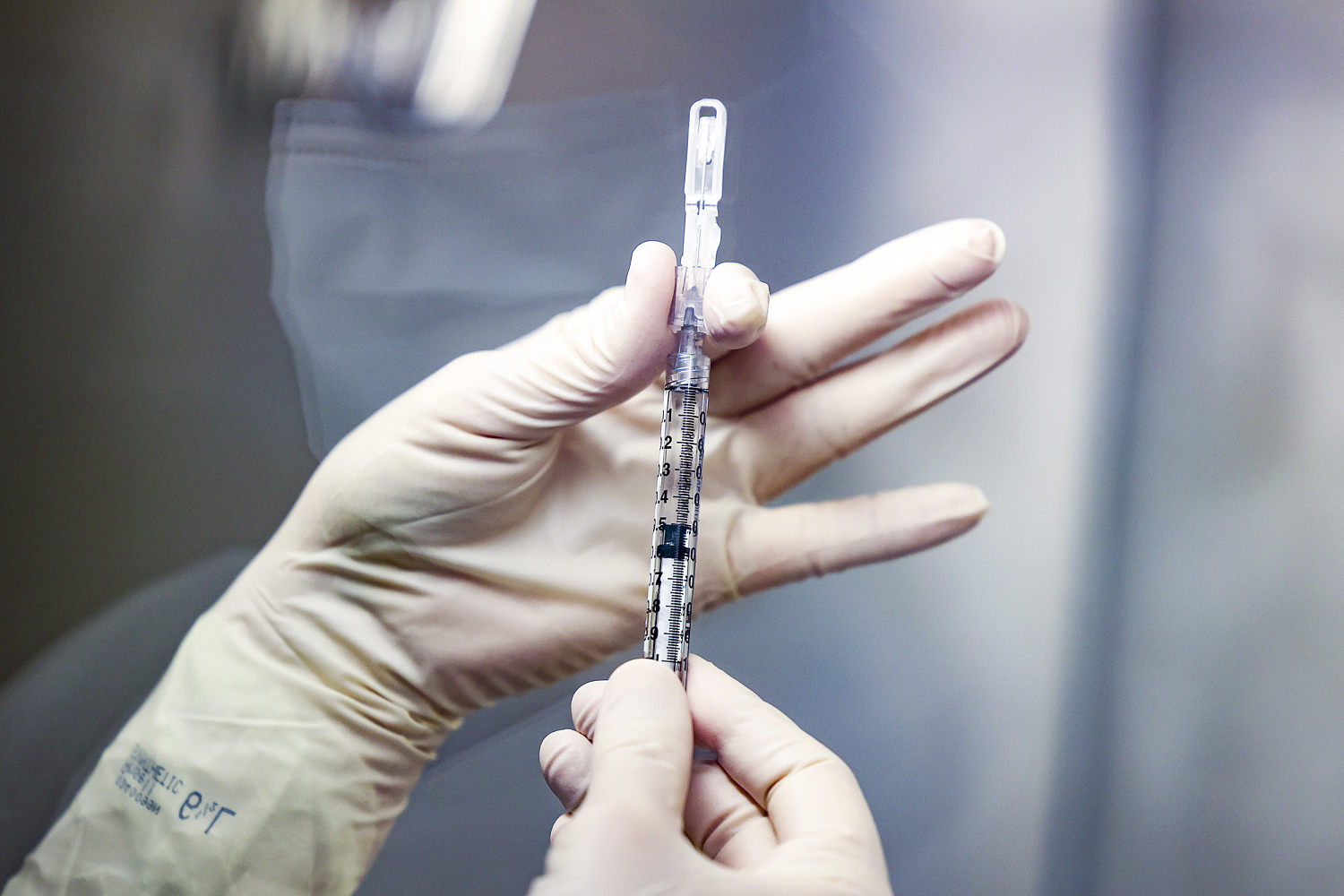
Then came a quiet revolution wrapped in a syringe.
The Tailor and the Tumor
To understand how the medical community recently fundamentally shifted the odds for these patients, we have to look at how we traditionally fought cancer. For a century, cancer treatment was an exercise in carpet-bombing. Chemotherapy attacked every fast-growing cell in the body, which is why patients lost their hair and suffered severe nausea. It was effective, but the collateral damage was immense.
Immunotherapy changed that by teaching the body's own defense system to recognize the enemy. Yet, even modern immunotherapies like pembrolizumab (commonly known as Keytruda) operate like a general police briefing: Look out for things that look generally suspicious.
The new frontier is not general. It is hyper-specific. It is bespoke.
Consider a hypothetical patient named Marcus. Marcus is forty-five, a father, an architect. His melanoma was caught, cut out, and declared gone. But because the cancer had reached his lymph nodes, his statistical future remained a coin toss.
In the old paradigm, Marcus would receive the standard immunotherapy. In the new era, Marcus’s tumor undergoes genomic sequencing. Scientists map the exact, unique genetic mutations—the "neoantigens"—present in his specific cancer cells and nowhere else in his body.
No two melanomas are identical. Marcus’s cancer possesses a molecular signature as unique to him as his thumbprint.
Once that signature is mapped, manufacturers construct a custom strand of messenger RNA (mRNA)—the very same technology that underpinned the rapid development of COVID-19 vaccines. This isn't a vaccine to prevent you from catching a disease from someone else. It is a therapeutic vaccine designed to teach Marcus’s immune system exactly what his specific recurrence would look like.
The vaccine acts like an elite intelligence briefing. It hands the T-cells a highly detailed, three-dimensional wanted poster of the enemy.
If a single, microscopic melanoma cell wakes up and attempts to divide, the immune system doesn't hesitate. It recognizes the threat instantly. It destroys it.
Five Years in the Dark
Medical breakthroughs are often announced with great fanfare based on data that tracks patients for twelve months, maybe two years. But in the oncological world, the gold standard—the milestone that patients and doctors whisper about with bated breath—is the five-year mark.
Five years is the horizon where "remission" begins to feel like "cure."
Recently, the data from a landmark phase II trial (known as KEYNOTE-942) tracking this personalized mRNA vaccine treatment reached that critical five-year milestone. The results were not just statistically significant. They were staggering.
Patients who received the personalized vaccine (developed by Moderna and Merck, coded as mRNA-4157/V940) in combination with the standard immunotherapy saw the risk of recurrence or death plunge by 49 percent compared to those who received the immunotherapy alone.
Let that number sit with you for a moment.
In a group of one hundred people facing a high probability of their cancer returning, nearly half of those who would have relapsed under the best available standard treatment did not. Their scans remained clear. Their lives remained uninterrupted.
The trial also revealed a 62 percent reduction in the risk of distant metastasis—meaning the cancer’s ability to break away and set up lethal outposts in the lungs, liver, or brain was severely crippled.
This is the difference between a life lived in three-month increments—from scan to scan, paralyzed by anxiety—and a life where you can actually plan a vacation two years from now. It is the difference between watching your child graduate or leaving behind an empty chair.
The Weight of the Custom Line
The science is elegant, but the logistics are a mountain.
When a pharmaceutical company manufactures a standard drug, they create millions of identical doses in a massive facility. The process is streamlined, efficient, and scalable.
With a personalized vaccine, the manufacturing line is exactly one person long.
A piece of your tumor must be biopsied. It must be shipped to a specialized laboratory. The DNA must be sequenced, the mutations identified, the mRNA sequence designed, synthesized, quality-tested, vialed, and shipped back to your local clinic.
During the clinical trials, this process took anywhere from six to nine weeks. For a patient who knows that microscopic cells could be multiplying every hour, that waiting period is an agonizing eternity. You are clean from surgery, but you are unprotected, waiting for the armor to be forged.
There is also the question of accessibility and cost. Creating a custom medicine for every single individual on earth who develops high-risk melanoma is an incredibly resource-intensive endeavor. It requires specialized infrastructure, highly trained geneticists, and massive computational power.
As this technology moves from controlled clinical trials toward broader regulatory approval and real-world implementation, the medical system faces a daunting question: How do we scale intimacy? How do we turn a bespoke luxury of science into a standard of care accessible to a farmer in Iowa or a teacher in a rural village?
We must also acknowledge the uncertainty that still lingers. While a 49 percent reduction in risk is a monumental leap forward, it is not 100 percent. Some patients in the trial still saw their cancer return despite the vaccine. The immune system is a complex, temperamental machine, and sometimes the enemy finds a way to disguise itself or mute the T-cell response. We do not yet fully understand why the vaccine works miracles for one body and falls short in another.
But the direction of travel is unmistakable.
Beyond the Skin
The implications of this five-year data ripple far beyond the realm of dermatology. Melanoma has long been the guinea pig for immunotherapy because it is a highly mutated cancer, making it easier for the immune system to spot once it knows what to look for.
But the blueprint has been validated.
If you can sequence a melanoma tumor and train the body to fight it, you can theoretically do the same for non-small cell lung cancer, for pancreatic cancer, for colorectal cancer. Trials are already underway for these deadlier, more hidden malignancies.
The strategy is shifting from attacking the disease to fortifying the individual.
We are moving away from an era where we treat "colon cancer" or "breast cancer" as monolithic entities. Instead, we are treating your colon cancer, your breast cancer. The disease is being stripped of its generalized power and reduced to a specific, solvable genetic puzzle.
The View from the Horizon
Imagine Marcus five years after his diagnosis.
He still remembers the cold chill of the doctor’s office when the word malignant was first spoken. He still remembers the faint red line of the surgical scar on his back.
But because of a sequence of genetic code created specifically for him and delivered through a tiny needle, his immune system spent the last sixty months quietly patrolling his bloodstream like a highly trained security force, neutralizing threats before they could ever register on a CT scan.
He doesn't think about the cancer every day anymore. He thinks about his daughter’s upcoming soccer game. He thinks about the kitchen remodel. He thinks about the mundane, beautiful, ordinary details of a future he didn't think he would get to see.
The shadow is still there—it always is for anyone who has stared down a diagnosis—but it has grown faint, pushed back by the steady, quiet light of a medicine that knows exactly who he is.