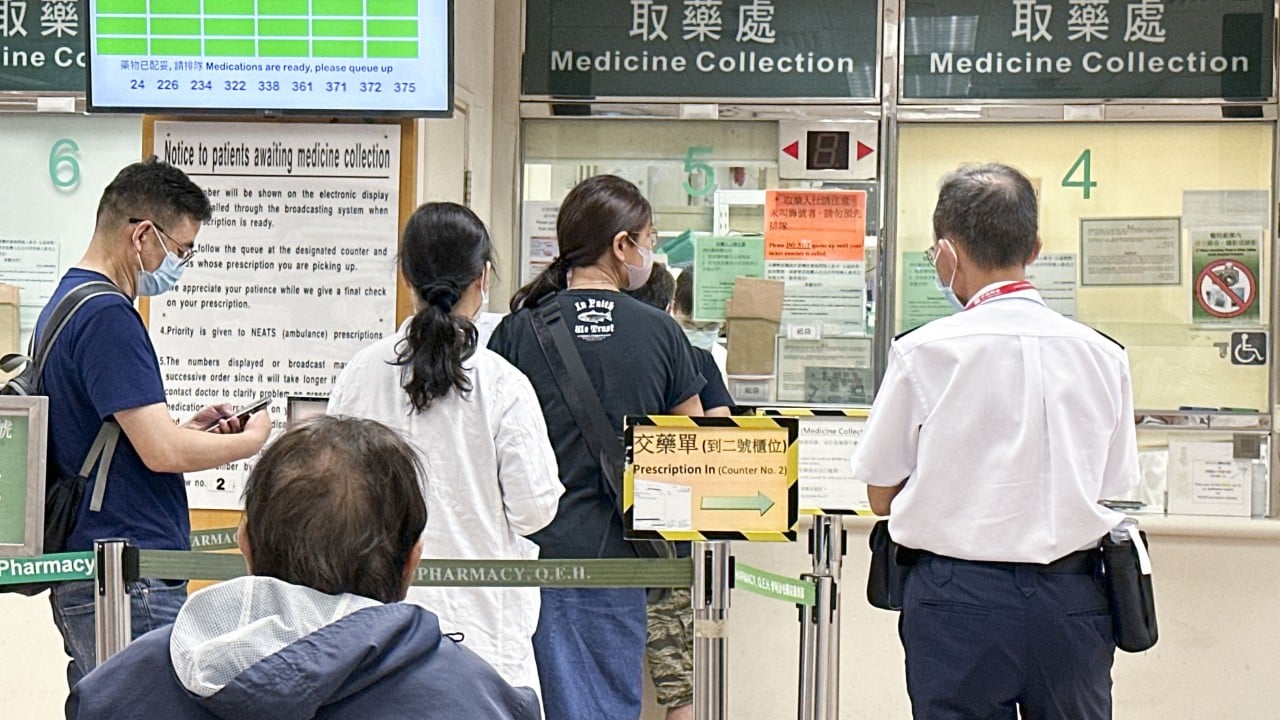
Hong Kong blood cancer patients will now pay just HK$240 a year for a life-saving drug that previously cost up to HK$500,000 annually. The Hospital Authority added Dasatinib, a targeted second-generation therapy for acute lymphoblastic leukemia and chronic myeloid leukemia, to its public drug formulary as a special drug. This system shake-up immediately shields roughly 400 vulnerable patients from financial ruin, transferring a HK$49 million annual fiscal burden to taxpayers. But while the immediate relief is undeniable, the policy shift exposes a deeper, structural crisis within Hong Kong's healthcare system regarding how ultra-expensive therapies are vetted, funded, and rationed.
For over two decades, the city's public healthcare gatekeepers operated under a strict, often slow-moving framework designed to protect the public purse. Patients caught in the gap between cheap generic options and astronomical breakthrough therapies were forced to deplete their life savings or beg for assistance from charity safety nets. This sudden policy pivot is not just a routine bureaucratic update. It is a reactive admission that the existing framework for importing and subsidizing innovative medicine has pushed local families to their absolute breaking point.
The Mathematical Wall Defeating Families
To understand the magnitude of this change, one must look at the brutal arithmetic of a leukemia diagnosis in Hong Kong. First-generation targeted therapies like Imatinib laid the groundwork, but when patients developed resistance, doctors turned to advanced alternatives like Dasatinib. Until April, that clinical transition came with an annual price tag that mirrored the cost of a luxury vehicle.
Public hospitals classified these advanced treatments as self-financed items. A regular middle-class family, earning too much to qualify for welfare but far too little to afford HK$40,000 every month for a single medication, faced an impossible choice. They could either refuse optimal medical treatment or watch their household wealth evaporate.
The new classification as a special drug completely erases that barrier. Patients now pay a standardized fee of just HK$20 every four weeks. It is a massive victory for patient advocacy groups who have spent years arguing that access to health should not be dictated by a household asset test. Yet, this victory raises an awkward question for the Hospital Authority. If the clinical data proving the superiority of these drugs has been available globally for years, why did it take until now to lower the barrier?
Inside the Sluggish Machinery of the Drug Formulary
The delay lies within the opaque evaluation process of the Hospital Authority Drug Formulary, a system established in 2005 to standardize drug utilization across all public hospitals. Every year, new pharmaceutical marvels arrive on the global market, and every year, Hong Kong's clinical committees evaluate them through a narrow lens of localized cost-effectiveness.
FORMULARY EXPANSION (2022 - 2025)
┌───────────────────────────────────────┬───────────┐
│ Category                              │ Expansion │
├───────────────────────────────────────┼───────────┤
│ Special Drugs (Standard Subsidized)   │ 36 ➔ 41   │
│ Self-Financed Items with Safety Net   │ 36 ➔ 66   │
└───────────────────────────────────────┴───────────┘
This slow, incremental growth shows how carefully the government manages its balance sheet. Bureaucrats fear that opening the floodgates to ultra-expensive drugs will overwhelm the public healthcare budget. To manage this, authorities frequently push expensive therapies into the safety net category first, forcing patients to pass a strict means test through the Samaritan Fund before receiving aid.
By directly classifying Dasatinib as a special drug instead of keeping it locked behind a welfare means test, the government is subtly shifting its philosophy. They are acknowledging that chronic, life-threatening illnesses can bankrupt any citizen, not just the historically impoverished. But this ad-hoc generosity creates an uneven landscape where survival depends heavily on which specific disease a patient contracts.
The Selective Mercy of a Fractured Safety Net
While leukemia patients celebrate this policy change, hundreds of individuals suffering from other rare genetic disorders or advanced cancers remain stuck in the old, complex system. For instance, advanced therapies for spinal muscular atrophy and specific rare colorectal or lung cancers are still classified as self-financed items or remain restricted behind rigid safety net rules.
A system that rescues one group of patients while leaving another to navigate complex bureaucratic paperwork is fundamentally flawed. The Hospital Authority recently relaxed the means-testing criteria for the Samaritan Fund, resulting in a 15 percent increase in approved drug applications. Public spending on these approved subsidies jumped 20 percent year-on-year to HK$620 million.
These rising figures show that the public system is under massive strain. The government cannot afford to subsidize every breakthrough drug that enters the market without collapsing its broader financial framework. By shielding leukemia patients from the true market cost of medicine, the state is taking on an open-ended financial commitment. This strategy works well when a drug's target pool is limited to 400 people, but it becomes completely unsustainable if applied to more common chronic conditions.
The Push for Direct Mainland Procurement
The long-term solution to this pharmaceutical crisis will not come from expanding government subsidies. It will come from fundamentally rewriting how Hong Kong sources its medicine.
The city is currently preparing to establish the Office for Introducing Innovative Drugs and Medical Devices. The explicit goal of this new entity is to bypass traditional, slow Western approval channels and proactively negotiate directly with global and mainland Chinese pharmaceutical manufacturers.
For decades, Hong Kong relied almost entirely on secondary approvals from stringent regulatory bodies in the US and Europe. This approach kept standards high, but it left local buyers entirely at the mercy of global pricing structures set by multinational pharmaceutical giants. Mainland China, using its massive market size, has successfully used centralized volume procurement to force drug companies to cut their prices by up to 60 percent.
If Hong Kong can integrate its procurement strategy with the Greater Bay Area, it will gain massive leverage. The city could negotiate significantly lower prices for advanced therapies, changing the current dynamic where the government uses taxpayer money to pay retail prices for essential medicine.
Until that structural shift happens, individual drug updates are merely temporary fixes for a much deeper systemic vulnerability. Lowering the cost of a crucial leukemia drug to HK$240 a year keeps families together and saves lives today. However, it also reminds us of the precarious nature of a public healthcare system balancing the realities of human survival against a rigid fiscal budget.


