The heat in the Équateur province of the Democratic Republic of Congo does not just sit on you. It presses. It carries the thick, sweet scent of the Congo River and the sharp, metallic tang of red clay dust that kicks up beneath the tires of lone motorbikes.
In May 2018, that dust carried something else.
An ambulance driver named Jean-Pierre—a hypothetical composite of the dozens of brave health workers who first answered the call—felt the steering wheel slip in his sweaty palms as he navigated the rutted roads toward Bikoro. He had heard the whispers before he received the official dispatch. People were bleeding. Families were vanishing into the forest to hide their sick.
When we talk about global health emergencies, we usually talk about them in the cold, antiseptic language of epidemiology. We talk about transmission vectors, case fatality rates, and containment zones. We look at graphs with sharp, terrifying upward curves.
But Ebola is not a graph.
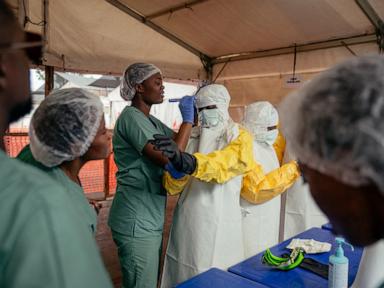
It is the sound of a mother crying through a plastic tarp because she cannot touch her dying child. It is the suffocating heat inside a yellow personal protective equipment (PPE) suit, where your own sweat pools in your boots until you feel like you are drowning on dry land. To understand the outbreak currently creeping through the dense forests of the DRC, you have to leave the Geneva briefing rooms behind and step into the red dust.
The Ghost in the Blood
Ebola is remarkably simple, which is what makes it so devastating. It is a filament, a tiny, thread-like ribbon of RNA wrapped in a protein coat. Under an electron microscope, it looks almost delicate, like a piece of dropped string.
But inside the human body, it acts like a demolition crew.
Think of your blood vessels as a vast, intricate network of plumbing. The pipes are lined with endothelial cells that keep the fluid moving smoothly where it belongs. The Ebola virus targets these specific cells. It hijacks them, forces them to replicate the virus, and then destroys them from the inside out.
Suddenly, the pipes begin to leak.
The immune system, panicked by this scorched-earth assault, launches everything it has. It releases a torrent of inflammatory signaling molecules called cytokines. In a healthy body fighting off a common cold, cytokines are the infantry, deployed to precise locations. In an Ebola patient, they become a carpet-bombing campaign. This is the infamous "cytokine storm." The body turns against itself, destroying its own tissue in a desperate, blind attempt to kill the invader.
Blood pressure drops precipitously. Organs, starved of oxygen and oxygen-rich blood, begin to fail one by one. The liver shuts down. The kidneys stop working. The external bleeding that dominates public imagination—the bleeding from the eyes, nose, and gums—only happens in a fraction of cases. The real devastation is internal. The body simply runs out of fluid, collapsing into a state of profound, irreversible shock.
The numbers out of the DRC tell a grim story, but they lack the weight of reality. When an official report states that the case fatality rate of the Zaire ebolavirus strain hovers around 50 percent, or sometimes spikes to 90 percent without intervention, it means a coin flip. Walk into a home with four sick children. Toss a coin four times. That is the math of Ebola.
The Friction of Isolation
Why is containment so difficult in the DRC? The answer lies in the geography and the profound exhaustion of a region that has known too much conflict.
The Équateur province is vast, covered by dense equatorial rainforest. Roads are often non-existent or reduced to muddy tracks impassable during the rainy season. To track a single contact—someone who may have brushed shoulders with an infected person at a market—health workers must travel for hours on the backs of motorbikes, wade through swamps, or paddle dugout canoes down remote tributaries.
Distance is the first enemy. Mistrust is the second.
Imagine you live in a village that has been neglected by the central government for decades. The clinics have no medicine, the schools have no books, and the roads are broken. Suddenly, when a terrifying disease appears, white trucks arrive. Men and women descend from them wearing white, faceless suits that look like nightmares from a science fiction movie. They take your sick relatives away to tents surrounded by orange plastic fencing.
Sometimes, those relatives never come back.
Their bodies are buried by strangers in body bags, denied the traditional washing and burial rites that honor the dead and ensure their passage to the ancestor realm.
"They are stealing the organs," the rumors whisper in the market squares. "They brought the virus to make money."
Can you blame them for running? Fear is a rational response to the incomprehensible. When health teams arrived in Mbandaka, a bustling port city of more than one million people connected to the capital of Kinshasa via the Congo River, the stakes shifted from a localized crisis to a potential national catastrophe. In a crowded urban center, a single undetected case can fan out into dozens of exposures in a matter of hours.
The virus thrives on human connection. It spreads through the care we give to the sick and the respect we show to the dead. It weaponizes love.
The Shield of Science
Yet, we are not where we were during the horrific West African outbreak of 2014 to 2016. The world learned brutal lessons from the deaths of more than 11,000 people in Guinea, Liberia, and Sierra Leone.
We now possess weapons we could only dream of a decade ago.
The most potent of these is the Ervebo vaccine. It is a marvel of modern biotechnology, a live-attenuated vesicular stomatitis virus engineered to carry a protein from the Zaire Ebola virus. It does not cause Ebola, but it trains the human immune system to recognize the enemy instantly.
During recent outbreaks in the DRC, epidemiologists deployed a strategy known as "ring vaccination."
It is a beautiful, tactical concept. Instead of trying to vaccinate an entire population of millions, health workers identify an infected individual. They then draw a circle around that person, vaccinating all of their primary contacts—family, friends, neighbors. Then, they draw a second circle, vaccinating the contacts of those contacts.
The vaccine creates a human shield. It creates a firebreak in the forest, ensuring that when the virus leaps from the host looking for a new home, it finds only a wall of immunity.
But a vaccine is only as good as the cold chain that preserves it. Ervebo must be stored at temperatures between -60°C and -80°C. Consider the logistical insanity of maintaining those temperatures in a tropical rainforest where there is no electricity grid, where the humidity climbs to 90 percent, and where the only power source is a sputtering diesel generator strapped to the back of a motorbike.
Specialized, ultra-cold portable freezers called Arktek devices, insulated with high-grade materials and filled with precise cooling blocks, have become the unsung heroes of the response. They are modern relics carried on the shoulders of local health workers through the mud, keeping the fragile liquid gold alive.
The Unseen Frontline
We often praise the international doctors, the epidemiologists flying in from Atlanta or Geneva. They deserve praise. But the true weight of this fight is carried by the Congolese people themselves.
It is carried by the local community leaders who stand up in front of angry, terrified crowds to say, "The doctors are here to help us." It is carried by the survivors.
Ebola survivors carry a unique gift in their blood: antibodies.
Because their immune systems successfully figured out how to defeat the virus, their plasma is rich with the blueprints for victory. In treatment centers, survivors who are now immune can walk into the high-risk zones without the terrifying, suffocating PPE suits. They can sit with the sick. They can look a frightened child in the eye, show them a human face, hold their hand, and feed them broth. They offer something no vaccine can provide: dignity.
New therapeutics, like the monoclonal antibody treatments Ebanga and Inmazeb, have fundamentally altered the prognosis for those who seek care early. If a patient reaches an Ebola Treatment Center within the first few days of symptom onset, their chances of survival skyrocket.
The tragedy is that many do not arrive until it is too late. They wait because of fear, or because the journey takes three days through the bush, or because they tried traditional remedies first.
The Cost of Looking Away
The outbreak in the DRC is a reminder of a uncomfortable truth about our interconnected world: a health crisis anywhere is a threat everywhere. The forests of Équateur may seem infinitely distant from the concrete corridors of New York, London, or Tokyo.
They are not.
A passenger can board a motorbike in Bikoro, catch a barge to Kinshasa, and be on an international flight to any major global hub within forty-eight hours, all while the virus is still quietly incubating in their bloodstream, showing no symptoms at all.
The investment in local surveillance, in building strong, permanent healthcare systems in the heart of Africa, is not an act of charity. It is an act of collective self-preservation. When we allow clinics in rural Congo to crumble, when we ignore the lack of clean water and basic protective gear for provincial nurses, we leave the front gate of our global village wide open.
The motorbike engines eventually fade into the evening insect chorus of the forest. The red dust settles back onto the leaves. In the quiet of the African night, the work continues. Health workers check the temperature dials on their portable freezers, update their contact lists by the light of a smartphone, and prepare to go back out onto the tracks at dawn.
They do not look away. We cannot afford to either.