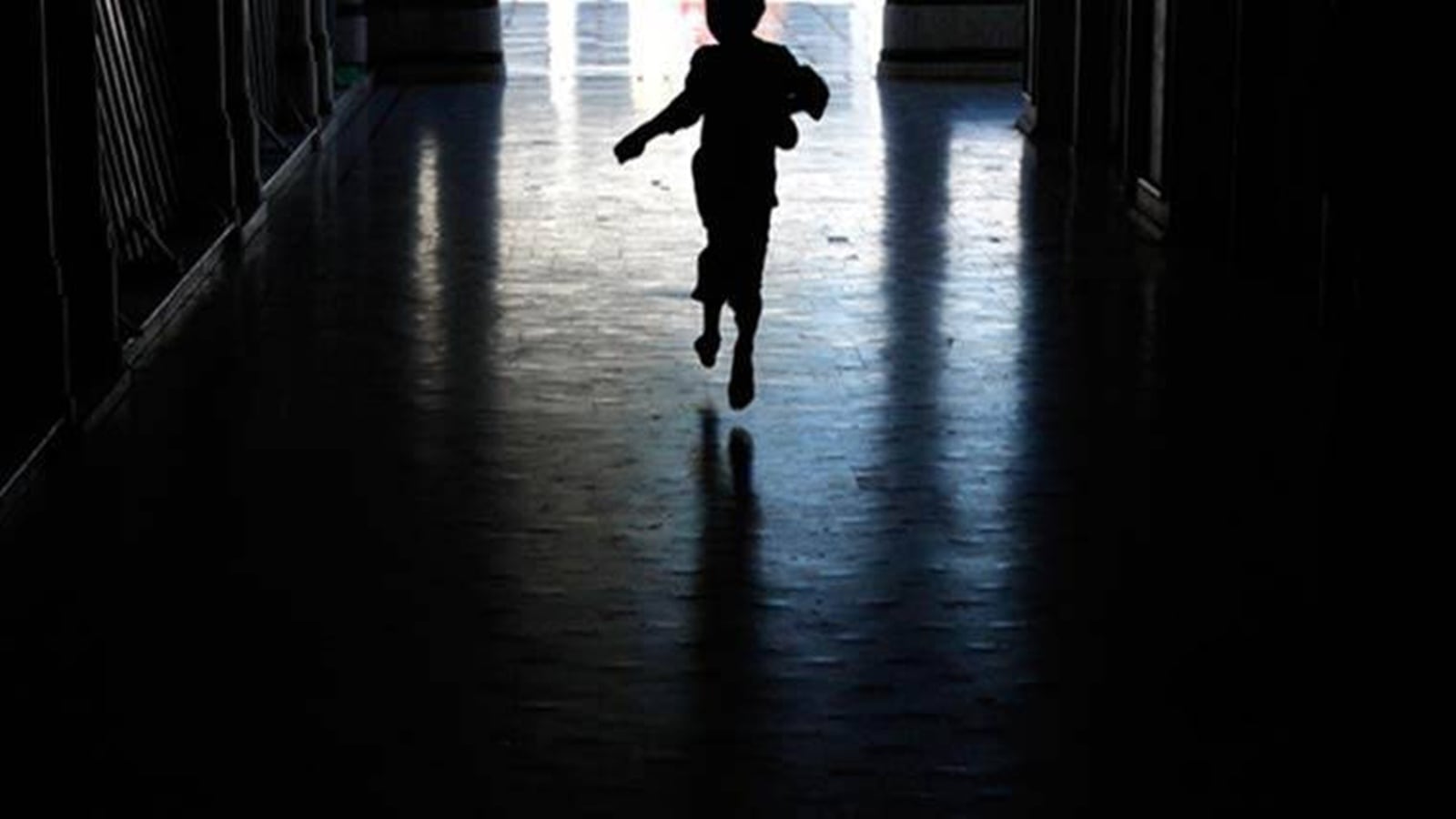
The afternoon heat in Dhaka does not move. It sits on your chest, thick with dust and the smell of exhaust, heavy enough to slow your breathing. In the crowded alleyways of the Mirpur district, life is loud. Mechanics clang wrenches against old engines. Street vendors shout the prices of green mangoes. Children laugh as they chase a deflated football through the dirt.
But if you step away from the main thoroughfare, past the corrugated iron gates and into the cramped, single-room homes where families of five sleep on a single wooden platform, the noise changes. Or rather, it disappears. There is a specific, heavy silence that hangs over certain households. It is the silence of a secret that everyone knows but nobody dares to name.
For those of us who have spent years working in the communities across Bangladesh, tracking the fault lines of social collapse, that silence is louder than any siren.
We live in a culture that worships progress. We point to the rising skyscrapers in Gulshan, the booming garment exports, the digital connectivity reaching the remotest villages of the delta. We celebrate the numbers. But numbers are deceptive masks. They hide the rot beneath the foundation. While the economic graphs march upward, another set of statistics is climbing alongside them, quiet and deadly.
Human rights organizations operating on the ground have watched the data shift from a steady simmer to a raging fire. In recent months, local advocacy groups, including the prominent Ain o Salish Kendra (ASK), have documented a terrifying surge in violence against the most vulnerable members of society. Children.
The reports are stackable towers of misery. Hundreds of minors subjected to physical abuse, rape, and murder within shockingly compressed timeframes. In the first half of a single recent year, documented cases of severe child abuse surged by over thirty percent compared to the previous period. Sexual assault numbers climbed even faster. And the finality of the violence has escalated; dozens of children are killed every single month, their bodies left in ponds, mustard fields, or abandoned construction sites.
These are not just data points on a spreadsheet presented at a press conference in a air-conditioned hotel. They are a baseline reality of terror.
The Anatomy of the Shadow
To understand how a society reaches this point, we have to look past the monstrous individuals who commit these acts and look at the scaffolding that allows them to do it without fear.
Consider a hypothetical neighborhood on the outskirts of Chittagong. Let us call it a composite of a hundred places I have visited. In this neighborhood lives a ten-year-old girl named Fahima. Her parents work twelve-hour shifts in a textile factory. She is responsible for fetching water from the communal tap and watching her younger brother.
One afternoon, a man from three doors down—a man who holds some minor political influence in the local ward—corners her in an alley.
When Fahima’s mother comes home and finds her daughter weeping in the corner, the world does not stop. The local police do not arrive with sirens blaring. Instead, the machinery of silence begins to turn. The neighborhood elders drop by. They talk about "shame." They talk about the family’s reputation. They point out that the perpetrator has connections to the local shalish—the informal village arbitration court. They suggest a small cash payment to make the problem go away.
If the family pushes back, the pressure hardens. Threats are made. The father’s job is suddenly at risk. The police station refuses to file a First Information Report (FIR), telling the family to settle it internally.
This is the real monster. It is not just the act of violence itself; it is the comprehensive, systemic erasure of justice that follows. The legal system becomes a labyrinth designed to exhaust the poor until they drop their claims from sheer starvation.
The statistics gathered by rights groups show that less than one percent of reported child sexual abuse cases in Bangladesh result in a conviction. Think about that number. One percent. It is not a deterrent; it is a green light. It tells the predator that the odds are entirely in his favor. It tells the victim that her voice is worth nothing.
Why the Surge is Happening Now
The sudden spike in these crimes is not an accident of history. It is the direct result of a society undergoing massive, uneven friction.
When economic pressures mount—driven by inflation, climate displacement in the coastal regions, and the post-pandemic unraveling of community safety nets—the stress does not distribute itself evenly. It flows downward. It pools at the bottom, crushing those who cannot fight back.
Men who feel powerless in their economic lives seek dominance where they can find it. The home and the immediate neighborhood become theaters of control. Combine this psychological pressure with a profound breakdown in institutional trust, and you create a perfect environment for exploitation.
People have stopped believing that the courts will protect them. When the state abdicates its role as a protector, the social contract dissolves. In its place, a survivalist ethos takes over. The powerful take what they want, and the weak endure what they must.
The nature of the violence has shifted too. It has become more performative, more brutal. Predators no longer hide their crimes with the same desperation. When children are not just abused but murdered and discarded like trash, it signals a complete loss of empathy within the social fabric. It means the perpetrator does not view the child as a human being with a future, but as a temporary object of impulse, easily disposed of because the consequences are non-existent.
The Cost of the Closed Eye
We often treat these stories as isolated tragedies. We read the headline, feel a fleeting pang of horror, and turn the page. We tell ourselves it happens in places we do not visit, to people we do not know.
But the infection does not stay contained in the slums or the remote villages. A society that allows its children to be hunted with impunity is a society that is dying from the inside out.
The children who survive these ordeals do not simply grow out of them. They carry the trauma into adulthood, weaving it into the next generation of families, workplaces, and communities. The psychological damage manifests as chronic anxiety, depression, and a fundamental inability to trust any human relationship. We are effectively mass-producing a generation defined by fear and betrayal.
The economic cost is staggering, though rarely calculated. The loss of human potential, the strain on an already overburdened healthcare system, and the productivity lost to psychological paralysis all drag down the very progress our leaders boast about. You cannot build a sustainable, modern nation on a foundation of broken children.
But the moral cost is higher. Every time a rights group releases a report filled with double-digit increases in child homicides, and every time the public response is a collective shrug, we lose a piece of our collective humanity. We become complicit.
Breaking the Silence
The solution is not complex, but it requires something our leadership has consistently failed to provide: political will.
We do not need new laws. Bangladesh already has the Women and Children Repression Prevention Act, which carries severe penalties, including the death penalty, for heinous crimes. The problem is execution. The laws are statues in a museum—impressive to look at but completely inert.
Real change requires a dismantling of the informal protection networks that shield criminals. It means holding police officers accountable when they refuse to register cases. It means fast-tracking trials in specialized tribunals so that families do not have to spend a decade waiting for a verdict while their savings evaporate. It means funding independent victim-support services so that a mother does not have to choose between seeking justice for her daughter and feeding her remaining children.
Most of all, it requires a cultural reckoning. We must stop treating sexual violence as a matter of family honor to be hidden away. Honor does not belong to the predator; shame does. Until we shift the burden of shame entirely onto the perpetrator, the silence will remain unbroken.
The sun begins to set over Dhaka, turning the smog an angry orange. In the alleys of Mirpur, the children are being called inside. The doors are locked with cheap iron padlocks. But those locks only keep out the strangers. For too many children in this country, the danger is already inside the perimeter, waiting for the night, confident that no one will hear the cry.


