The plastic chairs in the waiting area are always the first things you notice. They are cheap, molded, and bleached by the relentless sun until they turn a chalky pink. Usually, they are loud. They scrape against the concrete floors as mothers shift weight, rocking feverish children. They rattle when a patient collapses into them, slick with sweat and shivering despite the heavy tropical heat.
But when the numbers climb past a certain threshold, the chairs go quiet.
According to the latest briefings from the World Health Organization, the number of suspected Ebola cases in the current outbreak zone has officially breached six hundred. Officials warn that the trajectory suggests many more are on the horizon. To a data analyst in Geneva, 600 is a data point on a logarithmic curve. It is a prompt to release emergency funding, an entry in a spreadsheet, a stark headline designed to pierce through the noise of a crowded 24-hour news cycle.
To those on the ground, 600 is a physical absence. It is six hundred families suddenly fractured, six hundred empty seats around cooking fires, and six hundred names whispered in fear behind the plastic tarps of isolation wards.
The air inside an Ebola treatment center smells heavily of chlorine. It burns the back of your throat, a sharp, chemical sting that attempts to mask the heavier, sweeter scent of human sickness. Anyone who has ever walked past the orange plastic fencing of a bio-secure zone retains that smell in their nasal memory forever. It is the scent of a border town between life and death.
To understand how a virus like Ebola secures a foothold and expands its territory so rapidly, consider a hypothetical village named Kanya.
In Kanya, the economy runs on proximity. People trade cassava in crowded markets, shoulder to shoulder. They share communal meals from large metal bowls. When an elder falls ill, love is measured by touch. You hold their hand. You wipe the sweat from their forehead. When they pass away, the final act of devotion is to wash the body, preparing it for the ancestors.
The virus exploits this human decency. It transforms our deepest, most beautiful instincts—compassion, grief, familial duty—into a highly efficient transport mechanism.
When a young woman named Mariama—a composite representation of the early patients seen in these outbreaks—first develops a headache, nobody suspects a global health emergency. They suspect malaria. They suspect typhoid. They suspect the common fatigue of a long harvest. She stays home. Her sister cares for her, washing her soiled linens in the local stream.
By the time the hemorrhagic fever manifests, the invisible web has already been spun. The sister is infected. The motorbike taxi driver who carried Mariama to the clinic is infected. The traditional healer who pressed his hands to her abdomen is infected.
This is the hidden mathematics of an outbreak. One becomes three. Three becomes nine. Nine becomes twenty-seven. By the time the World Health Organization confirms the first official case via laboratory testing, the virus is already weeks ahead, hiding in the incubation periods of dozens of unsuspecting hosts.
The current surge to 600 cases represents a critical tipping point in epidemic management. When an outbreak is small, contact tracers can act like detectives. They trace every interaction, building a family tree of transmission. They find the driver, the sister, the market vendor. They monitor them for twenty-one days, the maximum incubation period of the virus.
When the number hits 600, the system begins to fracture under its own weight.
Contact tracing at this scale requires an army. It demands hundreds of local healthcare workers willing to walk into communities where suspicion runs high and fear runs deeper. In many affected regions, international intervention is met not with open arms, but with profound distrust.
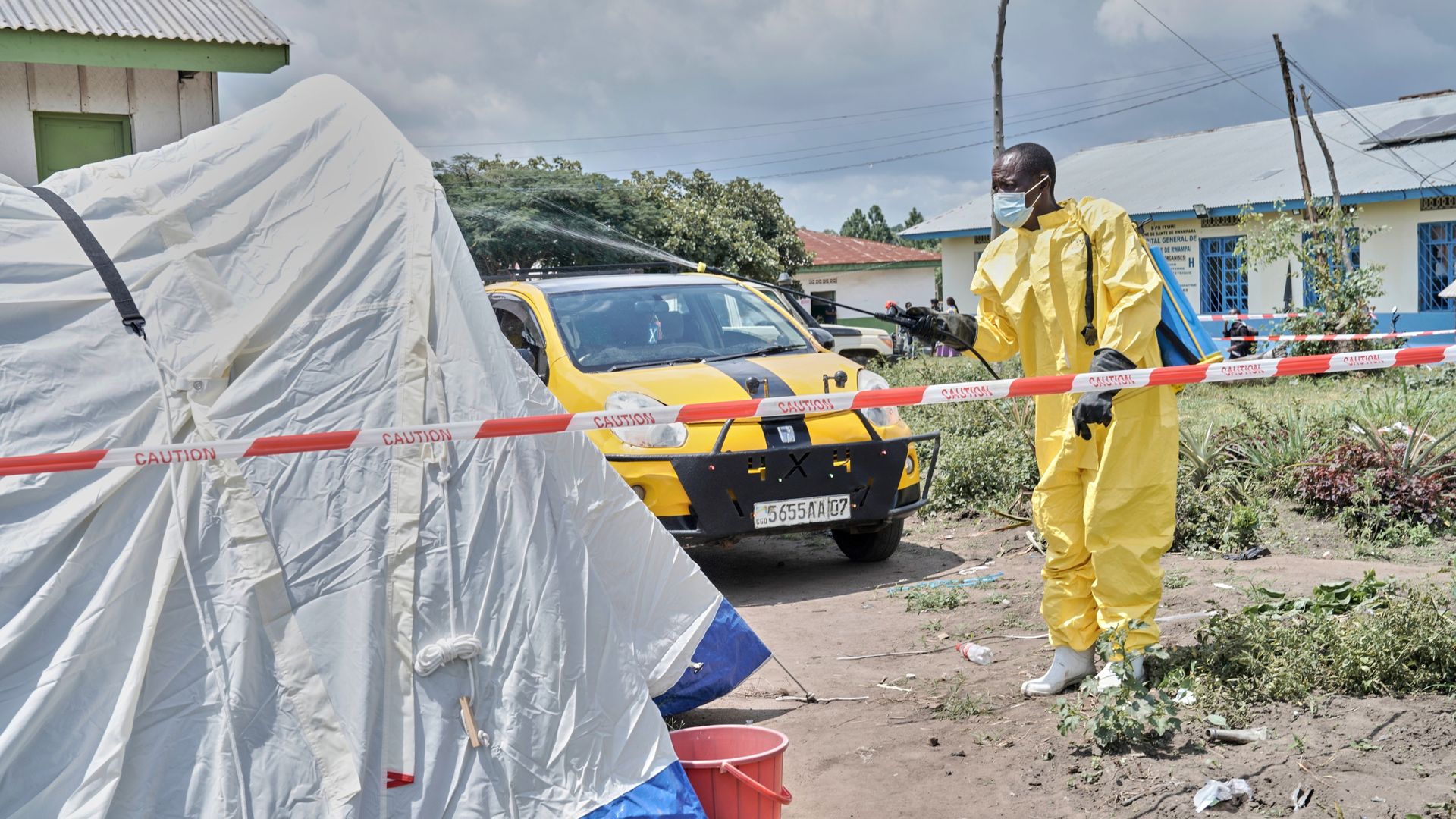
Imagine seeing outsiders arrive in your village wearing white, faceless Tyvek suits, looking less like doctors and more like astronauts. They carry spray tanks of chlorine. They take away your sick relatives behind high walls, and sometimes, those relatives never return. The bodies are buried in body bags by teams who do not allow the family to touch or even see the deceased.
To a community steeped in tradition, this does not look like healthcare. It looks like state-sanctioned abduction.
This cultural friction is where the virus finds its greatest ally. Resistance grows. People begin hiding their sick in the forest or moving them across provincial borders to relatives in unaffected towns. A father, desperate to save his son from what he perceives as a death camp, slips away into the night on a dirt road. He carries the virus to a new city, a new market, a new network of unsuspecting targets.
Suddenly, the curve spikes again.
The medical community understands the biology of Ebola perfectly. We know exactly how the filovirus attaches to human cells, how it replicates, and how it systematically dismantles the body's clotting mechanisms. We have developed highly advanced monoclonal antibody treatments and experimental vaccines that can drastically improve survival rates if administered early.
The failure to contain the virus is rarely a failure of science. It is a failure of sociology.
The real battleground against Ebola is not fought in sterile laboratories or high-tech isolation pods. It is fought in the minds of terrified people. It is won or lost based on whether a grandmother trusts the community health worker enough to report that her grandchild has a fever.
When that trust breaks down, the numbers explode.
Right now, teams on the ground are working against a ticking clock to prevent the current 600 suspected cases from converting into thousands. The logistics are staggering. Every single treatment center requires thousands of gallons of clean water daily. They need a constant supply of personal protective equipment (PPE). A single doctor or nurse can only spend a few hours inside a hot protective suit before dehydration and exhaustion set in, meaning staffing requirements are massive.
If the supply chain falters by even a few days, the front line collapses.
The true cost of an Ebola outbreak extends far beyond the mortality rate of the virus itself. The wider healthcare system in an affected region often shuts down entirely out of fear. Routine immunization clinics close. Maternity wards empty because pregnant women are terrified of contracting the virus at the hospital. Patients with treatable conditions—malaria, appendicitis, high-risk labor—stay home and die in silence.
The shadow cast by the virus is often longer and deadlier than the virus itself.
As the sun sets over the containment zones today, the focus remains on the horizon. The World Health Organization's warning of more cases to come is a acknowledgment of a grim reality: the embers have already scattered into the wind. We are waiting to see where the next fires break out.
Inside the isolation wards, the nightly routine begins. Medical staff, their faces obscured by goggles and masks, move quietly between the cots. They check vitals, administer fluids, and speak words of comfort through layers of heavy plastic that muffle their voices into distant, ghostly echoes.
Outside, on the concrete porch of the triage center, a single pink plastic chair sits empty in the fading light, waiting for the next name to be called.