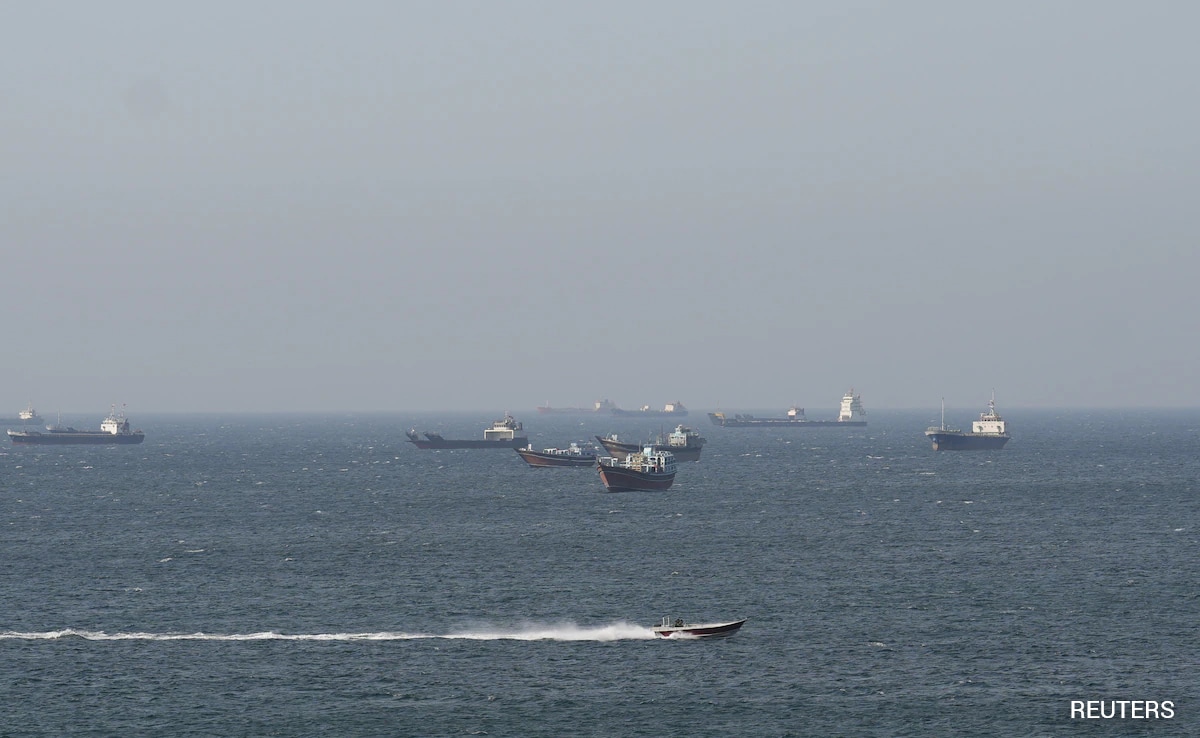
Twenty percent of the world's petroleum passes through a single, narrow strip of water sandwiched between Iran and Oman. It is the Strait of Hormuz. If you think a supply chain crunch at your local grocery store is frustrating, imagine what happens when this specific maritime artery gets clogged. Energy markets don't just react; they panic.
For decades, the burden of keeping this chokepoint open has fallen disproportionately on a few shoulders, primarily the United States military. That model is broken. It's unsustainable, expensive, and politically volatile. We need a radical shift toward a shared responsibility model where international stakeholders pay their fair share and provide actual naval assets to secure the transit lanes.
The reality of global trade dictates that a crisis in the Middle East instantly becomes a crisis in Tokyo, New Delhi, and Rotterdam. Relying on a single superpower to act as the world's permanent maritime security guard isn't working anymore. It's time for the nations that rely most on these energy flows to step up and build a resilient, multi-nation coalition that secures the strait for everyone.
The Brutal Geography of a Maritime Chokepoint
Geography is destiny. The Strait of Hormuz proves it. At its narrowest point, the shipping lanes are only two miles wide in either direction, separated by a two-mile buffer zone. This isn't open ocean. It's a crowded, highly constrained corridor where massive supertankers have almost no room to maneuver.
[Persian Gulf] ---> [Strait of Hormuz: 2-mile wide lanes] ---> [Gulf of Oman]
Iran sits directly on the northern coast, giving its military an overwhelming structural advantage. They can deploy fast-attack craft, lay sea mines, or position anti-ship missiles along the cliffs with ease. When tensions rise, the threat isn't theoretical. We saw it clearly during the Tanker War of the 1980s, and we see it in the periodic seizures of commercial vessels today.
The economic stakes are massive. According to data from the U.S. Energy Information Administration, roughly 20 million barrels of oil move through the strait daily. That's more than the entire daily consumption of the United States. It isn't just about crude oil either. Liquefied natural gas from Qatar relies heavily on this route. If Hormuz closes, the global economy takes an immediate, violent hit.
Who Actually Relies on the Strait of Hormuz
Here is the twist that most people miss. The country that has historically spent the most money protecting the strait—the United States—is no longer the primary consumer of the oil flowing through it. Thanks to the American shale revolution, the U.S. is now a net exporter of crude oil.
The real beneficiaries of a secure Strait of Hormuz sit in Asia.
- China: Imports a massive percentage of its crude oil from the Persian Gulf.
- India: Heavily dependent on Middle Eastern energy to fuel its growing economy.
- Japan and South Korea: Virtually their entire economic survival depends on uninterrupted tanker traffic through the strait.
Look at the math. It makes zero sense for American taxpayers to foot the entire bill for a security mission that directly protects Chinese, Japanese, and Indian energy supplies. Western nations shouldn't bear the full operational risk while Asian economies reap the rewards of stable prices. A fair system requires that those who consume the oil must help protect the route.
The Failure of Unilateral Security
For years, Washington used the Carter Doctrine to justify its massive naval presence in the region. The idea was simple. Any attempt by an outside force to gain control of the Persian Gulf region would be regarded as an assault on the vital interests of the United States.
That logic is outdated. Unilateral enforcement creates a massive free-rider problem. When one nation promises to fix everything, nobody else bothers to help. This dynamic lets wealthy nations avoid the political and financial costs of maintaining blue-water navies capable of escorting their own merchant fleets.
Worse, a purely Western military presence plays directly into local geopolitical rivalries. It gives adversarial regimes an easy target for nationalist rhetoric. A diverse, international fleet representing dozens of countries is much harder to vilify than a single American aircraft carrier strike group.
What True Shared Responsibility Looks Like
Shared responsibility cannot just be a vague diplomatic talking point. It requires hard assets, clear command structures, and financial commitments. We need an expanded version of existing frameworks like the Combined Maritime Forces, but with real teeth and broader participation.
First, nations utilizing the strait must contribute naval assets proportional to their import volumes. If a country receives 15% of the oil moving through the chokepoint, they should provide 15% of the escort ships, minesweepers, and aerial surveillance assets.
Second, we need to establish standardized rules of engagement that apply to all participating nations. This stops rogue actors from exploiting legal loopholes or targeting ships from specific nations. When a tanker is threatened, the nearest international vessel responds, regardless of the flag flying on either ship.
Third, we must integrate technological solutions to lower the overhead costs. Drone swarms, autonomous underwater vehicles, and satellite tracking can monitor the strait constantly. Sharing this real-time data across a unified command center allows for faster, less provocative responses to threats.
Overcoming the Political Roadblocks
Implementing this model isn't easy. The biggest obstacle is political distrust. China is hesitant to operate under a command structure that looks too Western. India values its strategic autonomy and resists getting dragged into formal alliances.
We can bypass this gridlock by focusing strictly on commercial protection. This isn't about regime change or projecting power into the Middle East. It's about protecting the global commons. The framework should operate under a strict United Nations mandate or a newly formed International Maritime Security Consortium.
[International Maritime Security Consortium]
     ├── Shared Satellite & Drone Data
     ├── Joint Escort Operations
     ├── Multi-Nation Funding Pool
Another objection is that some nations lack the naval capacity to help. That's fine. If a country can't send warships, they should contribute to a joint funding pool. This money would pay for maintenance, logistics, and drone procurement. No more free rides.
Immediate Action Steps for Global Maritime Security
Shifting to a shared responsibility model requires concrete policy changes from the world's major economies. We can't wait for the next major geopolitical crisis to start organizing.
Governments must take these steps immediately:
- Convene a Chokepoint Security Summit: The major energy-importing nations need to meet outside traditional security alliances to draft a new maritime treaty specifically for global chokepoints.
- Establish a Multi-National Fund: Create a transparent financial mechanism where non-military nations buy into the security apparatus protecting their trade goods.
- Deploy Non-Western Escorts: Asian powers need to begin regular, independent escort missions in coordination with existing regional forces to demonstrate capability and commitment.
- Invest in Alternative Routes: Accelerate the development of pipelines that bypass the strait entirely, such as lines running across Saudi Arabia to the Red Sea or through Oman, reducing the strategic leverage of the chokepoint.
The era of a single nation policing the world's oceans is ending. The Strait of Hormuz is too important to leave at the mercy of regional skirmishes or unilateral protectorates. Securing it is a global utility, and it's time for everyone who uses that utility to pay their bill.