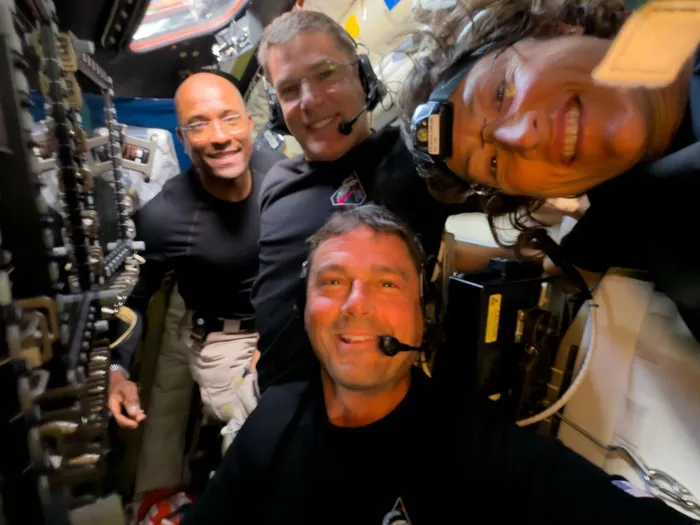
The return of the Artemis II crew from lunar orbit represents more than a milestone in human spaceflight; it is a validation of high-velocity atmospheric braking and heat shield integrity under extreme thermal loads. While superficial reporting focuses on the distance traveled—approximately 400,000 kilometers—the true analytical value lies in the transition from the lunar gravity well back to Earth’s atmosphere. This process requires precise energy management to convert kinetic energy into thermal energy without compromising the structural limits of the Orion Multi-Purpose Crew Vehicle (MPCV).
The Kinetic Energy Dissipation Problem
A spacecraft returning from the Moon enters Earth’s atmosphere at roughly 11 kilometers per second (approx. 40,000 km/h). This differs fundamentally from Low Earth Orbit (LEO) returns, such as those from the International Space Station, which occur at roughly 7.8 kilometers per second. The physics of reentry dictate that heating increases with the cube of velocity.
The Orion MPCV utilizes a skip-entry maneuver to manage this energy. Instead of a direct, steep descent—which would subject the crew to unsustainable G-forces and the vehicle to catastrophic thermal peaks—the capsule "skims" the upper atmosphere. This maneuver allows the spacecraft to shed a portion of its velocity, briefly exit the atmosphere, and then perform a final descent. This two-stage deceleration achieves three operational objectives:
- Reduction of Peak Heat Flux: By spreading the thermal load over two distinct heating periods, the peak temperature on the Avcoat ablative heat shield is kept within safety margins.
- Precision Landing Accuracy: The skip allows for a longer downrange flight path, enabling the navigation system to adjust the splashdown point with high granularity regardless of the initial entry interface point.
- G-Force Optimization: The crew experiences a more gradual deceleration, peaking at around 4 Gs rather than the 8 or 9 Gs associated with ballistic lunar returns.
Thermal Protection System (TPS) Performance Metrics
The primary barrier between the vacuum of space and the Pacific Ocean is the 5-meter-diameter heat shield. Composed of Avcoat—a synthetic material in a honeycomb structure—it is designed to erode predictably.
The heat shield must withstand temperatures reaching 2,760°C. The efficacy of this system is measured by the char rate, the speed at which the material vaporizes to carry heat away from the cabin. Data from Artemis I indicated minor "skiving" or unexpected loss of small pieces of the ablative material. For Artemis II, the analysis shifts from theoretical modeling to empirical validation of how the presence of life-support systems and active crew mass affects the vehicle's center of gravity and, by extension, the angle of attack during the high-heat phase.
Logistics of the Recovery Architecture
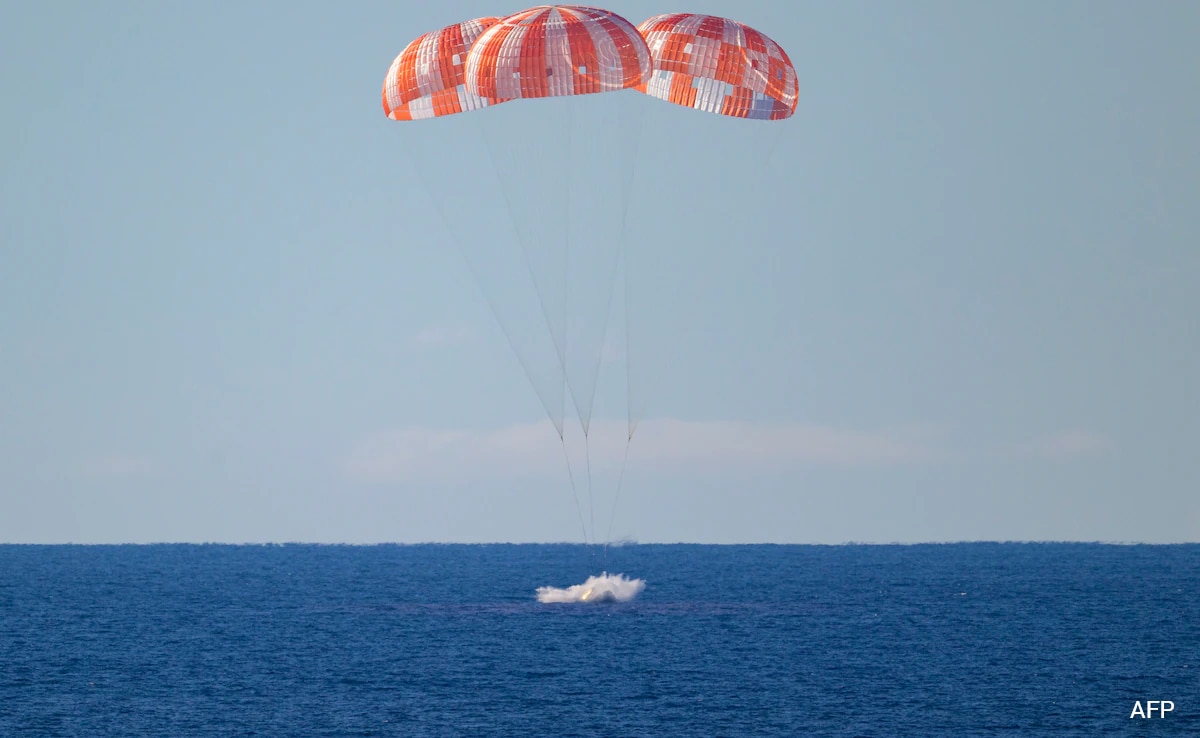
The recovery phase is a coordinated operation involving the U.S. Navy and NASA’s Exploration Ground Systems. The success of the mission is not recorded at splashdown, but at the point of "stable-1" uprighting.
The recovery sequence follows a strict causal chain:
- Parachute Deployment: At an altitude of approximately 7.6 kilometers, three drogue parachutes stabilize the capsule. These are followed by three pilot chutes that pull out the 35-meter-diameter main parachutes.
- Active Uprighting System (AUS): If the capsule flips in the swells (stable-2 position), five helium-filled bags inflate on the nose to rotate the vehicle.
- Hazardous Vapor Detection: Before Navy divers approach, the recovery team must scan for hypergolic propellant leaks (hydrazine and nitrogen tetroxide) used by the reaction control system.
- The Well-Deck Manifold: Unlike Apollo, which used helicopters for recovery, Artemis utilizes a San Antonio-class amphibious transport dock. The ship floods its well deck, allowing the capsule to be winched inside. This eliminates the risk of open-sea crane lifts, which are susceptible to pendulum effects in high sea states.
The Life Support Life Cycle
The Artemis II mission serves as the first live-fire test of the Environmental Control and Life Support System (ECLSS) in a deep-space environment. In LEO, crews can be evacuated in hours. At 400,000 kilometers, the ECLSS must function as a closed-loop system with zero tolerance for failure.
The system manages three critical variables:
- Atmospheric Scrubbing: Utilizing amine-based technology to remove CO2. Unlike the ISS, which has massive volumes for air, Orion’s small habitable volume (approx. 9 cubic meters) means CO2 levels can reach toxic concentrations rapidly if the scrubbers fail.
- Pressure Regulation: Maintaining a nitrogen-oxygen mix. The mission tests the vehicle's ability to handle rapid pressure changes during the transition from the vacuum of space to the crushing pressure of the ocean surface.
- Thermal Control: The Internal Thermal Control System (ITCS) uses water-glycol loops to move heat from the electronics to the external radiators. During reentry, these radiators are jettisoned with the Service Module, requiring the capsule to rely on a sublimator or "flash evaporator" to stay cool until splashdown.
Structural Bottlenecks in Deep Space Transit
The radiation environment beyond the Van Allen belts introduces a hardware degradation variable that is often overlooked. The Artemis II crew travels through the South Atlantic Anomaly and the belts twice. This necessitates "Single Event Upset" (SEU) mitigation in the flight computers. The avionics are not just hardened; they are redundant, using a voting system where three computers must agree on a maneuver before it is executed.
The "Cost of Mass" remains the defining constraint of the mission architecture. Every kilogram of shielding or life support added to the capsule requires a non-linear increase in propellant for the Space Launch System (SLS). This creates a design ceiling for how long humans can stay in the Orion capsule before the mass of consumables exceeds the lift capacity of the launch vehicle.
Tactical Shift for Future Lunar Iterations
The data gathered from the Artemis II return indicates that the current recovery model is sustainable for sporadic missions but lacks the throughput required for the planned Artemis IV and V lunar base rotations.
To scale, the following architectural adjustments are necessary:
- Transition to Reusable Heat Shield Sub-components: Moving away from the monolithic Avcoat pour to modular, replaceable tiles could reduce the refurbishment time between missions from 12 months to 4 months.
- Autonomous Recovery Platforms: Replacing the massive amphibious transport docks with smaller, autonomous recovery vessels to reduce the operational cost per seat.
- Point-to-Point Communication Upgrades: Integrating the Deep Space Network (DSN) with laser-based communication to ensure high-bandwidth telemetry during the reentry plasma blackout phase, which currently lasts about seven minutes.
The Artemis II return confirms that the physics of lunar reentry are solved, but the economics of frequent deep-space transit remain precarious. The next phase of lunar exploration requires moving from "historic trips" to "standardized logistics." Efforts must now focus on the industrialization of the heat shield manufacturing process and the hardening of ECLSS components to extend the mean time between failures (MTBF) from weeks to years.