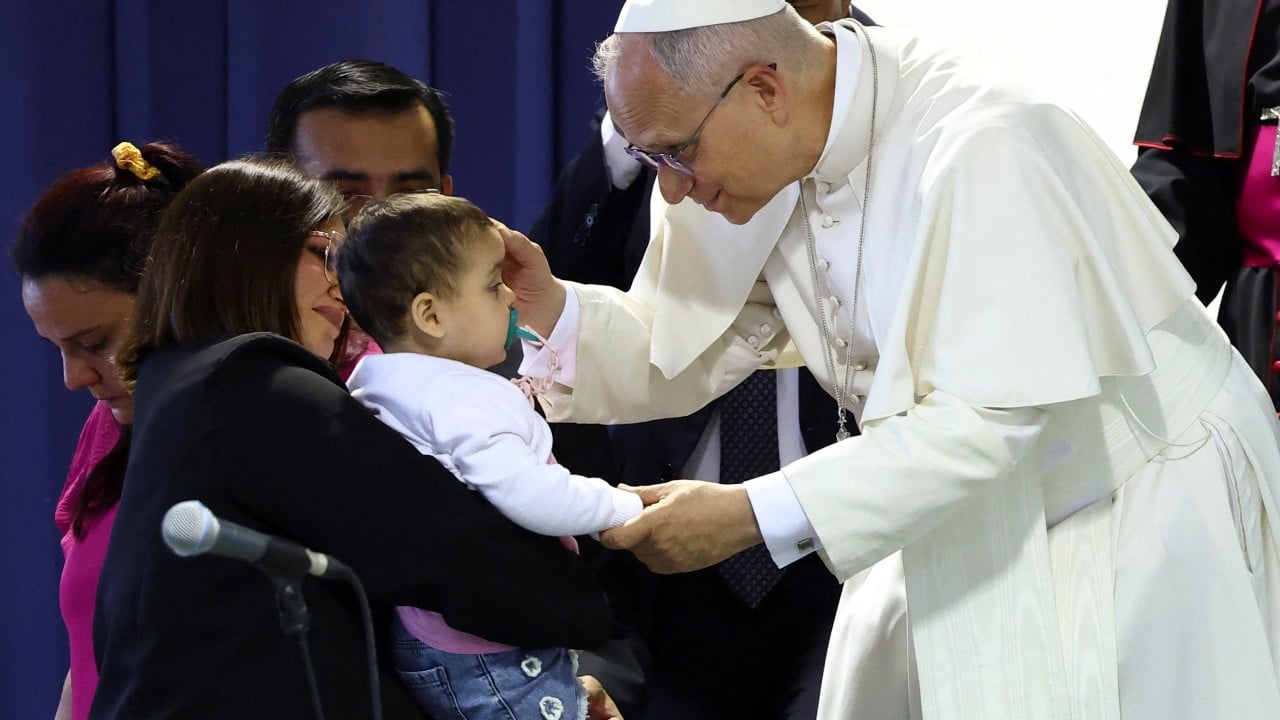
Pope Leo XIV is about to bypass centuries of Vatican protocol to stage a direct confrontation with the White House and the major defense contractors driving the automated arms race. On May 25, the American-born pontiff will personally present his first papal encyclical, Magnifica Humanitas ("Magnificent Humanity"), a sweeping document targeting the moral erosion caused by artificial intelligence in warfare and labor. Breaking with a tradition where popes remain behind the scenes during such rollouts, Leo XIV will share the Synod Hall stage with Christopher Olah, the co-founder of Anthropic. The move is a calculated geopolitical play that establishes the Catholic Church as a central arbiter in the global battle over AI safety and sovereignty.
This is not a mere theological meditation on technology. By inviting Olah, the researcher who leads Anthropic’s interpretability efforts to figure out how neural networks actually process information, the Vatican is positioning itself alongside Silicon Valley's most prominent corporate dissidents. This alliance arrives at a highly volatile moment.
Anthropic is currently locked in a high-stakes federal lawsuit against the Trump administration. In February, the White House ordered a complete ban on federal agency use of Anthropic’s technology. The administration penalized the firm after its leadership refused to grant the U.S. military unrestricted, unmonitored deployment of its Claude models. By placing Olah on the papal stage, Leo XIV is signaling that the Vatican views the commercial and military exploitation of black-box AI systems as an immediate threat to global human dignity.
The Ghost of 1891 and the Battle for the Machine Age
To understand why the Vatican is taking this step, one has to look at the date the Pope signed the document. Leo XIV signed Magnifica Humanitas on May 15, exactly 135 years after Pope Leo XIII issued Rerum Novarum in 1891. That historical document became the bedrock of modern Catholic social teaching by fiercely defending workers against the unregulated exploitation of the early Industrial Revolution.
The current Pope, a former mathematics major who took his name explicitly to honor Leo XIII, views generative AI not as a gradual upgrade in software, but as a total structural rupture of human society.
The Vatican's critique targets two primary areas where machine learning threatens human agency: automated warfare and the systematic devaluation of human labor. While tech executives market these systems as tools for efficiency, the Vatican sees an infrastructure that detaches humanity from its moral obligations.
The Automated Battlefield and the Spiral of Annihilation
The Pope has grown increasingly vocal about the deployment of algorithmic targeting and autonomous platforms in active conflict zones. In a recent address at Rome’s La Sapienza University, Leo XIV warned that the deployment of automated systems across Ukraine, Gaza, Lebanon, and Iran represents an "inhuman evolution" that distances leaders from the blood on the ground.
The theological argument here is precise. When an algorithmic model determines a target or optimizes a drone strike, it creates a buffer of plausible deniability. The Vatican argues that removing direct human choice from the act of killing creates a moral vacuum, transforming warfare into what the Pope termed a "spiral of annihilation." Magnifica Humanitas is expected to call for an absolute global ban on lethal autonomous weapons systems, a position that puts the Holy See in direct opposition to the Pentagon’s current strategy of rapid AI integration.
The Devaluation of Human Creation
Beyond the theater of war, the encyclical takes a harsh look at the economic reality of generative software. The Pope has warned that allowing corporate models to monopolize the production of text, music, and video risks turning human beings into "passive consumers of unthought thoughts."
The economic argument mirrors the 1891 defense of factory workers. If the creative and analytical output of human professionals is systematically replaced by corporate models trained on their stolen data, the dignity of labor itself is destroyed. The Vatican's position is that human expression is tied to an unrepeatable individual identity. Treating consciousness as a commodified data set to be optimized by a handful of trillion-dollar tech monopolies is, in the eyes of the Church, a fundamental violation of human rights.
Why Anthropic is the Vatican’s Chosen Partner
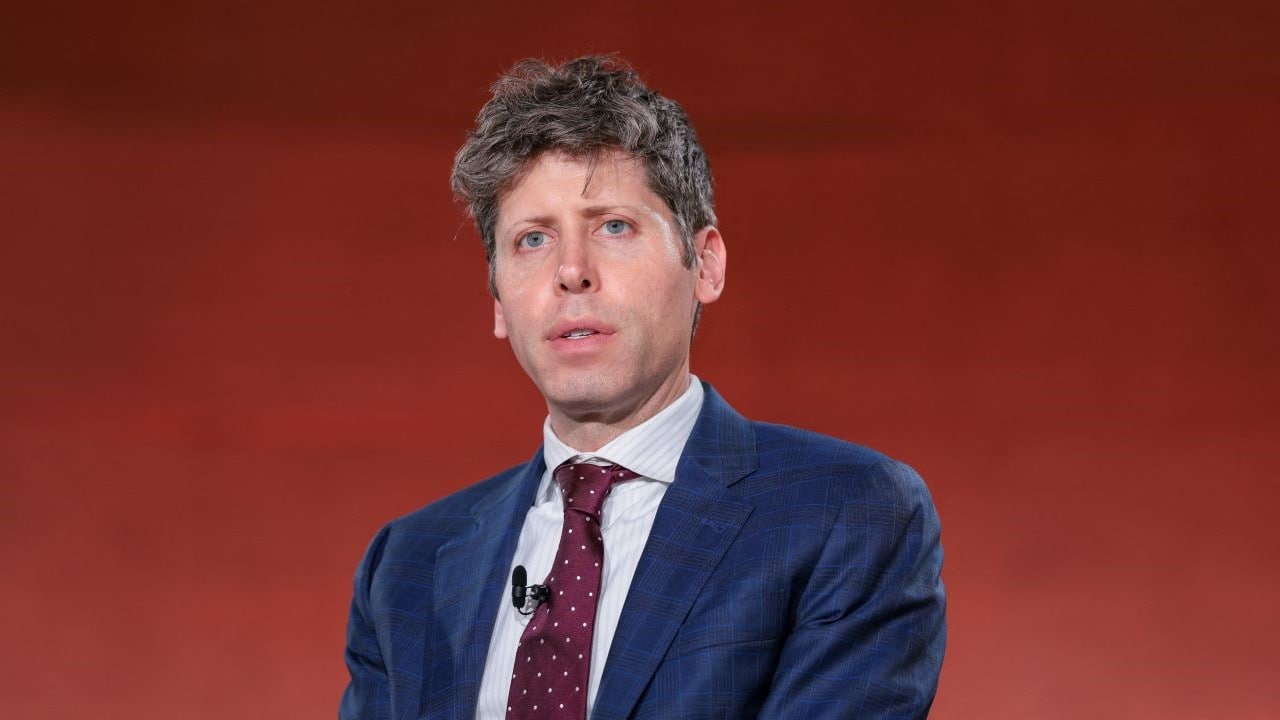
The inclusion of Christopher Olah on a panel alongside Cardinal Doctrine Chief Víctor Manuel Fernández and Secretary of State Pietro Parolin has caught the tech industry off guard. Anthropic, currently valued at $380 billion, was founded by Dario Amodei and a group of researchers who split from OpenAI in 2021 due to fundamental disagreements over Sam Altman’s commercialization strategy and a perceived neglect of safety protocols.
AI SAFETY APPROACHES: A COMPARATIVE LOOK

+-------------------------+-----------------------------------------------------+
| Strategy                | Core Operational Mechanism                          |
+-------------------------+-----------------------------------------------------+
| Anthropic Model         | Prioritizes mechanistic interpretability; attempts  |
|                         | to map internal weights before scaling software.    |
+-------------------------+-----------------------------------------------------+
| Standard Commercial     | Maximizes computational power and rapid deployment, |
| Infrastructure          | relying on post-hoc guardrails and alignment fixes. |
+-------------------------+-----------------------------------------------------+
The Vatican’s alignment with Anthropic is grounded in this specific methodology. Olah’s work focuses on mechanistic interpretability, an engineering discipline that attempts to open the "black box" of deep learning to see exactly why a model makes a specific decision.
For the Vatican, this is a profound moral issue. If an AI system's internal reasoning cannot be understood or auditing tools cannot decipher its weights, that system cannot be trusted to make decisions that impact human lives, whether in a hospital, a human resources department, or a military command center.
By championing interpretability, the Pope is backing a technical requirement that could force tech companies to slow down development. It challenges the dominant Silicon Valley ethos of pushing unverified models into the wild and fixing the collateral damage later.
The Geopolitical Collision with Washington
The timing of Magnifica Humanitas ensures it will act as a diplomatic explosive. The Trump administration has treated AI development as an existential geopolitical race against China, arguing that any domestic regulatory restraint gives an adversarial authoritarian regime an advantage. Under this doctrine, the White House expects American technology firms to cooperate fully with national security objectives.
Anthropic has resisted this pressure, publishing warnings that while democratic nations must maintain a lead over authoritarian states, rushing unaligned systems into military infrastructure invites catastrophic systemic risk. Their refusal to provide the U.S. military with unmonitored access to Claude led directly to the administration’s federal blacklisting of the company in February.
By validating Anthropic on a global religious stage, Leo XIV is throwing the moral weight of the Catholic Church behind a corporate entity suing the United States government. The Pope is effectively arguing that national security considerations do not give a state the right to deploy unpredictable, opaque algorithmic systems. This stance will complicate Washington’s efforts to build a unified Western coalition around an aggressive, militarized AI strategy.
The Limits of Papal Moral Authority
While the encyclical will undoubtedly shake up tech policy discussions, its practical impact faces severe structural hurdles. The Vatican can issue moral declarations, but it lacks enforcement mechanisms. The multinational tech conglomerates driving the current boom answer to shareholders and venture capitalists, not papal decrees.
Furthermore, the Vatican’s own internal consistency on technology remains experimental. The Pope recently established an internal AI study group and has warned his own clergy against using LLMs to write homilies, yet the Church has historically struggled to keep pace with rapid technological adaptation. Sceptics will rightly question whether an institution governed by ancient traditions can effectively influence the code deployment cycles of San Francisco and Seattle.
The document’s true efficacy will depend on whether it provides a framework for secular lawmakers. European regulators, who have already established the AI Act, may use Magnifica Humanitas to stiffen their stance against American tech monopolies. Similarly, the document could bolster civil society organizations and labor unions fighting automated worker surveillance and algorithmic layoffs.
Leo XIV is banking on the idea that the underlying questions of AI are not mathematical, but philosophical and economic. By framing the debate around human dignity rather than corporate capability, the Vatican is attempting to slow down an industry running at breakneck speed. The success of this intervention will be measured by whether tech workers and policymakers begin to demand transparency from the companies building the future, or if the document simply becomes a historical footnote in an era of automated consolidation.